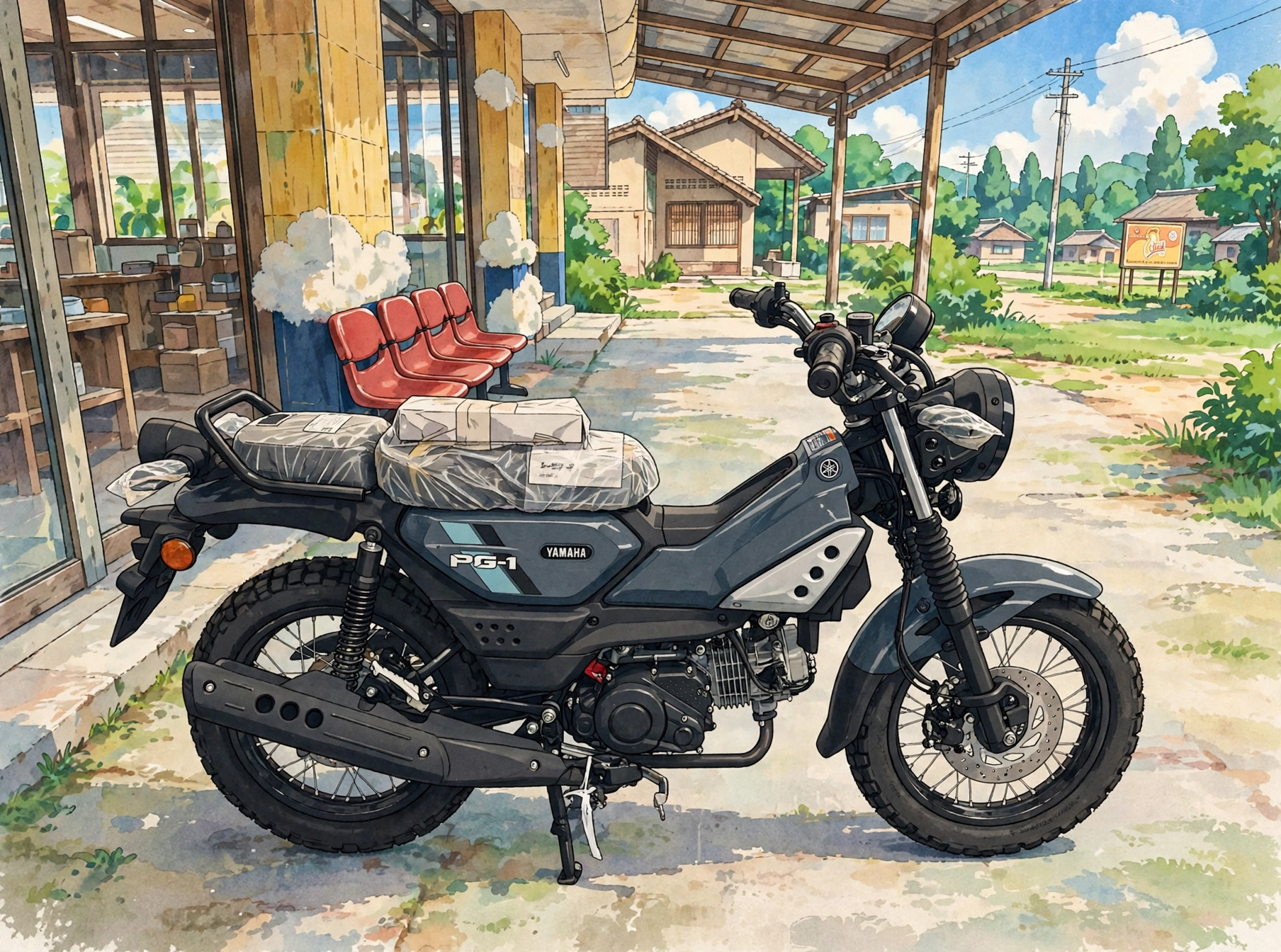
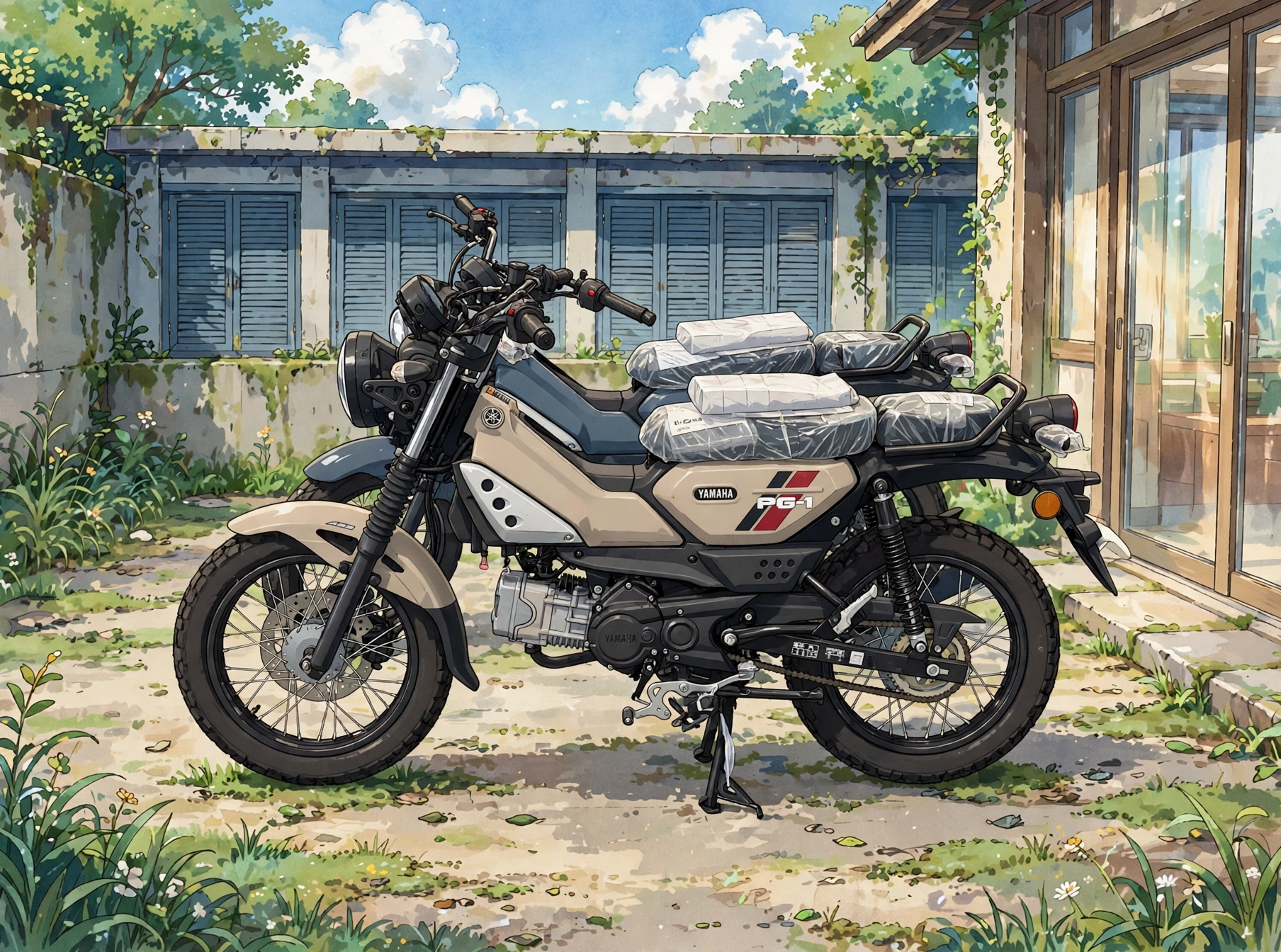
Yamaha PG-1 Review: The Retro Adventure Motorcycle That Makes Every Ride an Adventure
An in-depth review of Yamaha’s lightweight 114cc lifestyle motorcycle, covering its design, engine, riding performance, practicality, off-road ability, ownership costs, regional pricing and how it compares with Honda’s CT125 Hunter Cub and Cross Cub 110.
Introduction
Motorcycles do not always need large engines, impressive horsepower figures or sophisticated electronic equipment to deliver an enjoyable riding experience. Sometimes, a lightweight motorcycle with a simple engine, an upright riding position and an adventurous personality is all that is needed to make an ordinary journey more interesting.
The Yamaha PG-1 is an excellent example of this philosophy.
Introduced in Southeast Asia in 2024, beginning with Thailand, the PG-1 represents Yamaha’s interpretation of a small-capacity recreational motorcycle. It combines the practicality of a traditional underbone motorcycle with styling cues from scramblers and lightweight adventure bikes. Its wide handlebars, raised exhaust, wire-spoke wheels, chunky tyres and relatively generous ground clearance give it a distinctive appearance.
Unlike conventional commuter motorcycles, the PG-1 is designed to encourage riders to explore different routes. It is equally at home navigating narrow city streets, travelling through rural villages, visiting countryside attractions and riding along suitable gravel roads.
Its 114cc air-cooled engine is deliberately modest, but the motorcycle’s lightweight construction makes it approachable and easy to manage. Rather than concentrating on outright speed, Yamaha has prioritised simplicity, accessibility and recreational riding enjoyment.
The PG-1 also occupies an interesting position in the small-capacity motorcycle market. Its concept invites comparisons with Honda’s CT125 Hunter Cub and Cross Cub 110, two motorcycles that combine traditional Cub architecture with outdoor-oriented styling.
However, the Yamaha has its own identity. It is a relatively straightforward, affordable and lightweight motorcycle that offers a different interpretation of the mini-adventure concept.
This review examines the Yamaha PG-1 in detail, including its mechanical specifications, design, handling, comfort, off-road capabilities, fuel consumption, ownership costs and value across Southeast Asian markets.
1. Yamaha PG-1: Background and Concept
Yamaha introduced the PG-1 with a concept centred on making everyday riding more playful and encouraging riders to take alternative routes.
The motorcycle was developed for Southeast Asian markets, where small-capacity motorcycles play an important role in daily transportation. In these markets, motorcycles are commonly used for commuting, shopping, travelling between villages and exploring countryside roads.
Yamaha recognised an opportunity to create something different from a conventional step-through commuter.
Instead of producing another economical urban motorcycle, the company developed a model with a more recreational character. The PG-1 combines the basic architecture and accessibility of an underbone motorcycle with the appearance and riding posture associated with a small scrambler.
Yamaha’s own technical development publication describes the PG-1 as a motorcycle combining the manoeuvrability of a moped with scrambler-inspired capabilities for unpaved roads.
This distinction is important because the PG-1 is not intended to compete directly with conventional high-performance dual-sport motorcycles.
Its purpose is much simpler:
- Make everyday commuting more enjoyable.
- Offer a lightweight motorcycle that is easy to manoeuvre.
- Provide a distinctive retro-inspired design.
- Allow riders to explore suitable unpaved roads.
- Offer an affordable platform for personalisation.
- Make recreational motorcycling accessible to a wider audience.
The PG-1 therefore belongs to an increasingly interesting category of motorcycles that prioritise lifestyle and versatility rather than performance.
2. Design and Styling: A Retro Scrambler Personality
One of the strongest attractions of the Yamaha PG-1 is its appearance.
While many modern small-capacity motorcycles feature aerodynamic body panels and contemporary scooter-inspired styling, the PG-1 takes a more traditional approach.
Its design combines several elements from classic motorcycles, scramblers and utility-oriented off-road machines.
2.1 Round Headlight and Retro Front Styling
The round headlight is one of the PG-1’s most recognisable design features.
It gives the motorcycle a classic appearance reminiscent of older Japanese motorcycles and traditional scramblers.
The relatively simple front assembly avoids excessive plastic bodywork, contributing to its functional character.
The upright handlebars and compact front profile also create a relaxed riding appearance.
2.2 Exposed Frame and Minimalist Bodywork
The PG-1 uses a backbone-style frame, with its structural layout contributing to the motorcycle’s distinctive appearance.
Instead of hiding most mechanical components behind large body panels, Yamaha allows much of the engine and frame structure to remain visible.
This gives the motorcycle an uncomplicated, mechanical personality.
The minimalist approach also makes the PG-1 particularly attractive to owners interested in customisation.
2.3 Wide Handlebars and Upright Riding Position
The wide handlebars are an important part of the PG-1’s design.
They provide leverage when manoeuvring at low speeds and help create an upright riding position.
This arrangement is useful when travelling through narrow streets, negotiating uneven surfaces or navigating gravel roads.
It also gives the motorcycle a more adventurous appearance than conventional underbone commuters.
2.4 Wire-Spoke Wheels and Chunky Tyres
The PG-1 comes with 16-inch wire-spoke wheels at both ends.
Its relatively wide 90/100-16 tyres feature a tread pattern designed to provide versatility on different road surfaces.
These tyres give the motorcycle a rugged appearance while offering more flexibility than narrow conventional commuter tyres when riding on gravel and uneven roads.
However, the original tyres should not be mistaken for specialist enduro or motocross tyres.
Their purpose is general recreational use rather than serious off-road competition.
2.5 Raised Exhaust
The raised exhaust is another important styling feature.
Its positioning contributes to the scrambler appearance and offers additional clearance compared with a conventional low-mounted exhaust.
This can be useful when crossing shallow puddles or negotiating uneven tracks.
Nevertheless, a raised exhaust does not make the PG-1 waterproof. The air intake, electrical components and other vulnerable areas still impose limits on water crossings.
2.6 Colour Options
Yamaha has offered different colours and special editions depending on the country and model year.
The motorcycle’s retro appearance works particularly well with understated colours, including earth-inspired shades, black and blue.
Colour availability should be checked with the local distributor because Southeast Asian markets do not necessarily receive identical specifications or finishes.
Overall, the PG-1 has a design that stands out without being unnecessarily complicated.
It looks like a motorcycle intended for spontaneous weekend trips rather than simply travelling from home to work.
3. Technical Specifications and Engine Details
The Yamaha PG-1 uses a small-capacity engine derived from Yamaha’s established commuter motorcycle engineering.
Although its displacement is only 114cc, the engine is designed around simplicity, fuel efficiency and manageable power delivery.
3.1 Engine Configuration
The PG-1 is powered by an air-cooled, four-stroke, single-cylinder engine featuring a single overhead camshaft (SOHC) and two valves.
Its relatively long-stroke configuration is intended to provide useful low- and mid-range performance for everyday riding.
Key engine specifications include:
| Specification | Yamaha PG-1 |
|---|---|
| Engine type | 4-stroke, single-cylinder |
| Valve configuration | SOHC, 2 valves |
| Cooling system | Air-cooled |
| Displacement | 114cc |
| Bore × stroke | 50.0 × 57.9mm |
| Compression ratio | 9.3:1 |
| Fuel system | Electronic fuel injection |
| Ignition | TCI |
| Maximum power | 6.6kW (9.0PS) at 7,000rpm |
| Maximum torque | 9.5Nm at 5,500rpm |
| Starting system | Electric starter |
| Lubrication | Wet sump |
| Engine oil capacity | Approximately 0.8 litres for routine oil changes |
| Transmission | 4-speed constant-mesh |
| Clutch | Wet multi-plate centrifugal arrangement |
| Fuel | Unleaded petrol, E10–E20 compatibility |
| Fuel tank | 5.1 litres |
Specifications may differ slightly by market and model year.
The engine’s 9.0PS output is modest, but this is consistent with the PG-1’s intended role.
It is not designed to compete with 150cc or 160cc scooters. Instead, it provides sufficient performance for everyday urban transportation and relaxed recreational riding.
3.2 Fuel Injection System
The electronic fuel injection system provides more consistent fuel delivery than a traditional carburettor.
Its advantages include:
- Easier starting under different temperature conditions.
- More consistent throttle response.
- Automatic adjustment of fuel delivery.
- Improved combustion efficiency.
- Reduced need for routine carburettor adjustment.
For riders who use their motorcycles regularly, fuel injection is a practical advantage.
3.3 Four-Speed Transmission
The PG-1 uses a four-speed constant-mesh transmission.
It is paired with a centrifugal clutch arrangement, making gear changes relatively straightforward.
The semi-automatic operating concept is particularly useful for riders familiar with traditional underbone motorcycles.
The absence of a conventional manual clutch lever also makes the motorcycle approachable for people who are less experienced with manual motorcycles.
The four-speed gearbox provides a useful balance between acceleration and cruising, although the limited number of ratios becomes more noticeable when riding on steep roads or carrying additional luggage.
3.4 Engine Performance and Power Delivery
With approximately 9PS and 9.5Nm, the PG-1 is not a fast motorcycle.
Its strengths are manageable acceleration, lightweight construction and predictable performance.
At lower speeds, the engine provides sufficient response for navigating urban traffic.
On rural roads, riders can enjoy a relaxed riding experience without constantly pushing the engine towards its maximum output.
However, overtaking requires more planning, particularly when travelling uphill or carrying a passenger.
The PG-1 is best enjoyed at moderate speeds rather than being ridden continuously at maximum throttle.
3.5 Engine Reliability and Simplicity
Air-cooled engines have fewer cooling-system components than liquid-cooled designs.
The PG-1 does not require a radiator, coolant pump or radiator hoses.
This reduces mechanical complexity and makes routine maintenance relatively straightforward.
However, air cooling does not eliminate the importance of proper maintenance.
Regular oil changes, clean air filters, correct valve clearances and a properly maintained fuel-injection system remain essential.
For owners who value mechanical simplicity, the PG-1 offers an appealing package.
4. Chassis, Suspension and Handling
The PG-1’s chassis is designed to provide a combination of urban manoeuvrability and recreational riding capability.
Its lightweight construction is one of its biggest advantages.
4.1 Backbone Frame
Yamaha uses a backbone-style frame.
The layout provides a relatively compact motorcycle structure while allowing the engine and other mechanical components to remain accessible.
The frame is suitable for the motorcycle’s modest engine output and intended operating conditions.
4.2 Front Suspension
The front suspension consists of conventional telescopic forks.
The official specification lists approximately 130mm of front suspension travel.
This provides useful movement when negotiating uneven roads, potholes and gravel surfaces.
It is not a sophisticated adjustable suspension system, but it is appropriate for a motorcycle in this category.
4.3 Rear Suspension
At the rear, the PG-1 uses a swingarm with twin shock absorbers.
The rear suspension travel is approximately 109mm.
Some market specifications describe preload adjustment, so buyers should check the exact local version.
The arrangement is simple and relatively easy to maintain.
For normal road conditions, it provides sufficient suspension movement. However, large potholes and repeated impacts can expose the limitations of the relatively basic suspension design.
4.4 Braking System
The braking equipment varies significantly between model years and countries.
| Version | Front brake | Rear brake |
|---|---|---|
| Original 2024 specification | Hydraulic disc | Drum |
| Malaysia standard model | Hydraulic disc | Drum |
| Thailand 2025 specification | Disc with ABS | Drum |
| Vietnam 2025 ABS versions | Disc with ABS | Drum |
The front disc brake provides the primary stopping power, while the rear drum brake offers a simple and economical solution.
The ABS-equipped versions are particularly attractive because they provide additional assistance during emergency braking.
Importantly, buyers should not assume every PG-1 has ABS simply because the model is advertised as a 2025 or 2026 motorcycle. Equipment varies by market.
4.5 Dimensions and Weight
| Specification | Yamaha PG-1 |
|---|---|
| Overall length | 1,980mm |
| Overall width | 805mm |
| Overall height | 1,050mm |
| Wheelbase | 1,280mm |
| Seat height | 795mm |
| Ground clearance | 190mm |
| Minimum turning radius | 2.0m |
| Wet weight | Approximately 107–109kg |
| Front wheel | 16-inch |
| Rear wheel | 16-inch |
| Front tyre | 90/100-16 |
| Rear tyre | 90/100-16 |
| Fuel capacity | 5.1 litres |
The relatively low weight makes the PG-1 easy to handle when parking, turning around or manoeuvring through tight spaces.
Its 190mm ground clearance is also useful when riding over speed bumps and uneven surfaces.
However, the 795mm seat height is worth considering for shorter riders.
5. Riding Experience and Comfort
The PG-1 has a riding position that reflects its lifestyle-oriented design.
Rather than adopting the low and compact posture of some traditional underbone motorcycles, it features a more upright riding arrangement.
5.1 Riding Position
The relatively wide handlebars allow the rider to sit naturally, with the upper body in a comfortable position.
The footrests and seat arrangement are suitable for everyday riding.
This upright posture is particularly useful when travelling through urban traffic because it gives the rider a good view of surrounding vehicles and road conditions.
The handlebars also provide useful leverage when navigating narrow roads or slower-speed turns.
5.2 Seat Comfort
The PG-1 uses a separate rider and passenger seat arrangement.
This is visually consistent with its scrambler-inspired design.
The relatively simple seat construction is appropriate for a lightweight motorcycle, although long-distance comfort depends on rider size and personal preference.
For short trips and weekend rides, the seat should be adequate for most riders.
However, people planning to spend several hours continuously in the saddle may eventually want a thicker aftermarket seat.
5.3 Passenger Comfort
The PG-1 can accommodate a passenger, but it is important to recognise the limitations of a small-capacity motorcycle.
With two people onboard:
- Acceleration becomes slower.
- Hill-climbing performance is reduced.
- Rear suspension may feel less comfortable.
- Overtaking requires additional planning.
It is therefore better suited to occasional two-person journeys than regular long-distance passenger touring.
5.4 Highway and Long-Distance Riding
The PG-1 is not designed as a highway touring motorcycle.
Its modest engine output, small displacement and lack of substantial wind protection limit its suitability for sustained high-speed travel.
It can handle suitable longer journeys on secondary roads, but riders should avoid expecting the cruising performance of a larger motorcycle.
For exploring rural Thailand, travelling between small Malaysian towns or riding through scenic Vietnamese countryside, its character makes considerably more sense.
6. Off-Road Capability and Adventure Riding
Yamaha’s PG-1 looks like the ultimate go-anywhere mini-scrambler | MotoDeal
4 things that make the Yamaha PG-1 the ultimate prepper’s bike - Motoph - motoph.com
從 Super Cub 到 PG-1!日媒精選 2026 年必看 7 款「免離合器」125 玩樂車推薦 | SUPERMOTO8
17
This is where the PG-1 becomes particularly interesting.
Although it is not a genuine enduro or dual-sport motorcycle, Yamaha has designed it to handle more than ordinary paved roads.
Its combination of wide handlebars, relatively high ground clearance, chunky tyres and lightweight construction makes it suitable for light adventure riding.
6.1 Gravel Roads
Gravel roads are among the environments where the PG-1 makes the most sense.
Its relatively wide tyres offer a larger contact profile than narrow traditional commuter tyres.
The upright riding position also gives the rider good control when travelling at moderate speeds.
However, tyre pressure, tyre condition and riding technique remain important.
Riders should reduce speed on loose gravel, especially when approaching corners.
6.2 Dirt Roads and Rural Trails
The PG-1 can handle suitable dirt roads, particularly those with relatively smooth surfaces.
Its lightweight construction makes it easier to manage than heavier adventure motorcycles.
It is also easier to recover from a low-speed balance mistake compared with a much larger motorcycle.
For riders who enjoy exploring agricultural roads, forest access tracks and countryside routes, this capability adds considerable recreational value.
6.3 Mud and Wet Surfaces
The motorcycle’s tyres and ground clearance offer some flexibility on wet roads and light muddy surfaces.
However, the PG-1 does not have specialist mud tyres or advanced traction-control electronics.
Deep mud can quickly overwhelm the available traction.
Riders should also be particularly careful when crossing wet roots, slippery rocks and deep puddles.
6.4 Suspension Limitations
The relatively basic suspension system is suitable for light recreational use.
However, it is not designed for aggressive off-road riding.
Large jumps, deep ruts and repeated high-speed impacts are outside the motorcycle’s intended operating environment.
The PG-1 should be considered a light-adventure motorcycle rather than a serious off-road machine.
6.5 Touring and Camping
從 Super Cub 到 PG-1!日媒精選 2026 年必看 7 款「免離合器」125 玩樂車推薦 | SUPERMOTO8
The PG-1’s styling and relatively simple construction make it particularly attractive for motorcycle camping.
Owners can install:
- Rear luggage racks.
- Small waterproof panniers.
- Handlebar bags.
- Tank or frame bags.
- Front cargo carriers.
- Compact camping equipment.
- Engine protection bars.
- Hand guards.
For lightweight travel, the PG-1 can become a practical little adventure companion.
The key is to avoid excessive luggage weight.
Its engine, chassis and braking system are designed for a lightweight motorcycle, not for carrying the equipment associated with a large touring bike.
7. Fuel Economy and Running Costs
Fuel economy is one of the PG-1’s most appealing characteristics.
Its 114cc engine has relatively modest power requirements, and the motorcycle’s lightweight construction helps keep fuel consumption low.
7.1 Fuel Consumption
Actual fuel consumption depends on riding style, traffic, road conditions, passenger weight and maintenance.
For budgeting purposes, a practical illustrative range is approximately 45–60km/L under favourable everyday conditions. This should not be treated as a guaranteed official test result.
With a 5.1-litre tank, the theoretical distance at those consumption figures would be:
| Average consumption | Theoretical range |
|---|---|
| 45km/L | 229.5km |
| 50km/L | 255km |
| 55km/L | 280.5km |
| 60km/L | 306km |
Actual usable range will be lower because riders should refuel before completely exhausting the tank.
7.2 Fuel Costs
For illustration, assuming petrol costs US$1.20 per litre:
| Distance | Fuel consumption at 50km/L | Estimated cost |
|---|---|---|
| 100km | 2.0L | US$2.40 |
| 500km | 10.0L | US$12.00 |
| 1,000km | 20.0L | US$24.00 |
| 5,000km | 100L | US$120.00 |
The figures are illustrative rather than country-specific fuel prices.
7.3 Maintenance Costs
The PG-1 uses relatively conventional mechanical components.
Regular maintenance should include:
- Engine oil replacement.
- Air filter inspection and replacement.
- Spark plug inspection.
- Valve clearance checks.
- Chain cleaning, lubrication and adjustment.
- Brake inspection.
- Tyre pressure checks.
- Suspension inspection.
- Battery condition checks.
Because the engine is air-cooled, there is no coolant to replace.
The four-speed transmission and relatively simple chassis also help keep maintenance manageable.
7.4 Ownership Costs
The total cost of ownership depends on local insurance, registration, taxation, dealer servicing and spare-parts availability.
Nevertheless, the PG-1 has several characteristics that should make routine ownership relatively affordable:
- Small engine displacement.
- Modest fuel consumption.
- Simple mechanical construction.
- Conventional tyres and braking components.
- No liquid-cooling system.
- Relatively straightforward servicing.
One important consideration is that the PG-1 is a more specialised lifestyle motorcycle than a mass-market commuter.
Certain accessories and model-specific replacement parts may be less readily available than components for popular commuter motorcycles.
Owners should therefore consider local Yamaha dealer support before purchasing.
8. Practicality for Daily Commuting
Trải nghiệm Yamaha PG-1: một chiếc xe truyền cảm hứng cho những chuyến đi | Viết bởi MinhTriND
Although Yamaha promotes the PG-1 as a recreational motorcycle, it can also function as an everyday commuter.
Its compact dimensions and lightweight construction make it suitable for congested urban environments.
8.1 Urban Manoeuvrability
The motorcycle’s approximately 107–109kg wet weight makes it relatively easy to manoeuvre.
The wide handlebars provide good leverage when filtering through slow-moving traffic, while the upright riding position offers a clear view of the road.
Its relatively small turning radius also helps when negotiating narrow streets and parking areas.
8.2 Storage and Carrying Capacity
Unlike many modern scooters, the PG-1 does not offer a large under-seat storage compartment.
This is an important practical disadvantage.
Riders who regularly carry shopping, laptops or personal belongings will probably need an additional luggage solution.
Fortunately, the PG-1’s minimalist design makes it suitable for aftermarket racks and bags.
A rear luggage rack or small waterproof pannier can significantly improve its everyday usefulness.
8.3 Passenger and Family Use
The separate seat arrangement allows occasional passenger use.
However, the PG-1 should not be confused with a family-oriented utility motorcycle.
A conventional scooter or larger underbone may offer better passenger accommodation and carrying capacity.
8.4 Is It Suitable for Singapore?
The PG-1’s concept is interesting for Singapore riders who enjoy small motorcycles and recreational weekend rides.
However, there are several considerations.
- Its 114cc engine is suitable for Singapore’s Class 2B motorcycle licensing category.
- Its small fuel tank means more frequent refuelling than larger motorcycles.
- Its upright riding position is useful in urban traffic.
- Its limited storage makes additional luggage accessories desirable.
- Its modest engine output is better suited to city roads than sustained high-speed travel.
Availability, registration eligibility, local emissions compliance and the Certificate of Entitlement situation should be checked before considering an import.
The PG-1 is not necessarily the most practical choice for someone who simply needs inexpensive daily transportation. Its appeal is the combination of transport and recreational riding.
9. Yamaha PG-1 Model Years: 2024, 2025 and 2026
One important point when researching the PG-1 is that the motorcycle has received different updates depending on the market.
The 2024, 2025 and 2026 models should not automatically be assumed to have identical equipment.
9.1 Yamaha PG-1 2024
The original 2024 PG-1 established the motorcycle’s identity.
Its main characteristics included:
- 114cc air-cooled engine.
- Electronic fuel injection.
- Four-speed transmission.
- 16-inch spoke wheels.
- Chunky tyres.
- Front disc brake.
- Rear drum brake.
- Analog instrument cluster.
- Round headlight.
- Raised exhaust.
- Split-seat arrangement.
The original version was particularly attractive because of its uncomplicated mechanical specification and retro scrambler styling.
It was introduced in Thailand and subsequently reached other Southeast Asian markets.
9.2 Yamaha PG-1 2025
Yamaha PG-1 2025 có thêm ABS đồng hồ LCD đĩa lớn hơn - Motosaigon
The 2025 generation brought more significant changes in selected markets.
In Thailand, Yamaha introduced an updated model priced at THB57,500.
Notable changes included:
- Front disc brake with ABS.
- Updated digital instrument display.
- Revised styling details.
- New tyre design.
- Updated colour choices.
- Improved equipment presentation.
The digital instrument panel is particularly useful because it provides more information than the original basic analog arrangement.
Depending on the version, the display includes speed, engine speed, gear position, fuel level and trip information.
The addition of ABS is arguably the most meaningful safety improvement.
However, Malaysia’s 2025 and 2026 standard models should not be assumed to have the same ABS equipment as Thailand’s updated model.
9.3 Yamaha PG-1 2026
2026 Yamaha PG-1 Classic Black - 2 - Paul Tan’s Automotive News
The 2026 model year continued the PG-1’s development through market-specific updates and new colour selections.
In Malaysia, Hong Leong Yamaha Motor introduced Classic Black and Sky Blue on 3 February 2026.
The recommended retail price remained RM6,998, excluding registration and insurance.
In Thailand, a separate 2026 Special Edition was reported with additional adventure equipment, including:
- Hand guards.
- Leg protectors.
- Front luggage rack.
- Rear luggage rack.
- Metal skid plate.
- Engine protection bars.
- Front disc brake with ABS.
The Thai Special Edition was announced at THB67,000.
These updates demonstrate how Yamaha has developed the PG-1 as a customisation-friendly lifestyle platform rather than simply a conventional commuter motorcycle.
10. Yamaha PG-1 Pricing: 2024–2026 Southeast Asian Markets
Yamaha PG-1 ra mắt Việt Nam, 6 phiên bản màu sắc, giá từ 30,4 triệu | Viết bởi MinhTriND
Price is an important part of the PG-1’s appeal.
However, motorcycle prices vary considerably between Southeast Asian countries because of taxation, import duties, distribution arrangements and local specifications.
The following figures provide a useful reference for the 2024–2026 period.
10.1 Thailand
Thailand was the first major launch market for the PG-1.
| Model | Recommended price |
|---|---|
| Original PG-1 2024 | THB64,900 |
| PG-1 2025 | THB57,500 |
| PG-1 2026 Special Edition | THB67,000 |
The 2025 model’s lower recommended price made it particularly competitive.
The 2026 Special Edition commands a premium because of its additional adventure equipment.
Prices are recommended retail figures and may differ according to dealer promotions.
10.2 Malaysia
2026 Yamaha PG-1 with new colours, RM6,998 RRP - paultan.org
Malaysia is another important market for the PG-1.
| Model | Recommended retail price |
|---|---|
| 2024 PG-1 | RM6,998 |
| 2025 PG-1 | Check dealer quotation |
| 2026 PG-1 | RM6,998 |
The 2026 model retained the RM6,998 recommended retail price, with new colour options.
The price excludes road tax, registration and insurance.
Malaysia’s market is particularly interesting because the PG-1 competes with other small-capacity adventure-styled motorcycles.
10.3 Vietnam
Vietnam received an important update in September 2025 with the introduction of the PG-1 ABS.
Yamaha Vietnam announced the following recommended retail prices, including 8% VAT:
| Version | Launch price |
|---|---|
| Standard | VND30,928,000 |
| Premium ABS | VND34,364,000 |
| Limited ABS | VND34,855,000 |
For 2026, Yamaha Vietnam’s published recommended prices include:
| Version | Listed price |
|---|---|
| Standard black-wheel version | VND30,928,000 |
| Standard 2026 version | VND31,124,000 |
| Standard silver-wheel version | VND30,437,000 |
| Premium ABS | VND35,346,000 |
| Limited ABS | VND35,837,000 |
The published prices may vary with dealer promotions and revisions.
Vietnam is an especially interesting market because Yamaha offers multiple PG-1 configurations rather than relying on one basic specification.
10.4 Indonesia and Other Markets
The PG-1’s availability and official pricing should be verified locally.
It is important not to confuse grey-import prices with official distributor prices.
For countries without an official PG-1 distribution programme, buyers should consider:
- Import duties.
- Registration requirements.
- Emissions certification.
- Spare-parts availability.
- Warranty coverage.
- Availability of ABS-equipped versions.
10.5 2024–2026 Used-Market Value
The used market is influenced by mileage, condition, maintenance history, modifications and local availability.
There is no single reliable Southeast Asian used-market price because the PG-1 is sold under different pricing structures in different countries.
For a used example, buyers should pay particular attention to:
- Engine condition and cold-start behaviour.
- Evidence of regular engine oil changes.
- Fuel-injection system operation.
- Chain and sprocket wear.
- Front fork leaks.
- Rear shock absorber condition.
- Wheel alignment and spoke tension.
- Brake condition and ABS operation, where fitted.
- Signs of accident damage.
- Evidence of excessive off-road use.
A heavily modified PG-1 is not necessarily worth more than a standard motorcycle.
Some modifications may actually reduce resale value if they involve poor-quality electrical work, unsuitable suspension components or non-standard engine tuning.
For buyers, a well-maintained standard example with a complete service history is generally the safer purchase.
11. Yamaha PG-1 vs Honda CT125 Hunter Cub
All New Yamaha PG-1 ใจมันส์ได้…ไปกันได้
ホンダ「CT125・ハンターカブ」ストリートからオフロードまで走って分かったこと【試乗インプレ・車両解説】(2020年) (2/2) - webオートバイ
Motor Bebek Adventure Yamaha PG-1 vs Honda CT125, Kok Tidak Imbang?
8
The Honda CT125 Hunter Cub is arguably the most interesting competitor to the Yamaha PG-1.
Both motorcycles combine traditional underbone architecture with outdoor-oriented styling.
However, they approach the concept differently.
The Yamaha prioritises affordability, simplicity and lightweight handling.
The Honda offers a larger engine, more equipment and a stronger emphasis on adventure-oriented utility.
11.1 Technical Comparison
| Specification | Yamaha PG-1 | Honda CT125 |
|---|---|---|
| Engine | 114cc | 123–124cc |
| Engine type | Air-cooled, 4-stroke | Air-cooled, 4-stroke |
| Valve system | SOHC, 2 valves | SOHC, 2 valves |
| Fuel injection | Yes | Yes |
| Maximum power | 9.0PS | Approximately 9.1PS |
| Maximum torque | 9.5Nm | 11Nm |
| Transmission | 4-speed | 4-speed |
| Clutch | Centrifugal arrangement | Semi-automatic wet clutch |
| Front suspension | Telescopic | Telescopic |
| Rear suspension | Twin shocks | Twin shocks |
| Front brake | Disc, ABS on selected models | Disc with ABS |
| Rear brake | Drum | Disc |
| Seat height | 795mm | 800mm |
| Ground clearance | 190mm | Approximately 165mm |
| Weight | 107–109kg | 116–118kg |
| Fuel tank | 5.1L | 5.3L |
Figures are based on representative regional specifications; equipment and model-year differences apply.
11.2 Engine Performance
The Honda CT125 has a displacement advantage of approximately 10cc.
Its 11Nm torque output also gives it an advantage over the PG-1’s 9.5Nm.
This makes the CT125 more capable when carrying additional weight or accelerating under demanding conditions.
However, the PG-1’s lower weight is a significant advantage.
The Yamaha weighs approximately 9–11kg less, depending on the versions being compared.
For low-speed riding and everyday manoeuvrability, this difference is noticeable.
11.3 Off-Road Capability
The PG-1 has 190mm of ground clearance, compared with approximately 165mm for the CT125.
This gives the Yamaha an advantage when negotiating certain uneven surfaces and obstacles.
The Honda, however, has a more adventure-focused equipment package, including its front carrier, protective components and ABS-equipped braking system.
Neither motorcycle should be treated as a replacement for a proper dual-sport motorcycle.
11.4 Comfort and Practicality
The CT125 has a more substantial utility-oriented design.
Its luggage-carrying equipment and larger engine make it attractive for recreational touring.
The PG-1 is smaller, lighter and simpler.
For urban use and short countryside trips, the Yamaha can be more approachable.
11.5 Which One Is Better?
Choose the Yamaha PG-1 if:
- You want a relatively affordable motorcycle.
- You prefer a lightweight machine.
- You enjoy retro scrambler styling.
- You want a motorcycle that is easy to customise.
- You mainly ride in cities and on rural roads.
Choose the Honda CT125 if:
- You want more torque.
- You prefer a more substantial adventure-oriented motorcycle.
- You value additional utility equipment.
- You want a rear disc brake.
- You regularly carry luggage or a passenger.
The CT125 is the more capable and better-equipped proposition, while the PG-1 offers a simpler and more affordable alternative.
12. Yamaha PG-1 vs Honda Cross Cub 110
New Yamaha PG-1 [2025] รถมอเตอร์ไซค์ใหม่ ขี่สนุกทุกเส้นทาง
Honda Cross Cub 110 2026: Si Klasik Modern yang Siap Diajak Off-Road Ringan
9
The Honda Cross Cub 110 is another natural competitor.
The Cross Cub 110 is based on Honda’s Super Cub architecture but uses a more adventurous appearance.
Unlike the CT125, the Cross Cub is primarily a lifestyle-oriented urban and countryside motorcycle.
12.1 Technical Comparison
| Specification | Yamaha PG-1 | Honda Cross Cub 110 |
|---|---|---|
| Engine displacement | 114cc | 109cc |
| Engine type | Air-cooled, 4-stroke | Air-cooled, 4-stroke |
| Fuel injection | Yes | Yes |
| Maximum power | 9.0PS | 8.0PS |
| Maximum torque | 9.5Nm | 8.8Nm |
| Transmission | 4-speed | 4-speed |
| Weight | 107–109kg | 107kg |
| Seat height | 795mm | 784mm |
| Wheel size | 16-inch | 17-inch |
| Fuel tank | 5.1L | 4.1L |
| Ground clearance | 190mm | Market specification dependent |
The Cross Cub 110 has a smaller engine but remains competitive in terms of weight and fuel efficiency.
Honda’s published Japanese specifications quote approximately 67.9km/L under the WMTC test cycle.
That is a laboratory-style homologation figure, not a guaranteed everyday consumption result.
12.2 Design Differences
The PG-1 has a more obvious scrambler appearance.
Its wide handlebars, exposed mechanical layout and chunky 16-inch tyres make it look more rugged.
The Cross Cub 110 has a more traditional Cub identity.
Its design is recognisably derived from Honda’s Super Cub family, with a distinctive front leg shield and more enclosed bodywork.
12.3 Riding Characteristics
The PG-1 feels more like a small recreational motorcycle.
The Cross Cub is closer to a practical everyday underbone with lifestyle styling.
Honda’s larger 17-inch wheels offer a different rolling characteristic, while the Yamaha’s 16-inch wheels contribute to its compact appearance and handling.
12.4 Which One Should You Buy?
The Yamaha PG-1 is more attractive to riders seeking a mini-scrambler experience.
The Cross Cub 110 is more suitable for riders who prefer the traditional Cub riding concept and excellent fuel economy.
For people who want a small motorcycle with a distinctive appearance, both are excellent alternatives.
13. Comparison with Other Underbone Motorcycles
The PG-1 also deserves comparison with conventional underbone motorcycles.
These include popular models such as:
- Yamaha Finn.
- Yamaha Jupiter.
- Honda Wave 110i.
- Honda Super Cub.
- Honda Winner X.
The conventional commuter motorcycles generally prioritise practicality, fuel economy and affordability.
The PG-1 is different because it places greater emphasis on design, recreation and the ability to travel on suitable unpaved surfaces.
A traditional underbone may offer better storage options, more conventional body protection or easier availability of replacement parts.
The PG-1 counters with its distinctive appearance and more adventurous riding character.
For someone who wants an economical transport solution, a conventional commuter may make more financial sense.
For someone who enjoys the idea of turning an ordinary weekend ride into a small adventure, the PG-1 is considerably more appealing.
14. Customisation, Accessories and Modifications
LÊN GÓI ĐỘ YAMAHA PG-1 ADVENTURE (ADV) CHUYÊN NGHIỆP Sửa Xe Máy Lưu Động Đà Nẵng
K-SPEED YAMAHA PG-1 Scrambler Diabolus – K-SPEED JAPAN
PG1 độ phiên bản Kriega để chuyên đi phượt | Khóa Xe Máy
13
One of the PG-1’s strongest selling points is its customisation potential.
Its minimalist construction and distinctive appearance provide an excellent starting point for personalisation.
Owners can create different interpretations of the motorcycle, from a practical commuter to a miniature adventure touring machine.
14.1 Adventure Touring Setup
A practical adventure setup might include:
- Front luggage rack.
- Rear luggage rack.
- Waterproof side bags.
- Handlebar bag.
- Engine protection bars.
- Skid plate.
- Hand guards.
- Auxiliary lighting.
This configuration is particularly suitable for riders who enjoy exploring rural areas.
14.2 Scrambler Customisation
For owners who prefer a more traditional scrambler appearance, possible modifications include:
- Custom seat.
- Different handlebar design.
- Upgraded rear suspension.
- Alternative colour schemes.
- Custom side panels.
- Retro-style mirrors.
- Improved tyres.
- Compact luggage solutions.
14.3 Suspension Upgrades
Owners who regularly ride on rough surfaces may consider upgrading the suspension.
However, suspension modifications should be selected carefully.
A replacement shock absorber must be compatible with the motorcycle’s geometry, weight and intended use.
An excessively stiff setup can make the PG-1 uncomfortable on ordinary roads.
14.4 Tyre Upgrades
Tyres are among the most important components to consider when customising the PG-1.
Different tread designs can change its behaviour on:
- Asphalt.
- Gravel.
- Dirt roads.
- Wet surfaces.
For primarily urban use, a road-oriented tyre may provide better everyday characteristics.
For recreational gravel riding, a suitable dual-purpose tyre may be preferable.
Tyre selection should always respect the manufacturer’s approved dimensions and load ratings.
14.5 Engine Modifications
Some owners may be tempted to increase engine performance through exhaust, intake or engine modifications.
However, the PG-1 is designed around a relatively modest engine.
Major modifications can affect:
- Engine reliability.
- Fuel consumption.
- Noise levels.
- Emissions compliance.
- Warranty coverage.
- Transmission durability.
For most owners, retaining the standard engine and improving comfort, luggage capacity and suspension is a more sensible approach.
15. Maintenance, Reliability and Ownership Considerations
The Yamaha PG-1 uses conventional mechanical technology, which is one reason it should be relatively straightforward to maintain.
Nevertheless, its lifestyle-oriented appearance may encourage owners to ride it in conditions that are more demanding than normal commuting.
This makes preventative maintenance particularly important.
15.1 Engine Oil
Regular oil replacement is essential.
The owner’s manual specifies appropriate motorcycle engine oil grades and service requirements.
For routine oil changes, the engine oil quantity is approximately 0.8 litres, although the exact quantity depends on the service procedure.
Always follow the manual for the specific market and model.
15.2 Chain Maintenance
The chain is exposed to dirt, rain and dust.
Owners who frequently ride on gravel roads should inspect and clean the chain more regularly.
Important maintenance tasks include:
- Checking chain slack.
- Cleaning accumulated dirt.
- Applying suitable chain lubricant.
- Inspecting sprocket wear.
- Checking alignment.
15.3 Air Filter
The air filter is particularly important for a motorcycle used on dusty roads.
A dirty filter can affect engine performance and fuel consumption.
Riders who regularly explore dusty trails should inspect the air filter more frequently than those who use the motorcycle exclusively on paved roads.
15.4 Suspension and Bearings
Off-road use can increase the wear experienced by suspension components, wheel bearings and steering bearings.
Periodic inspections help identify problems before they become expensive repairs.
15.5 Spare Parts Availability
Availability varies by country.
In Thailand, Malaysia and Vietnam, local Yamaha distribution provides a more straightforward route to genuine replacement parts.
In countries where the PG-1 is not officially distributed, owners may need to depend on importers or specialist motorcycle workshops.
This is an important factor when evaluating long-term ownership costs.
16. Pros and Cons of the Yamaha PG-1
Peluncuran Edisi Khusus Yamaha PG-1 2026 di Thailand Hadirkan Fitur ABS dan Aksesori Crossover
Like every motorcycle, the PG-1 has strengths and weaknesses.
Its biggest advantage is that it offers something different from conventional commuter motorcycles without requiring a large engine or expensive adventure motorcycle budget.
Advantages
1. Lightweight construction
At approximately 107–109kg, the PG-1 is easy to manoeuvre, park and control at low speeds.
2. Distinctive retro styling
The round headlight, exposed frame, chunky tyres and raised exhaust give it a unique appearance.
3. Affordable purchase price
Its pricing in Thailand, Malaysia and Vietnam makes it an accessible entry into the lifestyle motorcycle category.
4. Good ground clearance
The 190mm ground clearance is useful when riding over uneven roads and speed bumps.
5. Fuel-efficient engine
The 114cc engine provides economical everyday transportation.
6. Simple mechanical construction
The air-cooled engine and conventional chassis help keep routine servicing relatively straightforward.
7. Excellent customisation potential
The PG-1 provides a good platform for adventure, scrambler and touring modifications.
8. Versatile riding character
It can handle urban commuting, countryside exploration and suitable gravel roads.
Disadvantages
1. Limited engine performance
The 9PS engine is adequate for everyday riding but lacks the acceleration and overtaking capability of larger motorcycles.
2. Small fuel tank
The 5.1-litre capacity limits touring range compared with larger adventure motorcycles.
3. Limited storage
The motorcycle does not provide the convenient under-seat storage found on many scooters.
4. Basic suspension
The suspension is suitable for everyday roads and light recreational riding, but not demanding off-road use.
5. Rear drum brake on standard versions
The rear drum brake is less sophisticated than the disc-brake arrangements found on some competitors.
6. ABS availability varies
Not every market or model year offers ABS.
7. Limited high-speed capability
The PG-1 is not particularly suitable for sustained high-speed highway travel.
8. Passenger performance
Carrying two people reduces acceleration and climbing performance.
17. Who Should Buy the Yamaha PG-1?
สายแคมป์ บอกแจ่มสุดๆ Yamaha PG-1 คอนเซ็ปต์ Escape Camper
NEW YAMAHA PG-1 – Everyday Playful มันส์ทุกเดย์ เท่ทุกทาง ในราคา 57,500 บาท
14
The Yamaha PG-1 is a motorcycle for people who appreciate simplicity, individuality and the enjoyment of riding.
It is not necessarily the best choice for every motorcyclist.
However, there are several types of riders who may find it particularly attractive.
17.1 First-Time Motorcycle Owners
The lightweight construction and relatively manageable engine make the PG-1 approachable.
Its semi-automatic transmission also reduces the complexity associated with operating a conventional manual motorcycle.
However, new riders should still receive proper training and become familiar with braking, cornering and road safety.
17.2 Urban Commuters
For people travelling relatively short distances around town, the PG-1 offers a compact and economical transportation solution.
Its distinctive appearance also makes it more interesting than many ordinary commuter motorcycles.
However, people who need extensive storage should consider a scooter instead.
17.3 Weekend Adventure Riders
This is probably the PG-1’s most natural audience.
People who enjoy exploring rural roads, visiting small towns, riding through agricultural areas and discovering countryside attractions may appreciate its lightweight design.
It is particularly attractive for riders who prefer slow-paced exploration rather than high-speed touring.
17.4 Motorcycle Customisation Enthusiasts
The PG-1 is an excellent platform for people who enjoy modifying their motorcycles.
Its simple design makes it suitable for different styling directions.
Owners can create a compact adventure bike, retro scrambler or practical touring motorcycle.
17.5 Experienced Riders Looking for a Second Motorcycle
The PG-1 may also appeal to experienced riders who already own a larger motorcycle.
A large adventure bike or touring motorcycle is excellent for long-distance journeys, but it may be unnecessarily heavy for short trips.
The PG-1 offers a completely different riding experience.
It is lightweight, uncomplicated and encourages riders to explore roads they might otherwise ignore.
18. Yamaha PG-1 vs Other Small Adventure Motorcycles: Overall Positioning
The PG-1 occupies an interesting position in the market.
It is not a conventional scooter, a traditional underbone commuter or a full-size adventure motorcycle.
Instead, it combines elements from these different categories.
Its closest conceptual competitors are:
| Motorcycle | Main character | Main strength |
|---|---|---|
| Yamaha PG-1 | Mini scrambler | Lightweight and affordable |
| Honda CT125 | Mini adventure motorcycle | Engine performance and utility |
| Honda Cross Cub 110 | Lifestyle underbone | Fuel economy and practicality |
| Honda Super Cub 110 | Retro commuter | Everyday usability |
| Suzuki Raider / Satria | Sport underbone | Performance and acceleration |
The PG-1’s strongest selling point is its balance between affordability and recreational appeal.
It is not the most powerful, most sophisticated or most practical motorcycle in this group.
But it offers an unusual combination of characteristics that makes it stand out.
For riders who value the experience of riding more than outright performance, this is an important advantage.
19. Is the Yamaha PG-1 Worth Buying in 2026?
Yamaha PG-1 2026 Vietnam Price, Review & Specs | Zigwheels
The Yamaha PG-1 remains an interesting proposition in 2026, particularly in Southeast Asian markets.
Its original concept has proven attractive because it combines a relatively affordable motorcycle with the styling and character of a small adventure machine.
The 2025 updates in selected markets, particularly the introduction of ABS and digital instrumentation, also make newer versions more appealing.
The 2026 colour updates and Special Edition equipment demonstrate that Yamaha continues to develop the motorcycle’s lifestyle appeal.
Buying a 2024 Model
The original model can be attractive to buyers looking for a more affordable used motorcycle.
Its simpler equipment is not necessarily a disadvantage for people who prefer a basic motorcycle.
However, the absence of ABS on the original version is an important consideration.
Buying a 2025 Model
The 2025 version is particularly interesting if you can find the ABS-equipped configuration.
It offers a more modern equipment package while retaining the PG-1’s original character.
Buyers should confirm the exact local specification before purchasing.
Buying a 2026 Model
The 2026 model is attractive to buyers who want the latest available colours or a market-specific Special Edition.
The Thai Special Edition is particularly interesting for people who intend to use the motorcycle for light adventure touring because of its additional protection and luggage equipment.
My Recommendation
For most buyers, I would prioritise the following:
- ABS-equipped model where available.
- Genuine Yamaha dealer support.
- Availability of replacement parts.
- Reasonable purchase price.
- Good-quality tyres suitable for intended use.
- Comfortable seat and suitable luggage accessories.
The PG-1 makes the most sense when purchased for its intended purpose rather than expecting it to perform like a larger adventure motorcycle.
20. Final Verdict: A Small Motorcycle with a Big Personality
Yamaha PG-1: el scooter scrambler sin carnet que puede llegar a Europa | Moto1Pro
สายแคมป์ บอกแจ่มสุดๆ Yamaha PG-1 คอนเซ็ปต์ Escape Camper
2026 Yamaha PG-1 with new colours, RM6,998 RRP - paultan.org
15
The Yamaha PG-1 is a refreshing addition to the small-capacity motorcycle market.
In an industry where manufacturers often compete through larger engines, additional electronic features and increasingly complicated designs, Yamaha has taken a different approach.
The PG-1 focuses on the fundamentals of enjoyable motorcycling.
It is lightweight, mechanically straightforward, visually distinctive and relatively affordable.
Its 114cc engine is not particularly powerful, but it provides sufficient performance for urban commuting and relaxed countryside riding.
The 16-inch wheels, chunky tyres, wide handlebars and relatively generous ground clearance give it more versatility than a conventional commuter motorcycle.
Its greatest strength, however, is its personality.
The PG-1 encourages riders to explore alternative routes, discover rural locations and enjoy journeys without worrying about travelling particularly fast.
It is not a replacement for a Honda CT125 if you want a more substantial adventure motorcycle, nor is it necessarily a better commuter than a conventional scooter or underbone.
But it offers a different kind of ownership experience.
For riders who enjoy retro styling, weekend exploration and motorcycle customisation, the PG-1 is an appealing choice.
The Yamaha PG-1 proves that an enjoyable adventure does not require a big engine, expensive equipment or a large motorcycle. Sometimes, a small motorcycle and an interesting road are all you need.
21. Yamaha PG-1 Quick Reference
4番目の画像 - 【写真15枚】タイヤマハ「PG-1 ABS」 - webオートバイ
| Category | Details |
|---|---|
| Manufacturer | Yamaha |
| Model | PG-1 |
| Motorcycle category | Lifestyle underbone / mini scrambler |
| Introduction | 2024 model year |
| Engine | 114cc, air-cooled, 4-stroke |
| Maximum power | 9.0PS |
| Maximum torque | 9.5Nm |
| Fuel system | Electronic fuel injection |
| Transmission | 4-speed |
| Front suspension | Telescopic fork |
| Rear suspension | Swingarm, twin shocks |
| Front brake | Disc, ABS on selected versions |
| Rear brake | Drum |
| Wheel size | 16 inches |
| Seat height | 795mm |
| Ground clearance | 190mm |
| Weight | Approximately 107–109kg |
| Fuel capacity | 5.1 litres |
| Main markets | Thailand, Malaysia, Vietnam and selected other markets |
22. Frequently Asked Questions (FAQ)
Is the Yamaha PG-1 a good motorcycle for beginners?
Yes. Its relatively lightweight construction, manageable engine output and semi-automatic transmission make it approachable for beginners. Proper motorcycle training is still essential.
What is the engine capacity of the Yamaha PG-1?
The PG-1 has a 114cc, air-cooled, four-stroke, single-cylinder engine with electronic fuel injection.
How much horsepower does the Yamaha PG-1 produce?
The engine produces approximately 9.0PS at 7,000rpm and 9.5Nm of torque at 5,500rpm.
Is the Yamaha PG-1 suitable for off-road riding?
It is suitable for light off-road riding, including gravel roads, dirt tracks and relatively smooth rural trails. It is not designed for aggressive off-road riding or extreme terrain.
Does the Yamaha PG-1 have ABS?
Some versions have front-wheel ABS, particularly the updated 2025 models in Thailand and Vietnam. Other versions, including the Malaysian standard model, use a conventional front disc brake without ABS.
What is the fuel consumption of the Yamaha PG-1?
Actual consumption depends on riding conditions. Approximately 45–60km/L is a useful illustrative budgeting range, rather than an official guaranteed figure.
What is the fuel tank capacity?
The PG-1 has a 5.1-litre fuel tank.
What is the seat height?
The official specification lists a seat height of approximately 795mm.
Is the Yamaha PG-1 better than the Honda CT125?
The Yamaha is lighter and generally more affordable. The Honda offers more torque, a rear disc brake and a more substantial adventure-oriented equipment package. The better choice depends on budget and intended use.
Is the Yamaha PG-1 good for long-distance touring?
It can handle relaxed touring on secondary roads, particularly with suitable luggage accessories. However, its modest engine performance, limited fuel capacity and lack of wind protection make it less suitable for sustained high-speed touring.
Can the Yamaha PG-1 carry a passenger?
Yes. It has separate rider and passenger seats, although carrying a passenger reduces acceleration and overall performance.
Is the Yamaha PG-1 available in Singapore?
Availability should be checked with local motorcycle dealers and importers. Buyers should also verify registration, emissions compliance and warranty arrangements before purchasing.
23. References and Further Reading
The following sources provide useful technical information, official specifications and model-year details.
- Yamaha Thailand – PG-1 Official Specifications
- Yamaha Thailand – PG-1 2025 Specifications
- Yamaha Malaysia – 2026 PG-1 New Colours
- Yamaha Vietnam – PG-1 ABS 2025 Launch
- Yamaha Vietnam – PG-1 Official Model Range
- Yamaha Global – PG-1 Technical Development
- Honda Japan – CT125 Hunter Cub
- Honda Japan – Cross Cub 110
Prices and specifications are subject to changes by market, model year and distributor. Always confirm the exact local motorcycle specification before purchase.
Suggested SEO information
| SEO element | Suggested content |
|---|---|
| SEO title | Yamaha PG-1 Review (2024–2026): Specs, Price, Performance and Comparison |
| Meta description | Explore the Yamaha PG-1 in detail, including its 114cc engine, specifications, performance, off-road ability, fuel economy, Southeast Asian pricing and comparison with Honda CT125 and Cross Cub 110. |
| Suggested URL slug | yamaha-pg-1-review |
| Primary keyword | Yamaha PG-1 |
| Secondary keywords | Yamaha PG-1 price, Yamaha PG-1 review, Yamaha PG-1 specifications, Yamaha PG-1 2026, Yamaha PG-1 vs Honda CT125 |
| Article category | Motorcycles |
| Tags | Yamaha, PG-1, Scrambler, Adventure Motorcycle, Underbone, Honda CT125 |
Editorial fact-checking notes
A few distinctions are particularly important when publishing this article:
- Yamaha’s official Thai 2025 specification lists ABS, while the Malaysian standard specification does not. Avoid describing ABS as standard across all PG-1 motorcycles.
- The 2025 Thai price of THB57,500 differs from the original THB64,900.
- Malaysia’s 2026 price is RM6,998.
- Vietnam has several different 2025–2026 configurations and prices.
- Fuel consumption figures in this article are illustrative estimates, not official Yamaha test results.
- Used-market values should be updated with actual local advertisements before publication.
These distinctions will help keep the article accurate for readers across Southeast Asia.