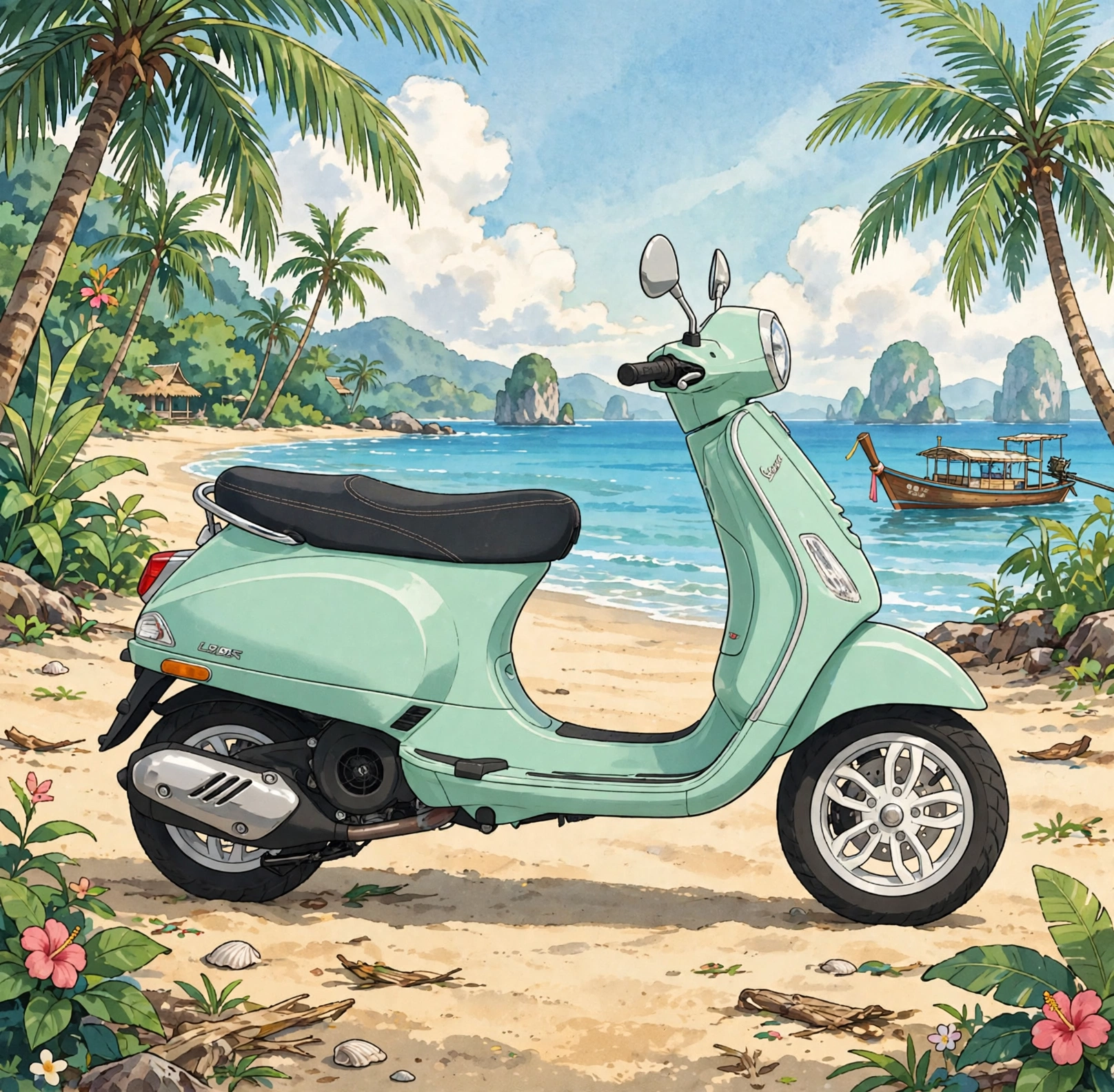
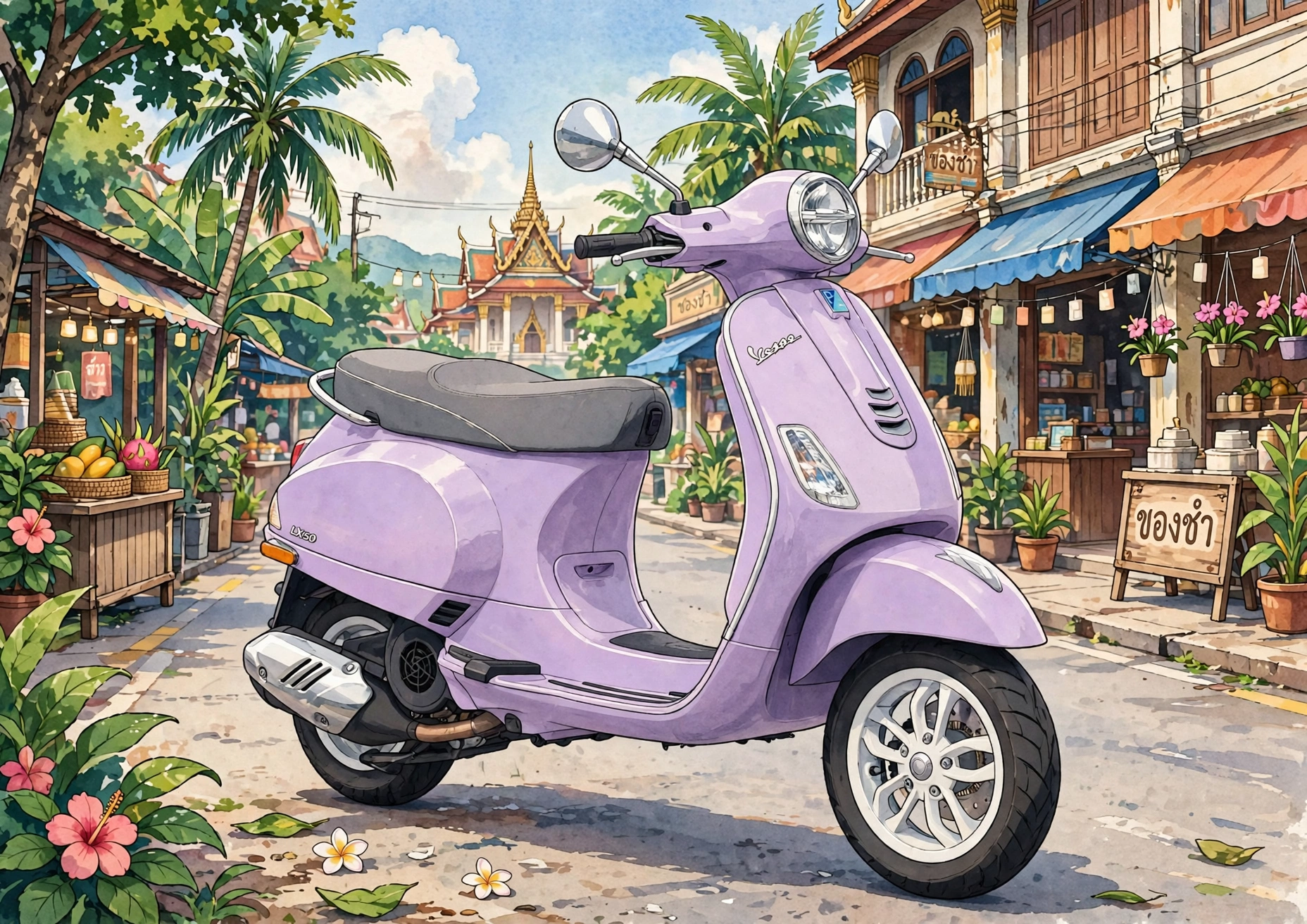
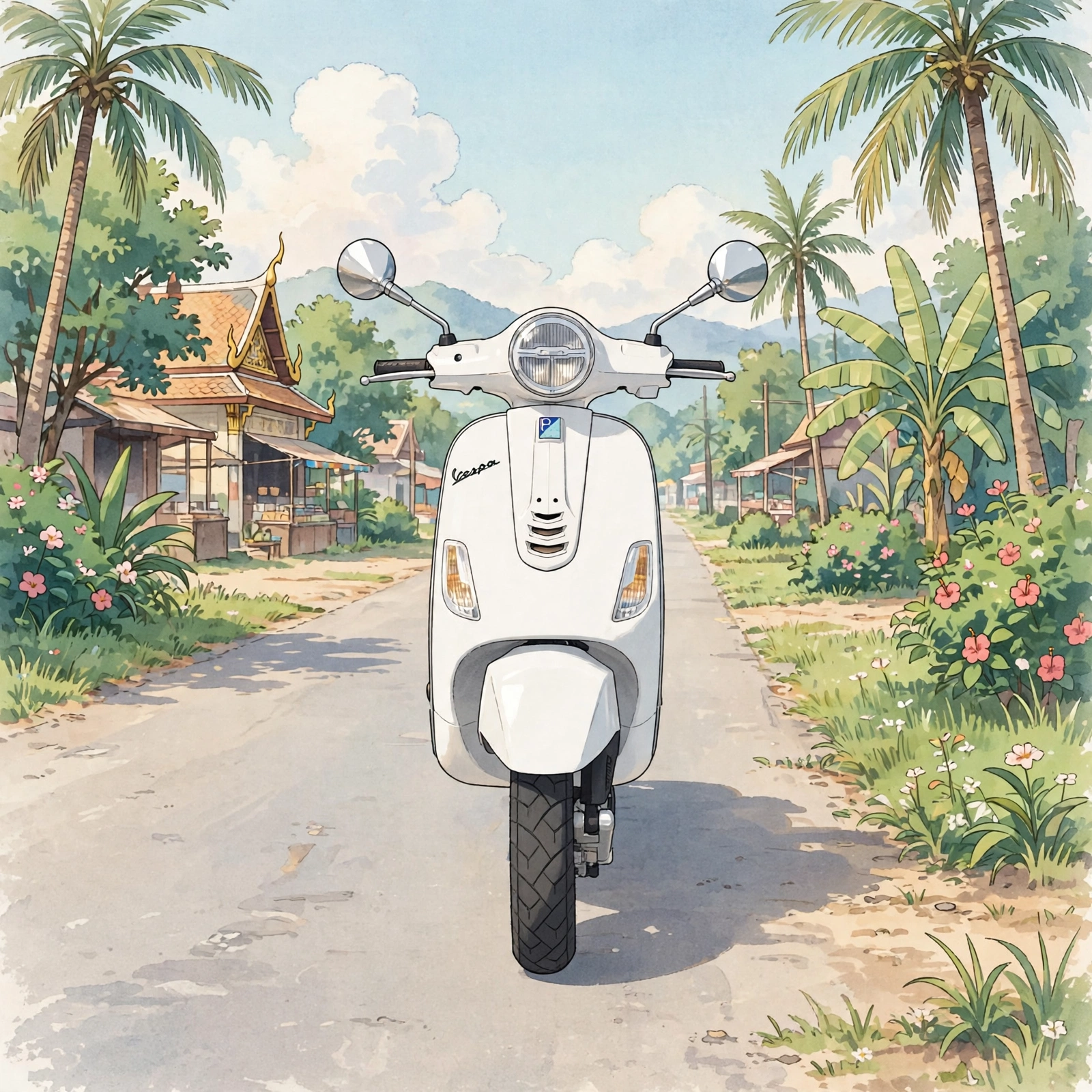
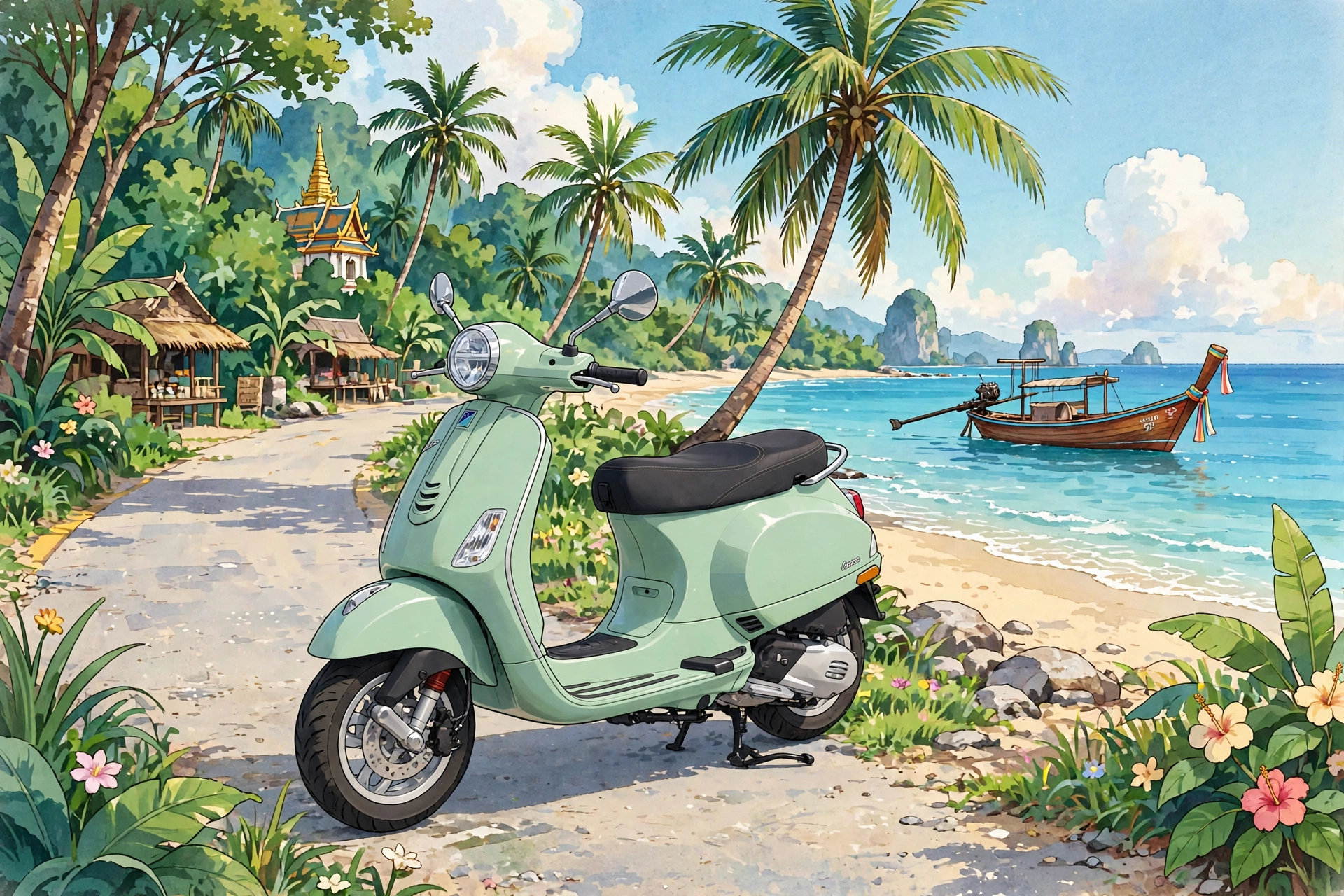
Vespa LX 125 i-Get ABS (2026): The Return of an Italian Icon with Modern Safety and Classic Style
The 2026 Vespa LX 125 i-Get ABS marks the return of one of Vespa’s most recognisable small-frame scooters to the Thai market. Combining traditional Italian styling, a compact 124cc fuel-injected engine, automatic transmission and newly introduced ABS braking, the latest LX aims to appeal to riders who want an elegant everyday scooter without sacrificing practicality and safety.
The LX has always occupied an interesting position in the Vespa family. It is smaller and more accessible than models such as the Primavera and GTS, yet retains the classic design elements that have made Vespa one of the world’s most recognisable scooter brands. Its rounded headlight, sculpted steel bodywork, minimalist proportions and distinctive front suspension give it an identity that is difficult to confuse with conventional Japanese scooters.
For its 2026 return in Thailand, Vespa has retained the familiar LX design philosophy while introducing two important improvements: an anti-lock braking system (ABS) and a redesigned, lower-profile seat. These changes make the scooter more relevant to contemporary urban riders, particularly those who regularly encounter congested streets, uneven road surfaces and sudden braking situations.
With an introductory price of ฿79,900, compared with its regular price of ฿84,900, the LX 125 i-Get ABS also enters the market with a more accessible price positioning than many larger Vespa models.
This review examines its engine, performance, design, braking system, suspension, comfort, everyday practicality, ownership costs and position against other 125cc scooters, including the Vespa Primavera.
1. Overview: The Return of the Vespa LX 125
The Vespa LX has long represented the more compact and approachable side of the Vespa product range. Its name is associated with a traditional small-frame scooter that combines everyday usability with the visual character of classic Italian motorcycling.
The 2026 Vespa LX 125 i-Get ABS continues this philosophy. Rather than introducing an entirely new design, Vespa has concentrated on updating the features that matter to modern riders.
The most significant changes include:
- ABS braking: An important safety improvement, introduced to the Thai LX 125 range for this latest version.
- Redesigned seat: A lower and more ergonomic seat profile intended to improve rider confidence when stopping.
- 124cc i-Get engine: A fuel-injected, air-cooled, four-stroke engine designed for everyday urban riding.
- Compact dimensions: A relatively narrow body and short wheelbase for manoeuvring through city traffic.
- Four exterior colours: A selection of contemporary colours that complement the scooter’s retro-inspired design.
- Competitive introductory pricing: A launch price of ฿79,900.
The new model is particularly interesting because it combines the traditional Vespa ownership experience with features that have become increasingly important in the modern scooter market.
Key highlights
| Feature | Vespa LX 125 i-Get ABS |
|---|---|
| Model year | 2026 |
| Market | Thailand |
| Engine | 124cc i-Get |
| Engine configuration | Single-cylinder, 4-stroke, 3-valve |
| Maximum power | 7.9 kW |
| Maximum torque | 10.9 Nm |
| Transmission | Automatic CVT |
| Front brake | 200mm disc with ABS |
| Rear brake | 110mm drum |
| Seat height | 781mm |
| Weight | 120kg |
| Fuel tank | 7.5 litres |
| Regular price | ฿84,900 |
| Introductory price | ฿79,900 |
The specifications above refer to the Thai-market model, using the official Vespa Thailand product information and its three-page product leaflet as the principal references.
2. Italian Design and Retro-Inspired Styling
Design has always been one of Vespa’s strongest selling points. Unlike scooters that concentrate primarily on aggressive styling or sporty bodywork, the LX follows a more timeless design direction.
Its appearance is influenced by the traditional Vespa scooters that established the brand’s identity after the Second World War.
2.1 Classic rounded headlight
The front headlight is one of the LX’s most recognisable features.
Its rounded shape gives the scooter a friendly, traditional appearance, contrasting with the angular LED lighting commonly found on newer Japanese and Taiwanese scooters.
The headlight design also reinforces the LX’s connection with the historic Vespa family.
2.2 Sculpted steel bodywork
Vespa is famous for its steel monocoque-style body construction, which forms an important part of its design heritage.
The LX retains the familiar sculpted body panels, curved front leg shield and integrated rear bodywork.
This creates a cohesive appearance rather than the collection of separate plastic panels commonly found on many mass-market scooters.
The steel construction also contributes to the distinctive character of Vespa ownership. However, it is important to remember that steel bodywork can be more expensive to repair when damaged or dented than replaceable plastic panels.
2.3 Compact proportions
The LX measures:
- Length: 1,770mm
- Width: 705mm
- Wheelbase: 1,280mm
These relatively compact dimensions make the scooter suitable for urban environments.
Its narrow overall width is particularly useful when manoeuvring through stationary traffic or parking in restricted spaces.
2.4 Retro details and contemporary touches
The LX combines traditional styling with modern mechanical equipment.
Its rounded headlight, elegant body proportions and classic Vespa silhouette are complemented by the electronic fuel injection system and ABS braking.
This balance between traditional appearance and modern functionality is central to the LX’s appeal.
2.5 Four colour options
The 2026 Thailand-market Vespa LX 125 i-Get ABS is available in four colours.
Lilac Euforico
A distinctive lilac finish that gives the LX a fashionable and expressive appearance. It is particularly suitable for riders who want something different from traditional scooter colours.
White Innocenza
A clean and elegant white finish. It complements the LX’s rounded bodywork and classic Italian styling.
Green Amabile
A distinctive green colour that emphasises the scooter’s fashionable and traditional character.
Grey Materia
A more understated option for riders who prefer a contemporary and sophisticated appearance.
The four colours provide different interpretations of the same classic design, ranging from fashionable and expressive to understated and elegant.
3. Engine and Technical Specifications
At the heart of the 2026 LX is Vespa’s i-Get engine technology.
The engine is designed to provide smooth, predictable power delivery and reasonable operating efficiency rather than outright performance.
For a compact scooter intended primarily for urban transportation, these characteristics are appropriate.
3.1 Engine configuration
The LX uses a 124cc, single-cylinder, four-stroke engine with three valves.
Its main characteristics include:
- Single-cylinder configuration
- Four-stroke combustion cycle
- Three-valve cylinder head
- Electronic fuel injection
- Forced-air cooling
- Automatic CVT transmission
The i-Get name refers to Piaggio’s family of engines developed to improve efficiency, refinement and everyday usability.
Electronic fuel injection provides more controlled fuel delivery than a conventional carburettor system.
It also helps the engine adapt to different operating conditions, including cold starts, changing temperatures and variations in engine load.
3.2 Engine performance
The official Thai-market specifications are:
| Engine specification | Figure |
|---|---|
| Engine displacement | 124cc |
| Engine type | Single-cylinder, 4-stroke |
| Valve configuration | 3 valves |
| Cooling system | Forced air |
| Fuel system | Electronic injection |
| Maximum power | 7.9 kW @ 7,250 rpm |
| Maximum torque | 10.9 Nm @ 5,750 rpm |
| Transmission | Automatic CVT |
The maximum power of 7.9 kW is approximately 10.7 metric horsepower (PS).
The maximum torque of 10.9 Nm is delivered at 5,750 rpm.
These figures position the LX as a conventional premium 125cc urban scooter rather than a high-performance sports scooter.
3.3 What is i-Get technology?
i-Get stands for Italian Green Experience Technology, a family of engine technologies developed by Piaggio.
Its design objectives include:
- Improving combustion efficiency.
- Optimising fuel injection.
- Reducing mechanical losses.
- Improving engine refinement.
- Supporting lower emissions.
- Providing predictable everyday performance.
The electronically controlled fuel injection system helps deliver fuel according to engine operating requirements.
This is particularly useful for scooters frequently operated in stop-and-go traffic.
3.4 Cooling system
The LX uses forced-air cooling rather than liquid cooling.
A cooling fan circulates air around the engine to help manage operating temperature.
Air cooling offers several practical advantages:
- Fewer cooling-system components.
- No radiator coolant to maintain.
- No radiator hoses or water pump.
- Relatively straightforward cooling-system maintenance.
The trade-off is that air-cooled engines generally have less precise temperature regulation than liquid-cooled engines under demanding operating conditions.
For the LX’s intended urban use, its air-cooled configuration is a traditional and practical solution.
3.5 Automatic CVT transmission
The engine is connected to an automatic continuously variable transmission (CVT).
Unlike a conventional motorcycle gearbox, the CVT does not require the rider to manually select gears.
Acceleration is controlled through the throttle.
This makes the LX easy to operate, especially for people transitioning from cars or other automatic scooters.
The CVT automatically changes its transmission ratio according to engine speed and load.
Its main advantages include:
- Simple operation.
- Smooth acceleration.
- No manual clutch operation.
- Convenient stop-and-go riding.
- Reduced workload in congested traffic.
The transmission is particularly appropriate for Bangkok and other Thai cities, where traffic conditions frequently involve repeated acceleration and braking.
4. Engine Performance and Riding Characteristics
With approximately 10.7 PS and 10.9 Nm of torque, the LX 125 is designed for everyday transportation rather than high-speed touring.
Its engine output should be sufficient for normal urban commuting, including travelling through city streets, accelerating away from traffic lights and maintaining typical urban traffic speeds.
4.1 Acceleration
The automatic CVT transmission makes acceleration straightforward.
The rider simply opens the throttle, allowing the transmission to adjust its ratio automatically.
The relatively modest engine capacity means that acceleration should be viewed in the context of a 125cc scooter.
It is not designed to deliver the rapid acceleration of larger 150cc, 160cc or 180cc scooters.
However, its power characteristics should be suitable for ordinary urban use.
4.2 Urban riding
The LX’s compact dimensions and automatic transmission are particularly useful in congested environments.
Its relatively narrow body helps the rider position the scooter within limited spaces, while its manageable weight should make low-speed manoeuvring less demanding.
4.3 Highway performance
The LX is primarily an urban scooter.
Although a 125cc engine can be used on faster roads where legally permitted, the modest power output means that riders should not expect strong acceleration at higher speeds.
Long-distance highway riding, particularly with a passenger or substantial luggage, will place greater demands on the engine.
For regular intercity travel, a larger-capacity scooter may be more appropriate.
4.4 Riding with a passenger
The LX can be used for two-up riding, but performance will naturally be affected by the combined weight of the rider, passenger and luggage.
Acceleration and hill-climbing ability will be reduced compared with riding alone.
For occasional passenger journeys around town, this should be manageable, but frequent two-up commuting may justify considering a larger scooter.
5. ABS Braking System and Safety Features
One of the most important improvements to the 2026 LX is the introduction of ABS.
The Thai-market LX 125 now combines a front disc brake with an anti-lock braking system, providing an additional level of braking control.
5.1 What is ABS?
ABS stands for Anti-lock Braking System.
It is an electronic safety system designed to prevent a wheel from locking under hard braking.
When the system detects that a wheel is approaching lock-up, it modulates braking pressure to help maintain wheel rotation.
This is particularly useful when a rider needs to brake suddenly on slippery or low-grip surfaces.
In Thailand, where sudden tropical rain can make roads slippery, ABS is a valuable addition.
It can help reduce the risk of losing front-wheel control during emergency braking.
However, ABS cannot overcome the physical limitations of tyre grip or compensate for excessive speed and unsafe riding.
5.2 Front disc brake
The LX uses a 200mm front disc brake with ABS.
The front brake is particularly important because a substantial proportion of a motorcycle’s braking force is generated at the front wheel during deceleration.
The addition of ABS helps improve braking stability in emergency situations.
5.3 Rear drum brake
The rear wheel uses a 110mm drum brake.
Although disc brakes are generally preferred for their heat dissipation and braking consistency under demanding conditions, a drum brake remains a practical solution for a small urban scooter.
It also provides a relatively enclosed braking mechanism.
The combination of a front disc brake and rear drum brake helps maintain a balance between cost, simplicity and everyday braking performance.
5.4 Braking specification
| Component | Specification |
|---|---|
| Front brake | 200mm disc |
| Front ABS | Yes |
| Rear brake | 110mm drum |
| Front tyre | 110/70-11 tubeless |
| Rear tyre | 120/70-10 tubeless |
5.5 ABS in Thai riding conditions
Thai roads present a variety of braking challenges.
These include:
- Wet roads during the rainy season.
- Painted road markings.
- Metal manhole covers.
- Loose gravel.
- Uneven road surfaces.
- Sudden braking in congested traffic.
ABS is particularly valuable when emergency braking is required on surfaces where the front wheel might otherwise lock.
The system is therefore a meaningful improvement over an otherwise similar scooter without ABS.
6. Suspension, Wheels and Handling
Vespa has traditionally used a distinctive single-sided front suspension design.
The LX continues this engineering approach, giving it a mechanical identity that differs from many conventional scooter designs.
6.1 Front suspension
The front suspension uses a single-arm arrangement with a helical spring and hydraulic shock absorber.
This configuration is a familiar feature of Vespa scooters.
It provides suspension travel to absorb road irregularities while maintaining the characteristic Vespa front-end design.
6.2 Rear suspension
The rear suspension uses a hydraulic shock absorber with four-position preload adjustment.
This allows the suspension preload to be adjusted according to loading requirements.
For example, a different preload setting may be appropriate when carrying a passenger compared with riding alone.
However, preload adjustment does not change the spring rate itself.
6.3 Wheel and tyre specifications
The LX uses relatively small-diameter wheels, which contribute to its compact proportions.
| Position | Tyre specification |
|---|---|
| Front | 110/70-11 tubeless |
| Rear | 120/70-10 tubeless |
The tubeless tyre configuration offers practical advantages, including easier puncture management compared with traditional inner-tube arrangements.
The relatively small wheels help keep the scooter compact and manoeuvrable.
However, riders should remember that smaller wheels can be more sensitive to potholes, sharp road edges and larger surface irregularities than scooters with larger-diameter wheels.
6.4 Urban handling
The 1,280mm wheelbase is relatively short, making the LX suitable for manoeuvring through urban environments.
Its 120kg weight is also reasonable for a steel-bodied Vespa.
Together, these characteristics make it a practical option for riders who want a premium scooter that remains relatively easy to handle.
6.5 Handling limitations
The LX is not an adventure scooter or a sports machine.
Its relatively small wheels, modest engine and urban-oriented suspension are better suited to paved roads than rough terrain.
Riders should also take care when crossing deep potholes, uneven surfaces and broken road edges.
7. Riding Comfort and Ergonomics
Vespa LX 2026 Motorcycle Price, Find Reviews, Specs | ZigWheels Thailand
Comfort is an important consideration for a scooter intended for daily transportation.
One of the main updates to the latest LX is its redesigned seat.
Vespa has adjusted the seat profile to make it lower and more closely shaped to the rider’s body.
7.1 Seat height
The official seat height is:
781mm
This is an important specification because seat height influences how confidently riders can place their feet on the ground when stopping.
The redesigned seat aims to make the scooter more accessible to a broader range of riders.
However, actual ground reach also depends on:
- Rider height.
- Leg length.
- Inseam measurement.
- Seat width.
- Riding posture.
A 781mm seat height does not automatically mean every rider will be able to place both feet flat on the ground.
A showroom test is recommended.
7.2 Riding position
The LX has a traditional step-through scooter layout.
This makes mounting and dismounting relatively straightforward compared with conventional motorcycles.
The upright riding position is suitable for urban journeys and everyday use.
7.3 Comfort for longer journeys
The LX should be comfortable for typical city journeys, shopping trips and commuting.
However, the compact dimensions and relatively small wheels mean that comfort over rough roads and long distances will depend heavily on road conditions and rider expectations.
It is worth taking a test ride over the type of roads that will form part of your regular journey.
7.4 Passenger comfort
The scooter’s compact proportions mean that passenger accommodation is not as spacious as on larger touring-oriented scooters.
For occasional passenger use, it should be adequate, but riders who frequently travel with another person should compare the LX with larger alternatives.
8. Urban Commuting and Everyday Practicality
The LX’s strongest application is urban transportation.
It combines manageable dimensions, automatic transmission and relatively modest engine capacity with a distinctive appearance.
8.1 Bangkok and city commuting
Bangkok presents challenging traffic conditions for motorcyclists.
Congestion, narrow streets, frequent traffic lights and limited parking space all influence scooter selection.
The LX is well suited to this environment because of its compact size.
Its automatic CVT transmission also makes repeated stopping and starting less tiring.
8.2 Parking
At 1,770mm long and 705mm wide, the LX has relatively compact dimensions.
This should make it easier to park in smaller spaces than larger scooters.
Its 120kg weight is also reasonable for a scooter with a steel body.
8.3 Shopping and daily errands
The LX can be used for shopping, short trips and general daily transportation.
However, prospective buyers should inspect the actual storage arrangement and confirm whether their preferred helmet fits under the seat.
The official specifications cited here do not provide a verified under-seat storage volume.
It would therefore be inappropriate to assume that every full-face helmet will fit.
8.4 Rainy-season commuting
Thailand’s rainy season makes braking performance and tyre condition particularly important.
The addition of ABS improves the LX’s safety equipment, although riders should still reduce speed and increase following distances on wet roads.
A quality rain suit, waterproof luggage and appropriate riding equipment remain worthwhile purchases.
8.5 Daily usability assessment
| Usage | Assessment |
|---|---|
| City commuting | Very suitable |
| Short urban journeys | Very suitable |
| Shopping and errands | Suitable |
| Occasional passenger use | Suitable |
| Long-distance touring | Less suitable |
| Regular highway travel | Limited |
| Rough-road riding | Not its intended purpose |
9. Fuel Economy and Running Costs
Fuel efficiency is an important part of scooter ownership.
The LX uses a relatively small 124cc engine with electronic fuel injection and forced-air cooling.
This engine configuration is designed for everyday operating efficiency.
However, the official three-page Thai leaflet does not provide a verified fuel-consumption figure in kilometres per litre.
It is therefore better not to publish an unverified fuel-economy claim.
9.1 Fuel tank capacity
The official fuel tank capacity is:
7.5 litres (±0.5 litres)
The relatively small tank is appropriate for a compact urban scooter.
Actual riding range will depend on fuel consumption, riding conditions and available fuel capacity.
For example, traffic congestion, frequent acceleration, passenger weight and high-speed riding can all affect consumption.
9.2 Fuel costs
The following table illustrates how to calculate fuel expenditure. These are examples, not measured LX fuel-consumption results.
| Average consumption | Fuel cost at ฿35/litre |
|---|---|
| 30 km/l | ฿1.17/km |
| 35 km/l | ฿1.00/km |
| 40 km/l | ฿0.88/km |
| 45 km/l | ฿0.78/km |
| 50 km/l | ฿0.70/km |
The actual fuel cost should be calculated using the scooter’s measured consumption and the prevailing petrol price.
9.3 Routine maintenance
The i-Get engine requires periodic servicing to maintain reliability.
Typical maintenance items include:
- Engine oil replacement.
- Spark plug inspection and replacement.
- Air filter inspection.
- CVT belt inspection and replacement.
- Variator and clutch inspection.
- Brake pad and brake shoe inspection.
- Tyre pressure and tread inspection.
- Battery inspection.
- Fuel and ignition system checks.
The actual maintenance intervals and recommended lubricants should follow the official Thailand owner’s manual and dealer service schedule.
9.4 CVT maintenance
The CVT transmission is convenient, but it contains wearing components.
The drive belt, rollers and clutch components require periodic inspection.
A worn CVT belt can affect acceleration and transmission performance.
Owners should follow the manufacturer’s recommended replacement schedule rather than waiting for the belt to fail.
9.5 Tyres and brakes
Tyres are particularly important for a small scooter with ABS.
ABS cannot create additional tyre grip, so maintaining suitable tyre pressure and replacing worn tyres are essential.
The front disc brake and rear drum brake should also be inspected periodically.
9.6 Ownership cost considerations
The LX is a premium European-brand scooter, so buyers should not automatically expect maintenance costs to match those of lower-priced mass-market Japanese scooters.
Before purchasing, it is sensible to obtain quotations for:
- Routine servicing.
- CVT belt replacement.
- Brake components.
- Tyre replacement.
- Battery replacement.
- Accident repairs and body panels.
The availability and pricing of genuine Vespa parts should also be considered.
10. Thailand Pricing and Promotions
The 2026 Vespa LX 125 i-Get ABS has an attractive launch price for a premium European-style scooter.
According to the official Vespa Thailand product page, the normal retail price is ฿84,900, while the model is being promoted at a special introductory price.
10.1 Official Thailand pricing
2026 VESPA LX 125 i-Get ABS
฿79,900
Introductory promotional price
Regular price
฿84,900
Introductory price
฿79,900
Price reduction
฿5,000
Prices include VAT. The official product page also refers to a Welcome Kit. Promotional conditions and availability should be confirmed with an authorised dealer.
The introductory price represents a reduction of approximately 5.9% from the regular price.
For buyers considering their first Vespa, this makes the LX an interesting entry point into the brand.
10.2 Launch promotions
The launch campaign reported in Thailand includes additional benefits:
- Welcome Kit.
- One-year VESPA SERVICE PLUS (VSP) maintenance package.
- 10% discount on accessories.
- Promotional gifts.
These additional benefits were reported in the November 2026 launch coverage. Buyers should confirm the exact package, included labour and parts, service conditions and expiry date with their dealer before signing a purchase agreement.
10.3 Financing
Monthly financing costs depend on several factors:
- Down payment.
- Financing period.
- Interest rate.
- Credit approval.
- Dealer promotions.
- Insurance and registration costs.
Buyers should compare the total repayment amount rather than focusing only on the advertised monthly instalment.
A lower monthly payment may simply reflect a longer financing period.
10.4 Additional ownership expenses
The purchase price is not the only expense.
A complete ownership budget should include:
| Expense | Consideration |
|---|---|
| Registration | Confirm dealer quotation |
| Compulsory insurance | Required under Thai regulations |
| Voluntary insurance | Recommended protection |
| Fuel | Depends on usage |
| Engine oil | Periodic replacement |
| CVT maintenance | Belt and transmission components |
| Tyres | Periodic replacement |
| Brake servicing | Pads, shoes and brake fluid |
| Battery | Replacement when necessary |
| Accessories | Optional |
For a premium scooter, it is worth budgeting for comprehensive insurance and genuine replacement parts.
11. Vespa LX Heritage: A Classic Scooter Returns
Vespa’s history stretches back to 1946, when the original Vespa scooter was introduced in Italy.
The brand became famous for its distinctive step-through construction, enclosed bodywork and practical approach to personal mobility.
Over the decades, Vespa developed a broad family of scooters that combined transportation with Italian design and lifestyle appeal.
The LX became one of the modern interpretations of this traditional design philosophy.
Its name and styling are associated with the smaller, more accessible side of the Vespa range.
11.1 Vespa’s post-war origins
The first Vespa was introduced in 1946 by Piaggio.
Its unusual design, with a protective front body, step-through layout and enclosed mechanical components, offered an alternative to conventional motorcycles.
The scooter quickly became associated with Italian culture and post-war mobility.
11.2 The modern Vespa LX
The LX helped continue this tradition in the modern scooter market.
It offered a smaller and more approachable alternative to larger Vespa models while retaining the traditional appearance.
Its rounded headlight, compact proportions and sculpted bodywork became familiar elements of the modern Vespa design language.
11.3 The 2026 return
The 2026 Thai-market LX 125 i-Get ABS is an interesting continuation of that heritage.
Rather than replacing the classic styling with an entirely new design, Vespa has preserved the familiar visual identity.
The addition of ABS and the redesigned seat demonstrates how a traditional model can be updated to address modern riding requirements.
This is an important part of the LX’s appeal: it looks familiar but incorporates more contemporary safety equipment.
12. Comparison with Other 125cc Scooters
The 125cc scooter segment in Thailand is competitive.
Japanese manufacturers offer a wide range of scooters that focus on fuel efficiency, affordability and everyday practicality.
The Vespa LX takes a slightly different approach by emphasising Italian styling, brand identity and premium ownership appeal.
12.1 Vespa LX 125 versus Japanese scooters
| Category | Vespa LX 125 i-Get ABS | Typical Japanese 125cc scooter |
|---|---|---|
| Design | Italian retro styling | Modern or retro-modern |
| Engine | 124cc i-Get | Model-dependent |
| Transmission | Automatic CVT | Usually automatic CVT |
| Fuel system | Electronic injection | Model-dependent |
| Braking | Front disc with ABS, rear drum | Model-dependent |
| Body construction | Steel Vespa body | Commonly plastic body panels |
| Brand positioning | Premium lifestyle | Mass-market to premium |
| Maintenance costs | Potentially higher | Often more affordable |
| Resale considerations | Brand and condition dependent | Model and demand dependent |
The Vespa’s main advantage is its styling and distinctive character.
Japanese scooters may offer stronger value in terms of equipment, practicality, dealer accessibility or running costs, depending on the particular model.
12.2 Vespa LX versus Honda Scoopy
The Honda Scoopy is a natural alternative for riders who like fashionable, retro-inspired scooters.
The Scoopy generally focuses on affordable urban mobility and lightweight everyday usability.
The LX is positioned more as a premium lifestyle scooter, with its steel bodywork, Italian design and Vespa brand identity.
The choice depends on whether the buyer prioritises value and practicality or the distinctive Vespa ownership experience.
12.3 Vespa LX versus Yamaha Grand Filano
The Yamaha Grand Filano is another interesting competitor.
It combines retro styling with modern convenience features and a practical urban-oriented design.
The Grand Filano appeals to buyers who want a fashionable scooter with everyday functionality.
The LX offers a more traditional Vespa appearance and a different ownership proposition.
12.4 Vespa LX versus Honda Giorno
The Honda Giorno is another model worth considering for buyers interested in classic scooter styling.
Both scooters appeal to riders who appreciate rounded bodywork and fashionable colours.
However, the LX has the advantage of Vespa’s distinctive Italian design heritage and steel-bodied construction.
The precise equipment and price comparison should be made against the specific Thai-market Giorno version available at the time of purchase.
13. Comparison with Vespa Primavera 125
Vespa Primavera 125 Euro 5+ | Vespa scooter configurator | Vespa UK
One of the most interesting comparisons within the Vespa family is between the LX and Primavera.
Both models share the traditional Vespa design philosophy, but they have different positioning and proportions.
The LX is intended to be the more compact and accessible member of the family.
The Primavera is a more established, larger and more premium model.
13.1 Design differences
The LX has a relatively compact body and traditional small-scooter proportions.
The Primavera features a more substantial overall appearance, with larger body dimensions and a more contemporary interpretation of classic Vespa styling.
Both retain rounded headlights and traditional Vespa design elements.
13.2 Size and practicality
The LX measures 1,770mm in length and 705mm in width.
Its wheelbase is 1,280mm.
These dimensions make it a relatively compact scooter.
The Primavera family has generally offered a larger chassis and more substantial proportions, although exact dimensions depend on the model year and engine version.
13.3 Thailand pricing comparison
The official Vespa Thailand Primavera range currently displays prices starting from ฿136,900, although the listed range includes different engine sizes and variants.
The LX’s introductory price of ฿79,900 is therefore significantly lower.
This is not a like-for-like 125cc comparison, since the currently displayed Thai Primavera lineup is not simply a direct 125cc equivalent.
Nevertheless, it demonstrates the LX’s position as a more accessible entry into the Vespa family.
13.4 Which should you choose?
| Consideration | LX 125 i-Get ABS | Primavera |
|---|---|---|
| Positioning | Entry-level compact Vespa | Larger, more premium Vespa |
| Design | Traditional compact retro | More modern classic |
| Dimensions | Smaller | Generally larger |
| Engine | Thai 124cc i-Get | Depends on variant |
| Price | ฿79,900 introductory | Thai range starts at ฿136,900 |
| Main appeal | Accessibility and classic style | More substantial design and premium positioning |
The LX makes sense for riders who want a traditional Vespa without spending as much as they would on a larger model.
The Primavera is worth considering for buyers who prefer its larger proportions and are comfortable with the additional purchase cost.
14. Maintenance, Reliability and Long-Term Ownership
A scooter’s purchase price is only one part of the ownership equation.
Long-term reliability depends on proper servicing, suitable riding habits and the availability of replacement parts.
14.1 Engine reliability
The 124cc i-Get engine uses established technologies:
- Four-stroke combustion.
- Electronic fuel injection.
- Air cooling.
- Three-valve cylinder head.
- Automatic CVT transmission.
These are conventional features in modern small-capacity scooters.
The engine is intended for regular everyday operation rather than high-performance use.
Following the manufacturer’s service schedule is essential to preserving reliability.
14.2 Engine oil
Engine oil should be replaced at the intervals recommended in the owner’s manual.
The correct oil specification and viscosity should be confirmed with an authorised Vespa service centre.
Regular oil changes help reduce friction and protect internal engine components.
14.3 CVT transmission
The CVT system should be inspected periodically.
Its belt, rollers and clutch components are subject to normal wear.
Poor maintenance can result in reduced acceleration, vibration or abnormal transmission noise.
14.4 Braking system
The ABS-equipped front braking system introduces additional electronic components compared with a conventional non-ABS brake setup.
Owners should pay attention to warning lights and have any ABS-related faults diagnosed by a qualified technician.
Brake fluid and mechanical braking components should be serviced according to the manufacturer’s instructions.
14.5 Bodywork and corrosion
The Vespa steel body is one of its most distinctive characteristics.
However, scratches and paint damage should be repaired promptly to minimise the risk of corrosion.
Owners living in coastal areas or regularly riding in heavy rain should pay particular attention to cleaning and protecting exposed metal surfaces.
14.6 Dealer support and genuine parts
Before purchasing, prospective owners should check the location of authorised Vespa service centres.
This is especially important for riders living outside major Thai cities.
Ask the dealer about:
- Scheduled servicing costs.
- Parts availability.
- Warranty conditions.
- Accident repair arrangements.
- ABS diagnostic capability.
- VSP maintenance coverage.
The launch maintenance package can make the first year of ownership more attractive, but its exact coverage should be confirmed in writing.
15. Pros and Cons
Advantages
- Classic Italian Vespa design.
- Attractive and distinctive colour options.
- Newly introduced ABS braking for the Thai LX 125.
- Redesigned, lower-profile seat.
- Compact dimensions suitable for urban commuting.
- Manageable 120kg vehicle weight.
- Fuel-injected 124cc i-Get engine.
- Convenient automatic CVT transmission.
- Four-position adjustable rear suspension preload.
- Competitive introductory price of ฿79,900.
- One-year VSP maintenance promotion reported at launch.
Disadvantages
- Modest engine output compared with 150cc and 160cc competitors.
- Rear drum brake rather than a rear disc.
- Relatively small wheels require care over potholes.
- Air-cooled engine is less suitable for sustained demanding use than some liquid-cooled alternatives.
- Limited suitability for regular highway touring.
- Premium-brand maintenance and body repairs may cost more.
- Fuel consumption has no verified official Thailand figure in the reviewed leaflet.
- Storage capacity should be checked physically before purchase.
- Smaller chassis may be less comfortable for larger riders and frequent two-up journeys.
16. Who Should Buy the Vespa LX 125 i-Get ABS?
The LX is aimed at riders who value design, manageable dimensions and convenient urban transportation.
It is particularly attractive to people who want the Vespa experience without moving into the larger and more expensive models.
16.1 First-time Vespa buyers
The LX is an interesting starting point for people entering the Vespa family.
Its compact dimensions and automatic transmission make it approachable.
The introductory price also makes it more accessible than larger Vespa models.
16.2 Urban commuters
Riders travelling regularly through Bangkok, Chiang Mai, Phuket and other Thai cities may appreciate the scooter’s compact proportions.
The addition of ABS is especially relevant for riders who encounter wet roads and unpredictable traffic conditions.
16.3 Lifestyle-oriented riders
Some buyers choose a scooter based on more than transportation.
The LX offers distinctive styling, fashionable colour options and a recognisable brand identity.
For riders who enjoy the visual character of classic Italian scooters, these qualities may be just as important as engine performance.
16.4 Riders who prefer smaller scooters
Not everyone wants a large 160cc or 180cc scooter.
The LX offers a relatively compact alternative for riders who mainly travel short distances and prefer a smaller machine.
16.5 Who should consider something else?
The LX may not be the best option for:
- Riders who regularly travel long distances.
- People who frequently carry passengers and heavy luggage.
- Buyers who prioritise maximum fuel economy.
- Riders who need substantial storage capacity.
- People who want strong highway acceleration.
- Buyers whose main priority is the lowest possible maintenance cost.
In these cases, larger Japanese scooters or more spacious Vespa models may be worth considering.
17. Buying Assessment: Is the 2026 Vespa LX 125 Worth ฿79,900?
The return of the LX 125 is an interesting development for Vespa Thailand.
At ฿79,900, the scooter offers an opportunity to purchase a new Vespa at a relatively accessible price. More importantly, the latest version includes ABS and an updated seat design, addressing two practical considerations for everyday riders.
The question is whether its combination of styling, equipment and performance represents good value.
17.1 What makes the LX attractive?
There are three particularly compelling reasons to consider this scooter.
First, its design. The LX has a distinctive appearance that differentiates it from conventional Japanese scooters. Its rounded headlight, sculpted bodywork and classic proportions give it a timeless character.
Second, its safety equipment. The introduction of ABS is a meaningful improvement. It is particularly relevant in Thailand, where heavy rain and unpredictable traffic can create challenging braking situations.
Third, its price. The introductory price of ฿79,900 is considerably more accessible than the currently advertised starting price of the Vespa Primavera range.
17.2 What should buyers consider carefully?
The LX is not designed to compete with larger scooters in terms of performance.
Its 124cc engine produces approximately 10.7 PS, which is adequate for urban commuting but relatively modest for regular highway journeys.
Its compact size also means that buyers should carefully evaluate passenger comfort and storage requirements.
Finally, Vespa ownership can involve higher maintenance and repair expenses than some mainstream Japanese alternatives.
17.3 Buying recommendation
| Buyer profile | Recommendation |
|---|---|
| First-time Vespa owner | Excellent candidate |
| Urban commuter | Recommended |
| Fashion and lifestyle enthusiast | Highly recommended |
| Short-distance daily rider | Recommended |
| Regular highway rider | Consider a larger scooter |
| Frequent two-up rider | Test larger alternatives |
| Budget-focused buyer | Compare Japanese scooters |
| Classic scooter enthusiast | Highly recommended |
Overall assessment
The 2026 Vespa LX 125 i-Get ABS is a compelling entry-level premium scooter for riders who value Italian styling, urban manoeuvrability and improved braking safety.
It is not the fastest or most technologically elaborate scooter in the 125cc segment, but it does not need to be. Its appeal lies in its character, proportions, convenience and distinctive Vespa identity.
At the introductory price of ฿79,900, it deserves serious consideration among buyers looking for a fashionable and practical city scooter.
18. Complete Technical Specifications
The following table consolidates the specifications of the 2026 Thailand-market Vespa LX 125 i-Get ABS based on the official product leaflet.
Engine and transmission
| Specification | Details |
|---|---|
| Engine type | i-Get, single-cylinder |
| Engine cycle | Four-stroke |
| Valve configuration | Three valves |
| Displacement | 124cc |
| Maximum power | 7.9 kW @ 7,250 rpm |
| Maximum torque | 10.9 Nm @ 5,750 rpm |
| Fuel system | Electronic fuel injection |
| Cooling system | Forced-air cooling |
| Transmission | Automatic CVT |
Chassis and suspension
| Specification | Details |
|---|---|
| Frame | Vespa steel body construction |
| Front suspension | Single arm with helical spring and double-acting hydraulic shock absorber |
| Rear suspension | Hydraulic shock absorber |
| Rear suspension adjustment | Four-position preload adjustment |
| Front tyre | 110/70-11 tubeless |
| Rear tyre | 120/70-10 tubeless |
Brakes
| Specification | Details |
|---|---|
| Front brake | 200mm disc |
| Front ABS | Yes |
| Rear brake | 110mm drum |
Dimensions and capacity
| Specification | Details |
|---|---|
| Overall length | 1,770mm |
| Overall width | 705mm |
| Wheelbase | 1,280mm |
| Seat height | 781mm |
| Vehicle weight | 120kg |
| Fuel tank capacity | 7.5 litres (±0.5L) |
Thailand-market information
| Item | Details |
|---|---|
| Model | Vespa LX 125 i-Get ABS |
| Model year | 2026 |
| Market | Thailand |
| Regular price | ฿84,900 |
| Introductory price | ฿79,900 |
| Price difference | ฿5,000 |
| Colours | Lilac Euforico, White Innocenza, Green Amabile, Grey Materia |
| Launch benefits | Welcome Kit and reported promotional benefits |
Note: Always confirm the final specifications, warranty, colour availability and promotional conditions with an authorised Vespa Thailand dealer.
19. Final Verdict
The 2026 Vespa LX 125 i-Get ABS demonstrates that classic scooter design still has an important place in the modern motorcycle market.
Its return to Thailand is more than a nostalgic exercise. The introduction of ABS, the redesigned seat and the competitive launch price make it a more relevant proposition for contemporary urban riders.
The 124cc i-Get engine provides sensible everyday performance, while the automatic CVT transmission makes the scooter easy to operate in congested traffic.
Its compact dimensions, relatively manageable weight and traditional Vespa bodywork further reinforce its suitability for city transportation.
Of course, the LX has limitations. Its engine is not particularly powerful, its small wheels require attention on poor road surfaces, and its ownership costs may be higher than those of comparable Japanese scooters.
However, these limitations should be considered alongside what the LX offers.
It is a scooter designed for people who appreciate Italian styling, classic design, brand heritage and a more distinctive ownership experience.
The addition of ABS makes the latest version a particularly worthwhile update, while the ฿79,900 introductory price makes it one of the more accessible ways to enter the modern Vespa family in Thailand.
For riders looking for a stylish, compact and relatively practical 125cc scooter with genuine Vespa character, the 2026 LX 125 i-Get ABS is an appealing choice.
It may not be the most powerful scooter in its class, but it offers something that cannot easily be measured in horsepower or torque: the unmistakable character of a Vespa.
20. Frequently Asked Questions (FAQ)
What is the price of the 2026 Vespa LX 125 i-Get ABS in Thailand?
The introductory price is ฿79,900, compared with the normal retail price of ฿84,900. The promotional price includes VAT and a Welcome Kit. Confirm current availability and conditions with a Vespa dealer.
What engine does the Vespa LX 125 use?
It uses a 124cc, single-cylinder, four-stroke, three-valve i-Get engine with electronic fuel injection and forced-air cooling.
How much power does the LX 125 produce?
The engine produces a maximum of 7.9 kW at 7,250 rpm, equivalent to approximately 10.7 PS.
What is the maximum torque?
Maximum torque is 10.9 Nm at 5,750 rpm.
Does the 2026 Vespa LX 125 have ABS?
Yes. The Thailand-market 2026 LX 125 i-Get ABS features a 200mm front disc brake with ABS.
What is the rear brake specification?
The rear brake is a 110mm drum brake.
What is the seat height?
The official seat height is 781mm. The redesigned seat is intended to make it easier for riders to place their feet on the ground.
How much does the Vespa LX 125 weigh?
The official vehicle weight is 120kg.
What is the fuel tank capacity?
The fuel tank holds approximately 7.5 litres, with a stated tolerance of ±0.5 litres.
What colours are available?
The four Thailand-market colours are:
- Lilac Euforico
- White Innocenza
- Green Amabile
- Grey Materia
Is the Vespa LX 125 suitable for beginners?
Yes. Its automatic CVT transmission, compact dimensions and manageable engine output make it approachable for new scooter riders. Beginners should still receive proper riding instruction and practise emergency braking.
Is it suitable for long-distance touring?
It can be used for occasional longer journeys, but its 124cc engine and compact dimensions make it better suited to urban transportation and shorter trips.
Is the Vespa LX 125 better than the Primavera?
Neither is universally better. The LX is smaller and more affordable, while the Primavera offers a larger and more premium product position. Buyers should compare the specific Thai-market versions and prices.
Is the Vespa LX 125 fuel-efficient?
Its 124cc fuel-injected engine is designed for everyday efficiency. However, an official Thailand-market km/l figure was not available in the reviewed leaflet, so real-world consumption should be measured rather than assumed.
21. Official References and Further Reading
The following sources were used to prepare this article.
Primary sources
- Vespa Thailand – LX 125 i-Get ABS official product page
- Vespa Thailand – LX 125 i-Get ABS official three-page product leaflet (PDF)
Additional supporting references
- AutoInfo – Vespa LX 125 launch and Thailand-market information
- InfoQuest – Vespa LX 125 Thailand launch and promotional information
- Piaggio Group – Vespa Primavera history
- Vespa Thailand – Primavera product range
Editorial note: Product specifications and prices in this article refer to the Thai-market 2026 LX 125 i-Get ABS. Promotional prices and dealer benefits may change. Fuel consumption, real-world performance and maintenance costs should be verified through actual ownership experience and authorised dealer information.
Suggested blog SEO information
| SEO element | Suggested content |
|---|---|
| SEO title | 2026 Vespa LX 125 i-Get ABS Review: Price, Specs and Features |
| Meta description | Explore the 2026 Vespa LX 125 i-Get ABS in Thailand. Discover its 124cc engine, ABS brakes, specifications, four colours, ฿79,900 launch price and ownership costs. |
| Suggested URL slug | 2026-vespa-lx-125-i-get-abs-review |
| Primary keyword | Vespa LX 125 i-Get ABS |
| Secondary keywords | Vespa LX 125 Thailand, 2026 Vespa LX, Vespa LX 125 price, Vespa 125 ABS, Vespa Thailand |
| Category | Motorcycles & Scooters |
| Tags | Vespa, LX 125, i-Get, ABS, 125cc Scooter, Thailand, Italian Scooters |