2026 Vespa GTV 300: The Perfect Blend of Italian Heritage, Retro Racing Style and Modern Scooter Technology
Introduction
The 2026 Vespa GTV represents one of the most distinctive interpretations of the modern Vespa scooter. Combining the unmistakable silhouette of a classic Italian scooter with sporty design elements and contemporary technology, the GTV occupies a special position within the Vespa family.
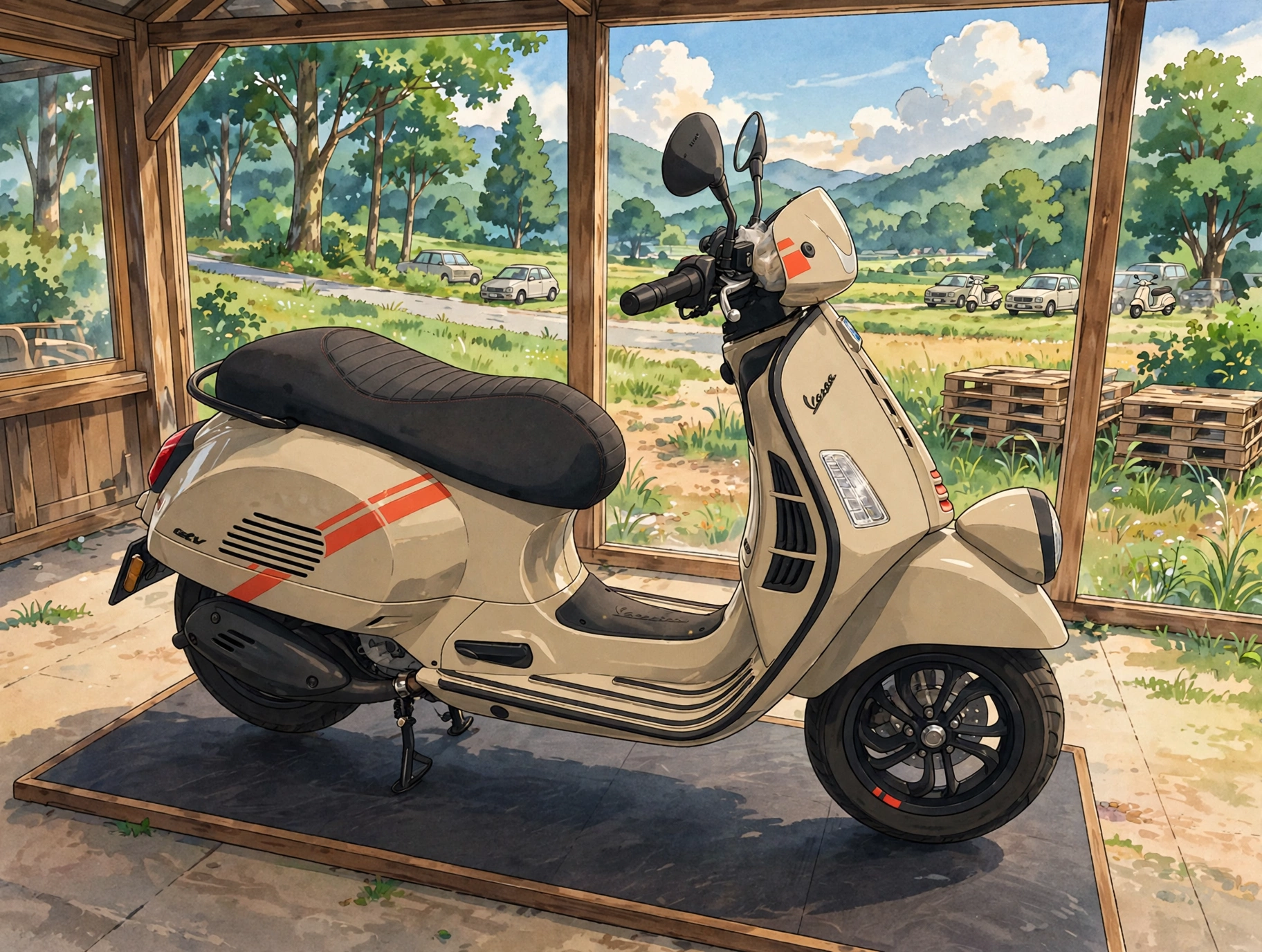
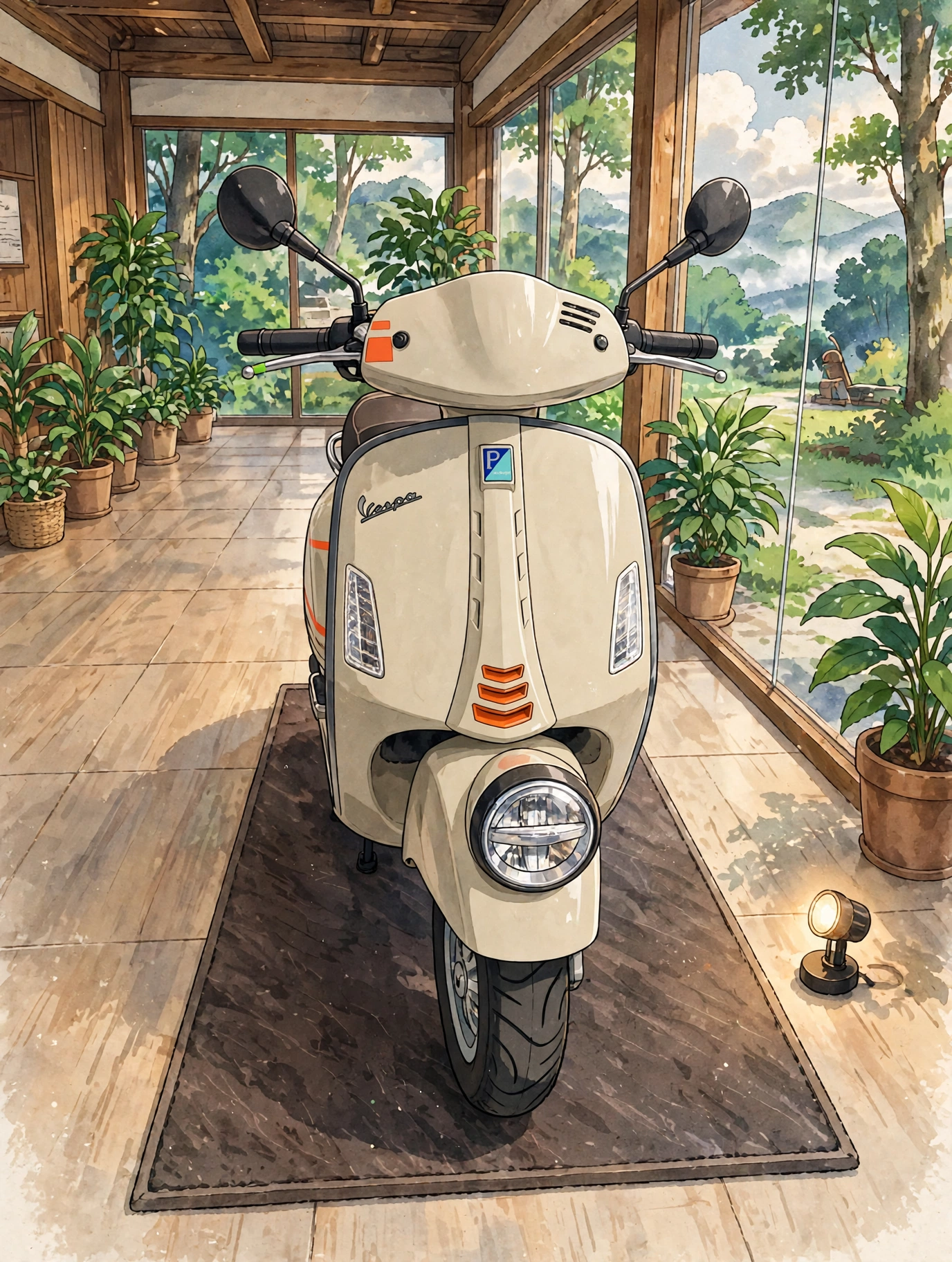
Unlike the more conventional Vespa Primavera and Sprint, the GTV draws heavily on Vespa’s historical racing heritage. Its distinctive low-mounted headlight, exposed handlebar design, racing-inspired bodywork and single-seat-look saddle give it an unmistakable personality. It is a scooter designed not only for practical transportation but also for riders who appreciate Italian craftsmanship, distinctive styling and the emotional appeal of owning a Vespa.
For 2026, the GTV continues this philosophy with updated styling, modern lighting, digital instrumentation and the latest available High Performance Engine (HPE) technology, depending on the market.
The GTV is particularly interesting for experienced Vespa enthusiasts who want something more distinctive than the standard GTS. It offers much of the practical convenience associated with a large Vespa while introducing a more sporting and individual appearance.
However, the GTV is not simply a fashionable scooter. Its larger engine, automatic transmission, steel monocoque construction and modern braking systems make it a capable everyday machine that can handle urban commuting and longer recreational journeys.
This review examines the 2026 Vespa GTV from the perspective of an enthusiast, covering its heritage, design, technical specifications, engine performance, comfort, technology, fuel economy, ownership costs and comparisons with other premium scooters.
1. Vespa GTV: A Scooter Inspired by Italian Racing Heritage
The Vespa GTV has an important connection with the history of the Vespa brand.
Since the introduction of the original Vespa in 1946, the Italian manufacturer has developed numerous models that combine practical transportation with distinctive styling. Vespa scooters became internationally recognised for their steel bodies, elegant proportions and simple mechanical design.
During the 1950s and 1960s, Vespa also developed sporting and racing-inspired models. These included special versions with exposed handlebars, distinctive front lighting and performance-oriented styling.
The modern GTV takes inspiration from these historical machines.
Its design recalls the early Vespa models with exposed handlebars and the characteristic low-mounted headlight positioned on the front mudguard. These features distinguish the GTV from most modern scooters, where headlights are normally integrated into the front handlebar assembly or front fairing.
The GTV name has become associated with Vespa’s more sporting interpretation of its classic design language.
Over successive generations, the model has incorporated increasingly sophisticated engines, electronic fuel injection, ABS braking, traction control and digital instrumentation.
The result is a scooter that preserves the visual identity of vintage Vespa machines while offering the convenience and reliability expected from a modern premium scooter.
For traditional Vespa enthusiasts, this combination is particularly appealing. The GTV provides a connection with the brand’s historical identity without requiring riders to maintain an older, mechanically simpler vintage scooter.
2. 2026 Vespa GTV Design and Styling
A Distinctive Retro-Sporty Appearance
The first thing that makes the Vespa GTV special is its appearance.
While many contemporary scooters use angular body panels, aggressive front fairings and futuristic lighting, the GTV retains the rounded proportions and sculpted steel bodywork that have defined Vespa for generations.
Its appearance combines two different design philosophies:
- Traditional Italian scooter styling.
- Modern sporting details inspired by racing motorcycles.
This combination gives the GTV a character that is difficult to reproduce with conventional maxi-scooters.
The Iconic Low-Mounted Headlight
One of the most recognisable GTV features is its low-mounted front headlight.
Unlike the majority of modern scooters, which place their headlights around the handlebar or front apron, the GTV positions its headlight on the front mudguard.
This arrangement recalls early Vespa racing and sporting models.
For 2026, the GTV features modern LED lighting technology, combining the traditional headlight position with contemporary illumination.
The design is an interesting example of how Vespa can preserve a historical feature while updating its functionality.
Exposed Handlebar Design
The exposed handlebar is another important element of the GTV’s identity.
It recalls the original Vespa models, where the handlebar assembly was a prominent part of the scooter’s mechanical appearance.
The relatively clean handlebar design contributes to the GTV’s classic aesthetic and gives the rider a more traditional Vespa experience.
Modern controls, digital instrumentation and updated electrical equipment are incorporated without significantly changing the overall appearance.
Racing-Inspired Seat
The GTV’s saddle is another distinguishing feature.
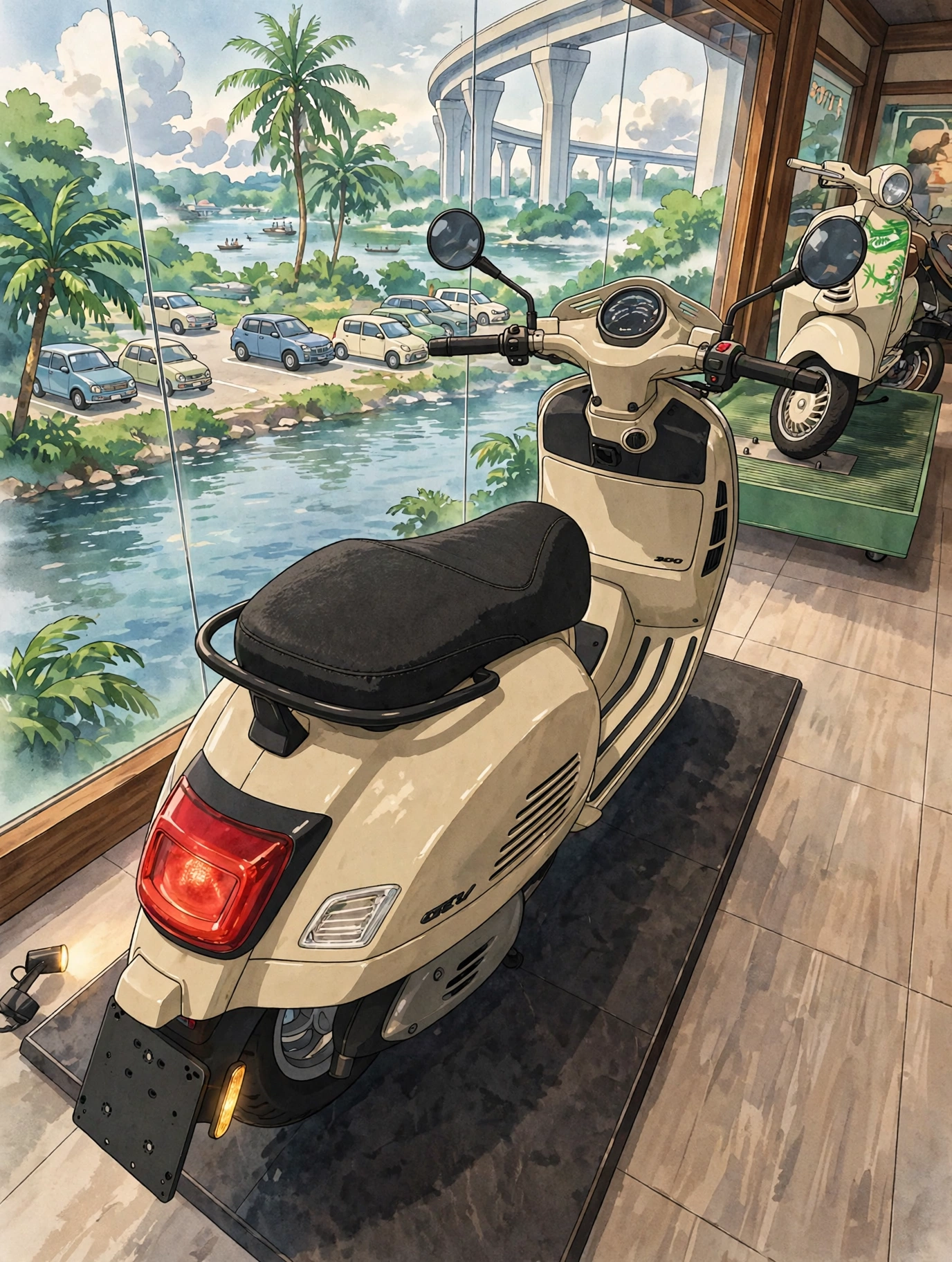
Its single-seat racing-look design creates a sportier appearance than the conventional dual-level seat found on many GTS models.
Depending on the market and model specification, the seat features contrasting colours and stitching that complement the bodywork.
The design is particularly attractive for solo riders who appreciate the sporting appearance.
However, riders who frequently travel with a passenger should consider the seating arrangement carefully. The GTS generally offers a more conventional passenger-friendly seat.
Sporty Wheels and Body Details
The GTV features distinctive alloy wheels, sporty graphics and darker exterior details.
The 2026 styling continues the combination of classic Vespa proportions and contemporary sporting elements.
Depending on the market, the MY26 styling package includes updated graphics, a racing-inspired upper fairing and black wheel finishes.
These details give the scooter a more individual appearance without sacrificing its recognisable Vespa identity.
Steel Monocoque Body Construction
One of Vespa’s defining engineering characteristics is its steel monocoque body.
Unlike many conventional scooters that use a tubular frame with separate plastic body panels, the Vespa uses a load-bearing steel body structure.
This construction contributes to the GTV’s distinctive appearance, structural rigidity and solid feel.
The steel body is also an important part of Vespa’s heritage and helps differentiate the brand from manufacturers that prioritise lightweight plastic bodywork.
3. 2026 Vespa GTV 300 Technical Specifications
The technical specifications below refer primarily to the Asia-Pacific MY26 GTV 300 HPE version.
It is important to distinguish this version from the newer European-market GTV 310.
Engine and Performance
| Specification | Vespa GTV 300 HPE MY26 |
|---|---|
| Engine type | Single-cylinder HPE, 4-stroke |
| Cooling | Liquid-cooled |
| Valve configuration | SOHC, 4 valves |
| Displacement | 278 cc |
| Bore x stroke | 75 x 63 mm |
| Maximum power | 23.8 hp (17.5 kW) at 8,250 rpm |
| Maximum torque | 26 Nm at 5,250 rpm |
| Fuel system | Electronic fuel injection |
| Starting system | Electric starter |
| Transmission | Automatic CVT |
| Clutch | Automatic centrifugal dry clutch |
| Final drive | Automatic CVT system |
Chassis and Suspension
| Specification | Vespa GTV 300 HPE MY26 |
|---|---|
| Frame | Steel monocoque body |
| Front suspension | Single-sided link-arm suspension |
| Rear suspension | Twin hydraulic shock absorbers |
| Rear suspension adjustment | Four-position preload adjustment |
| Front tyre | 120/70-12 |
| Rear tyre | 130/70-12 |
| Front brake | 220 mm hydraulic disc |
| Rear brake | 220 mm hydraulic disc |
| ABS | Dual-channel ABS |
| Traction control | ASR |
Dimensions and Capacity
| Specification | Vespa GTV 300 HPE MY26 |
|---|---|
| Length | 1,975 mm |
| Width | Approximately 765 mm |
| Wheelbase | 1,380 mm |
| Seat height | 790 mm |
| Kerb weight | Approximately 163 kg |
| Fuel tank capacity | 8.5 litres |
Specifications can vary by country, homologation and individual market configuration. Confirm the local technical documentation before purchasing.
Understanding the 310 HPE Version
Some international 2026 GTV versions are equipped with the newer 310 HPE engine.
This engine has a displacement of approximately 310 cc and uses a longer stroke compared with the older 278 cc engine.
Its published specifications include:
| Specification | GTV 310 HPE |
|---|---|
| Displacement | 310 cc |
| Bore x stroke | 75 x 70.1 mm |
| Maximum power | 25 hp (18.4 kW) at 6,500 rpm |
| Maximum torque | 28.9 Nm at 5,250 rpm |
| Cooling | Liquid |
| Fuel system | Electronic injection |
| Transmission | CVT |
| Emissions standard | Euro 5+ |
The 310 engine provides additional displacement, torque and power.
For buyers, the important point is to check whether the actual scooter being offered is the 278 cc GTV 300 or the newer 310 cc GTV. Model-year descriptions and marketing names are not always sufficient to establish the exact engine specification.
4. HPE Engine: Performance and Riding Character
The High Performance Engine is one of the most important mechanical components of the modern Vespa GTV.
The 278 cc HPE engine is a liquid-cooled, four-stroke, single-cylinder unit with four valves and electronic fuel injection.
It represents a substantial evolution from the older air-cooled and lower-capacity Vespa engines.
Smooth Power Delivery
The GTV’s engine is designed to deliver usable power across a broad operating range.
With 23.8 hp and 26 Nm of torque in the standard 278 cc specification, it offers sufficient performance for everyday urban riding and faster roads.
The engine’s liquid-cooling system helps maintain operating temperatures during demanding riding conditions.
Electronic fuel injection provides more consistent fuel delivery and helps improve engine efficiency.
Automatic CVT Transmission
The GTV uses a continuously variable transmission.
Unlike a conventional motorcycle, the rider does not need to operate a clutch lever or change gears manually.
The CVT automatically adjusts its transmission ratio according to engine speed and load.
This makes the GTV particularly convenient in urban traffic.
Acceleration is straightforward:
- Turn the ignition on.
- Start the engine.
- Apply the throttle.
- Accelerate without changing gears.
For riders who want the practicality of an automatic scooter without sacrificing the performance of a larger engine, this arrangement works particularly well.
Acceleration and Top Speed
The GTV is not designed to compete with high-performance motorcycles, but its engine provides adequate acceleration for a premium 300-class scooter.
Its strongest characteristics are:
- Smooth acceleration from a standstill.
- Useful mid-range torque.
- Convenient automatic transmission.
- Comfortable cruising at normal road speeds.
- Sufficient performance for highway travel where legally permitted.
Actual top speed and acceleration depend on market specification, rider weight, road conditions and environmental factors.
5. Riding Experience and Comfort
The Vespa GTV is designed to deliver a riding experience that combines practicality with a sense of occasion.
Its wide steel body, relatively upright riding position and automatic transmission make it suitable for everyday use.
Urban Riding
In city traffic, the GTV offers several advantages.
The automatic transmission removes the need for constant gear changes, while the scooter’s relatively compact dimensions make it easier to navigate traffic than many large maxi-scooters.
The seating position provides good visibility, and the wide body gives the scooter a substantial road presence.
Its weight is manageable for an experienced rider, although it is not as light as smaller 125 cc or 150 cc scooters.
Parking and low-speed manoeuvring require some familiarity, particularly for riders moving up from smaller scooters.
Handling and Stability
The GTV uses Vespa’s characteristic single-sided front suspension design.
This suspension arrangement is part of the brand’s engineering identity.
The steel body and relatively short wheelbase provide a planted riding sensation.
The 12-inch wheels are appropriate for urban use and contribute to the scooter’s compact proportions.
However, wheel size is an important consideration when riding over potholes or uneven road surfaces.
Larger-wheeled scooters can offer advantages in certain conditions, particularly when travelling over rough roads.
Suspension Comfort
The front suspension uses a single-sided link-arm arrangement, while the rear uses two hydraulic shock absorbers.
The rear suspension provides four-position preload adjustment.
This allows the suspension setup to be adjusted to suit different rider weights and passenger loads.
The GTV’s suspension is intended to balance everyday comfort with stable handling.
However, its sporting character and relatively compact wheels mean that it may not absorb every road imperfection as comfortably as larger touring-oriented scooters.
Passenger Comfort
The GTV’s single-seat-look saddle is visually appealing but less conventional than the GTS seating arrangement.
Although passenger accommodation is possible, the GTS is generally the more practical option for riders who frequently carry a passenger.
For solo enthusiasts, the GTV’s seat design is one of its strongest visual features.
6. Braking and Safety Technology
Modern scooter safety is an important consideration, especially when riding in congested urban environments.
The GTV incorporates several systems designed to improve braking performance and traction.
Dual-Channel ABS
The GTV uses ABS on both front and rear wheels.
The anti-lock braking system helps prevent wheel lock-up during hard braking.
This is particularly useful when riding on wet roads, painted road markings or slippery surfaces.
ASR Traction Control
The ASR system is designed to reduce excessive rear-wheel spin during acceleration.
It monitors wheel behaviour and intervenes when it detects excessive loss of traction.
This can be particularly useful on wet roads or slippery urban surfaces.
However, traction control does not eliminate the need for careful throttle operation.
Disc Brakes
The GTV uses 220 mm disc brakes at both ends.
The hydraulic braking system provides the stopping power expected from a premium scooter in this class.
For everyday riding, the combination of dual-channel ABS and ASR adds an important level of electronic safety assistance.
7. Modern Technology and Equipment
Although the GTV is heavily influenced by historical Vespa design, its equipment is distinctly modern.
Full LED Lighting
The modern GTV incorporates LED lighting technology.
LED headlights and other lighting components provide contemporary illumination and improve the overall appearance of the scooter.
They also reduce electrical consumption compared with many traditional lighting systems.
Digital Instrument Cluster
The GTV features a digital instrument display.
It provides essential riding information such as:
- Vehicle speed.
- Engine and trip information.
- Fuel level.
- Riding information and warning indicators.
- Other relevant vehicle data.
The display combines a modern interface with the GTV’s retro-inspired styling.
Keyless System
The keyless system allows the rider to operate the scooter without inserting a traditional ignition key.
Depending on the market configuration, the system supports functions such as unlocking and activating the scooter.
This is particularly convenient when using the GTV for daily commuting.
USB Charging
A USB charging connection is provided for compatible electronic devices.
This is useful for riders who rely on their smartphones for navigation and communication.
Vespa MIA Connectivity
Vespa MIA is an optional connectivity system in applicable markets.
It allows the scooter to communicate with a compatible smartphone.
Depending on the equipment and software configuration, supported functions can include:
- Call information.
- Message notifications.
- Music controls.
- Smartphone connectivity.
- Additional riding information.
Availability and functionality should be checked with the local Vespa distributor.
8. Fuel Economy and Running Costs
Fuel economy is an important consideration even for premium scooter owners.
Although the GTV is not designed primarily as an economical commuter scooter, its modern HPE engine provides reasonable fuel efficiency for its performance class.
Expected Fuel Consumption
Published figures vary according to the engine version and market.
Some earlier 278 cc GTV technical material lists consumption around 30.3 km/L, while the newer 310 HPE technical information gives approximately 31.2 km/L.
These figures should be treated as manufacturer or homologation reference values rather than guaranteed real-world consumption.
For practical budgeting, an illustrative range of 25–30 km/L is a reasonable planning assumption, although actual results will depend on traffic, speed, maintenance and riding style.
Fuel Cost Example
Assuming a fuel consumption of 27 km/L:
| Distance | Fuel Required |
|---|---|
| 100 km | 3.70 litres |
| 500 km | 18.52 litres |
| 1,000 km | 37.04 litres |
| 5,000 km | 185.19 litres |
| 10,000 km | 370.37 litres |
For example, assuming petrol costs SGD 2.80 per litre:
| Distance | Estimated Fuel Cost |
|---|---|
| 100 km | SGD 10.37 |
| 500 km | SGD 51.85 |
| 1,000 km | SGD 103.70 |
| 5,000 km | SGD 518.52 |
| 10,000 km | SGD 1,037.04 |
These are illustrative calculations, not official fuel-cost estimates.
Maintenance Costs
The GTV is a premium scooter, and its ownership costs reflect its positioning.
Routine maintenance normally includes:
- Engine oil replacement.
- Oil filter and air filter inspection.
- Spark plug replacement.
- CVT belt inspection and replacement.
- Variator and roller inspection.
- Brake pad and brake disc inspection.
- Coolant inspection and replacement.
- Tyre replacement.
- Battery checks.
- General suspension and steering inspection.
The CVT transmission is convenient, but its components require periodic inspection.
Owners should follow the maintenance schedule supplied by their local Vespa distributor.
Reliability Considerations
The modern GTV benefits from an established Piaggio engine platform and relatively mature scooter technology.
Nevertheless, a premium scooter is only as dependable as its maintenance history and servicing quality.
Potential ownership considerations include:
- Cost of genuine Vespa replacement parts.
- Availability of trained technicians.
- Electronic component replacement costs.
- CVT maintenance.
- Battery and charging-system condition.
- Bodywork repair costs.
The steel body is an important part of the Vespa identity, but accident damage and corrosion should be inspected carefully, particularly on used examples.
9. Urban Commuting and Long-Distance Touring
One of the GTV’s attractions is its ability to serve different riding purposes.
It is more than a fashionable weekend scooter.
Daily Urban Commuting
For daily commuting, the GTV provides:
- Automatic transmission.
- Comfortable upright riding position.
- Adequate engine performance.
- Modern braking technology.
- Keyless convenience.
- Compact scooter dimensions.
It is suitable for riders who want a premium scooter that can be used regularly rather than kept exclusively for recreational riding.
However, the GTV’s relatively expensive purchase price makes it less attractive as a purely economical commuting solution.
Weekend Riding
Weekend recreational riding is where the GTV’s personality becomes particularly appealing.
Its classic design, sporting details and larger engine make it an enjoyable choice for scenic roads and leisurely rides.
The scooter offers a different experience from conventional maxi-scooters.
It places greater emphasis on character, appearance and the enjoyment of riding.
Longer-Distance Touring
The GTV is capable of longer journeys, subject to local road regulations and suitable riding conditions.
Its larger engine provides enough performance for normal touring speeds.
The seating position is reasonably comfortable, while the steel body provides a substantial and stable riding feel.
Nevertheless, there are some limitations.
The 8.5-litre fuel tank means that long-distance riders will need to plan fuel stops.
The relatively small wheels and limited weather protection also make the GTV less suited to sustained high-speed touring than some larger maxi-scooters.
For riders who frequently travel with passengers and luggage, a GTS or a dedicated touring scooter may be a better choice.
10. Vespa GTV 300 vs Vespa GTS 300
The GTV and GTS share much of Vespa’s mechanical philosophy.
Both models use a steel monocoque body, automatic CVT transmission and modern liquid-cooled HPE engine technology in their relevant 300-class versions.
However, they have different personalities.
The GTS is the more conventional and practical large Vespa, while the GTV has a stronger sporting and retro-racing identity.
Design Comparison
| Feature | Vespa GTV 300 | Vespa GTS 300 |
|---|---|---|
| Overall character | Retro sporting | Classic premium |
| Headlight | Low-mounted on front mudguard | Handlebar-mounted |
| Handlebar | Exposed styling | Conventional enclosed styling |
| Seat | Single-seat racing-look design | Conventional dual-level seat |
| Appearance | Sporty and distinctive | Elegant and versatile |
| Styling inspiration | Historical racing Vespa | Traditional large Vespa |
Practicality Comparison
| Feature | GTV 300 | GTS 300 |
|---|---|---|
| Urban commuting | Very good | Very good |
| Solo riding | Excellent | Excellent |
| Passenger comfort | Less practical | Generally better |
| Long-distance touring | Good | Good |
| Sporting appearance | More distinctive | More understated |
| Everyday versatility | Good | Excellent |
Which One Should You Choose?
The GTV is particularly attractive to enthusiasts who appreciate Vespa’s historical racing heritage.
Its low headlight, exposed handlebars and sporting seat make it visually different from almost every other scooter on the road.
The GTS is the more rational choice for riders who prioritise versatility.
Its conventional seating arrangement makes it more suitable for regular passenger use, while its classic design remains recognisably Vespa.
For someone who already owns a GTS, the GTV offers a different ownership experience rather than simply being another version of the same scooter.
11. Comparison with Other Premium 300-Class Scooters
The GTV competes in a market that includes several capable premium scooters.
However, it is important to understand that these competitors do not necessarily target the same type of customer.
Vespa GTV 300 vs Yamaha XMAX 300
The Yamaha XMAX 300 is one of the most established premium sport scooters.
It offers a larger and more practical body design, substantial weather protection and a focus on touring comfort.
The XMAX is particularly attractive for riders who regularly commute on highways or travel longer distances.
Its equipment and practicality are among its strongest advantages.
The GTV takes a different approach.
It emphasises Italian design, heritage and individuality.
| Category | Vespa GTV 300 | Yamaha XMAX 300 |
|---|---|---|
| Engine | 278 cc | 292 cc |
| Power | 23.8 hp | Market-dependent |
| Transmission | CVT | CVT |
| Styling | Retro-sporty | Modern maxi-scooter |
| Wheel size | 12 inches | 15-inch front, 14-inch rear |
| Main strength | Design and heritage | Practicality and touring |
The Yamaha is the more practical touring-oriented scooter, while the Vespa is more distinctive and characterful.
Vespa GTV 300 vs Honda Forza 350
The Honda Forza 350 is another strong competitor.
It provides a larger-displacement engine, touring-oriented ergonomics and a practical body design.
The Forza is designed around everyday convenience and longer-distance comfort.
Its advantages include:
- Larger engine displacement.
- Strong touring-oriented ergonomics.
- Practical storage.
- Good wind protection.
- Established Honda engineering.
The GTV counters with its distinctive styling, steel body construction and Italian heritage.
For buyers who prioritise performance and practicality, the Forza deserves serious consideration.
For buyers who value design and character, the GTV is likely to be more appealing.
Vespa GTV 300 vs Honda ADV350
The Honda ADV350 offers a different interpretation of the premium scooter concept.
Its adventure-inspired styling, longer-travel suspension characteristics and rugged appearance make it suitable for riders who encounter varied road surfaces.
The ADV350 is designed to be more versatile when dealing with imperfect roads.
The GTV is more closely associated with urban sophistication and classic Italian scooter design.
These two scooters are therefore aimed at different audiences.
The ADV350 is the more adventure-oriented option, while the GTV is the more style-focused alternative.
Overall Comparison
| Scooter | Main Strength | Ideal Rider |
|---|---|---|
| Vespa GTV 300 | Italian design and heritage | Vespa enthusiasts |
| Yamaha XMAX 300 | Touring and practicality | Long-distance commuters |
| Honda Forza 350 | Comfort and performance | Everyday and touring riders |
| Honda ADV350 | Versatility and adventure styling | Riders using varied roads |
| Vespa GTS 300 | Classic Vespa practicality | Everyday Vespa owners |
The GTV does not need to outperform every competitor in every technical category.
Its appeal is based on a combination of styling, heritage, quality and the distinctive experience of owning a Vespa.
12. 2026 Vespa GTV Pricing and Market Value
The Vespa GTV occupies the premium end of the scooter market.
Its pricing is influenced by brand positioning, import duties, local taxation, distributor costs and equipment specifications.
The following prices provide an indication of its market positioning in Asia.
Singapore
The Singapore Vespa website lists the GTV 300 at a recommended retail price of:
SGD 13,800
This price is before Certificate of Entitlement (COE) and insurance.
The final purchase price will therefore be significantly higher after COE, registration and other applicable charges.
Singapore buyers should request a complete on-the-road quotation rather than compare the recommended retail price alone.
Thailand
The Thai Vespa market lists the GTV 300 HPE MY26 at approximately:
THB 232,900
This is an attractive reference point for buyers comparing regional prices.
The actual purchase price may vary depending on colour, dealer promotions and registration arrangements.
Malaysia
The Malaysian Vespa website lists the GTV 300 at approximately:
RM 36,900
The final transaction price should be confirmed with an authorised distributor because local promotions, registration charges and model availability can change.
Regional Price Comparison
| Market | Model / Reference | Indicative Price |
|---|---|---|
| Singapore | Vespa GTV 300 | SGD 13,800 |
| Thailand | GTV 300 HPE MY26 | THB 232,900 |
| Malaysia | Vespa GTV 300 | RM 36,900 |
Prices are indicative published market references, not a guarantee of final November 2026 dealer pricing. Singapore’s price excludes COE and insurance.
Used-Market Value
The GTV has an interesting position in the used scooter market.
Its distinctive styling and Vespa branding may help it retain enthusiast interest.
However, used prices are influenced by several factors:
- Year of manufacture.
- Actual registration year.
- Mileage.
- Service history.
- Mechanical condition.
- Accident history.
- Original accessories.
- Remaining warranty.
- Local registration and taxation rules.
In Singapore, COE remaining is particularly important when evaluating a used GTV.
In Thailand and Malaysia, buyers should pay close attention to maintenance history and the condition of the CVT system.
A well-maintained example with original parts and a complete service record is generally more attractive than a heavily modified scooter.
Because actual transaction prices vary significantly, it is better to compare current local listings rather than assume a fixed depreciation percentage.
13. Pros and Cons of the 2026 Vespa GTV 300
Advantages
1. Distinctive Italian design
The GTV has one of the most recognisable designs in the modern scooter market.
Its low-mounted headlight, exposed handlebars and sporty seat create a distinctive appearance.
2. Strong Vespa heritage
The GTV maintains a clear connection with historical Vespa racing and sporting models.
This gives it an identity that goes beyond simple transportation.
3. Modern HPE engine
The 278 cc HPE engine offers good performance for urban riding and recreational journeys.
The newer 310 version provides an additional performance improvement in markets where it is available.
4. Automatic transmission
The CVT makes the scooter convenient in traffic and easy to operate.
5. Modern safety equipment
Dual-channel ABS and ASR traction control provide additional confidence.
6. Steel monocoque construction
The steel body is an important part of Vespa’s engineering identity and contributes to the scooter’s solid feel.
7. Premium ownership experience
The GTV offers a distinctive combination of Italian styling, brand heritage and modern convenience.
Disadvantages
1. Premium purchase price
The GTV costs considerably more than many conventional scooters with similar engine capacities.
2. Limited passenger practicality
The sporty saddle is visually appealing but less practical than the GTS seat for frequent two-up riding.
3. Relatively small wheels
The 12-inch wheels may be less comfortable over rough surfaces than the larger wheels used by some competing maxi-scooters.
4. Limited weather protection
The GTV does not provide the same level of wind protection as a dedicated touring scooter.
5. Higher ownership costs
Genuine parts, specialised servicing and replacement body panels can be expensive.
6. Limited practicality compared with maxi-scooters
Storage capacity, touring equipment and passenger comfort may not match competitors such as the Yamaha XMAX 300 or Honda Forza 350.
14. Maintenance and Long-Term Ownership
Owning a Vespa is not simply about purchasing a scooter.
For many enthusiasts, it is also about maintaining a distinctive Italian machine.
The GTV requires regular servicing to preserve its mechanical condition and long-term value.
Routine Maintenance
Owners should pay particular attention to:
Engine oil
Regular engine oil replacement is essential for maintaining engine lubrication and reducing internal wear.
Cooling system
The liquid-cooling system should be inspected regularly, including coolant level, hoses and radiator condition.
CVT transmission
The belt, variator and rollers should be inspected according to the manufacturer’s maintenance schedule.
Braking system
Brake pads, discs, hydraulic fluid and ABS components should be checked periodically.
Tyres
Correct tyre pressure and adequate tread depth are essential for safe handling.
Battery and electronics
The keyless system, digital dashboard, lighting and electronic controls should be checked during servicing.
Buying a Used GTV
For anyone considering a second-hand GTV, the following inspection points are particularly important:
- Confirm the actual engine version and model year.
- Check the complete maintenance history.
- Inspect the steel body for accident damage or corrosion.
- Check the CVT belt and transmission condition.
- Inspect the front and rear suspension.
- Check ABS and ASR warning indicators.
- Test the keyless system and electrical equipment.
- Examine the wheels and tyres.
- Check for oil or coolant leaks.
- Verify registration documents and ownership history.
Original parts and a documented service history are desirable for enthusiasts who intend to keep the scooter for many years.
15. Is the 2026 Vespa GTV 300 Worth Buying?
The answer depends on what a buyer expects from a premium scooter.
If the priority is maximum practicality, fuel economy or luggage capacity, there are several more rational alternatives.
The Yamaha XMAX 300 and Honda Forza 350 offer strong touring and commuting capabilities.
The Honda ADV350 is another interesting choice for riders who prefer adventure-inspired styling.
However, the GTV is not designed to compete purely on specifications.
Its strongest selling points are its identity, heritage, appearance and the emotional appeal of owning a distinctive Italian scooter.
For an existing Vespa enthusiast, the GTV offers something special.
It retains the classic Vespa character while incorporating modern engine technology, electronic safety systems and contemporary convenience features.
It is particularly suitable for riders who enjoy solo journeys, weekend rides and urban commuting, and who appreciate a scooter that attracts attention wherever it goes.
The GTV is less compelling for riders who frequently carry passengers or need the storage and weather protection of a conventional maxi-scooter.
Nevertheless, for someone who appreciates Vespa’s history and wants a premium scooter with genuine personality, the GTV remains an appealing proposition.
16. Final Verdict
The 2026 Vespa GTV is a celebration of Italian scooter design.
It combines the visual identity of historic Vespa sporting models with modern engineering and everyday convenience.
Its low-mounted headlight, exposed handlebars, racing-inspired saddle and steel monocoque body make it one of the most distinctive scooters in the premium 300-class segment.
The HPE engine provides adequate performance for urban commuting and recreational riding, while the CVT transmission makes it easy to operate.
Modern equipment such as LED lighting, digital instrumentation, keyless operation, ABS and ASR ensures that the GTV is not simply a retro styling exercise.
It is a modern scooter with a clear connection to the past.
The main compromises are its premium price, relatively limited touring practicality and less accommodating passenger seating compared with the GTS.
For riders who want a practical maxi-scooter, there are more suitable alternatives.
But for Vespa enthusiasts who appreciate Italian heritage, sporting design and the pleasure of owning something distinctive, the 2026 GTV is an attractive choice.
Ultimately, the Vespa GTV is not just about getting from one destination to another. It is about enjoying the journey, appreciating the machine and experiencing a small part of Italian automotive history every time you ride.
2026 Vespa GTV 300: Key Highlights
| Category | Highlight |
|---|---|
| Engine | 278 cc HPE (Asia-Pacific MY26 specification) |
| Maximum power | 23.8 hp |
| Maximum torque | 26 Nm |
| Transmission | Automatic CVT |
| Braking | Dual-channel ABS |
| Traction control | ASR |
| Construction | Steel monocoque |
| Front lighting | Low-mounted LED headlight |
| Instrumentation | Digital dashboard |
| Fuel capacity | 8.5 litres |
| Seat height | Approximately 790 mm |
| Best feature | Distinctive Italian retro-racing design |
| Best suited for | Vespa enthusiasts and solo riders |
Frequently Asked Questions
1. Is the 2026 Vespa GTV 300 a good scooter?
Yes. It is a premium scooter offering a combination of distinctive styling, modern engine technology and practical automatic transmission. It is particularly attractive to Vespa enthusiasts.
2. What is the engine capacity of the 2026 Vespa GTV 300?
The Asia-Pacific MY26 GTV 300 uses a 278 cc single-cylinder HPE engine. Some international 2026 GTV versions use the newer 310 cc HPE engine.
3. How much horsepower does the Vespa GTV 300 produce?
The 278 cc version produces approximately 23.8 hp at 8,250 rpm and 26 Nm of torque at 5,250 rpm.
4. What is the fuel consumption of the Vespa GTV 300?
Published figures for earlier 278 cc versions are around 30.3 km/L. Actual consumption depends on traffic, riding style, maintenance and market specification.
5. Is the Vespa GTV 300 suitable for long-distance riding?
Yes. Its engine and riding position are suitable for recreational touring. However, its limited wind protection, small wheels and relatively compact fuel tank make it less touring-oriented than larger maxi-scooters.
6. What is the difference between the Vespa GTV and GTS?
The GTV features a low-mounted front headlight, exposed handlebars and a sporty single-seat-look saddle. The GTS uses a more conventional headlight arrangement and a more practical seating configuration.
7. Does the Vespa GTV have ABS and traction control?
Yes. The relevant modern GTV specifications include dual-channel ABS and ASR traction control.
8. Is the Vespa GTV expensive to maintain?
It is a premium scooter, so servicing and genuine replacement parts can cost more than those for many conventional scooters. Regular maintenance and an authorised service history are important.
9. Is the Vespa GTV better than the Yamaha XMAX 300?
They serve different purposes. The XMAX is more focused on touring practicality, storage and comfort, while the GTV places greater emphasis on Italian styling, heritage and individuality.
10. Is the 2026 Vespa GTV worth buying?
For enthusiasts who appreciate Vespa heritage, distinctive styling and premium scooter ownership, the GTV is a compelling choice. Riders prioritising passenger comfort, luggage capacity and touring practicality may prefer the GTS, XMAX or Forza.
Suggested Blog Tags
Vespa, Vespa GTV, Vespa GTV 300, Vespa GTV 2026, Vespa GTV HPE, Vespa 300, Italian Scooters, Premium Scooters, Retro Scooters, Classic Vespa, Vespa Review, Motorcycle Review, Scooter Comparison, Vespa GTS, Yamaha XMAX 300, Honda Forza 350, Honda ADV350, Vespa Ownership, Scooter Touring
Suggested SEO Information
SEO Title: 2026 Vespa GTV 300 Review: Specifications, Performance, Price and Features
Meta Description: Discover the 2026 Vespa GTV 300, featuring Italian retro-racing design, HPE engine technology, performance, specifications, fuel economy, pricing and comparisons with the Vespa GTS, Yamaha XMAX 300 and Honda Forza 350.
Suggested URL Slug: 2026-vespa-gtv-300-review
Primary Keyword: 2026 Vespa GTV 300
Secondary Keywords: Vespa GTV 300 specifications, Vespa GTV 2026 price, Vespa GTV HPE engine, Vespa GTV vs GTS, Vespa GTV review, Vespa 300 scooter
Research references and specification checks
The following sources are useful for validating the article and checking the exact version sold in each country:
-
Vespa – International GTV model range – international 310 HPE positioning.
-
Vespa Asia-Pacific – MY26 GTV 300 technical sheet – 278 cc specifications.
Vespa EN+1
-
Vespa Singapore – GTV 300 – Singapore model and recommended retail price.
vespa+1
-
Vespa Thailand – GTV – Thailand MY26 model and pricing.
Vespa Thailand
-
Vespa Malaysia – GTV – Malaysian market pricing.
vespa
-
Yamaha Singapore – XMAX 300 – competitor specifications and pricing.
Yamaha Singapore
The article treats the 2026 Vespa GTV as a model-year-specific scooter rather than simply reusing specifications from older GTV 300 models.
An important technical distinction: The 2026 GTV is marketed with the newer 310 HPE engine in some international markets, while the Asia-Pacific MY26 GTV 300 technical sheet still specifies the 278 cc HPE engine. Thailand also lists the MY26 GTV 300 at 278.3 cc. I distinguish these versions throughout the article so the specifications are not mixed up.