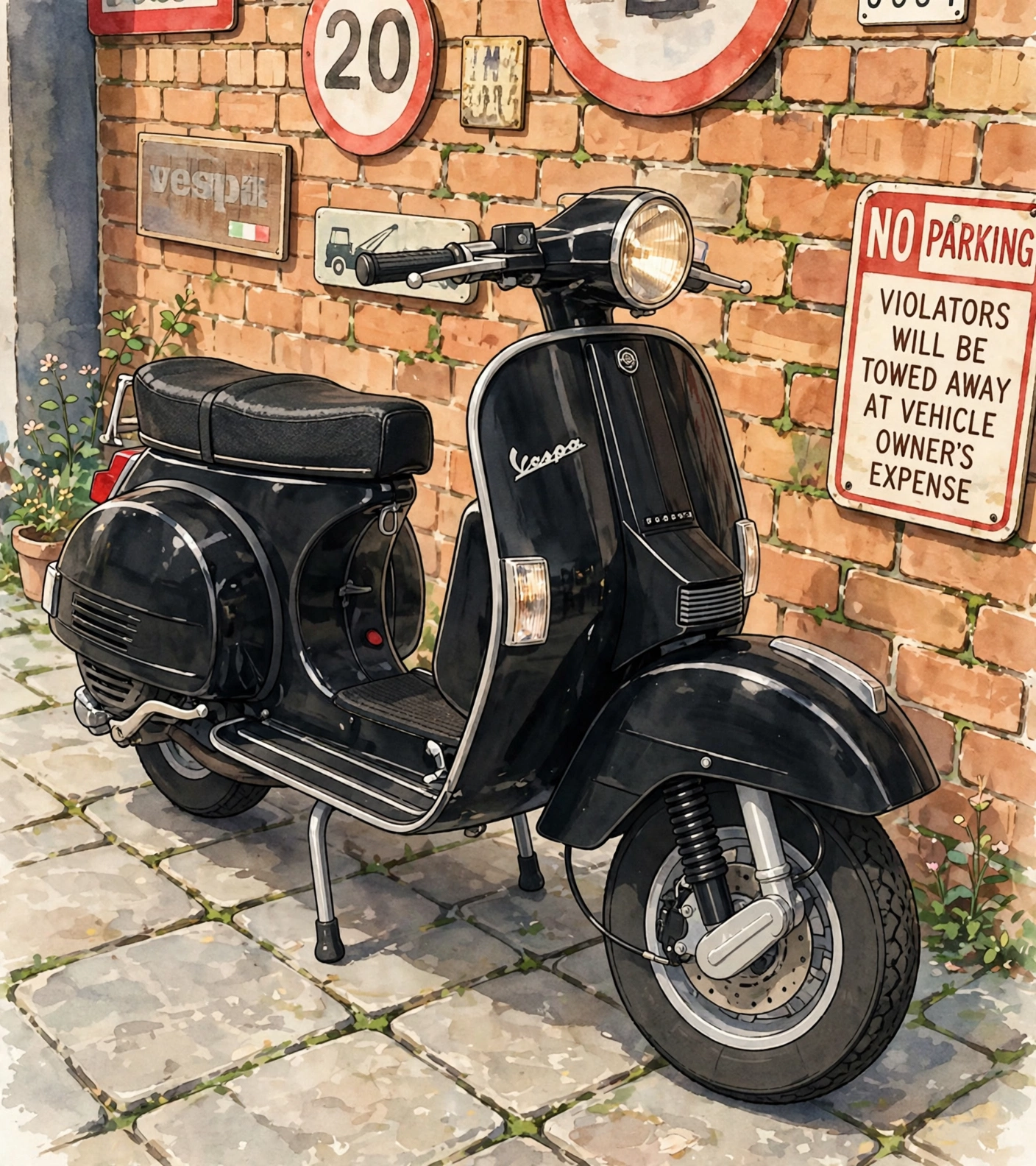
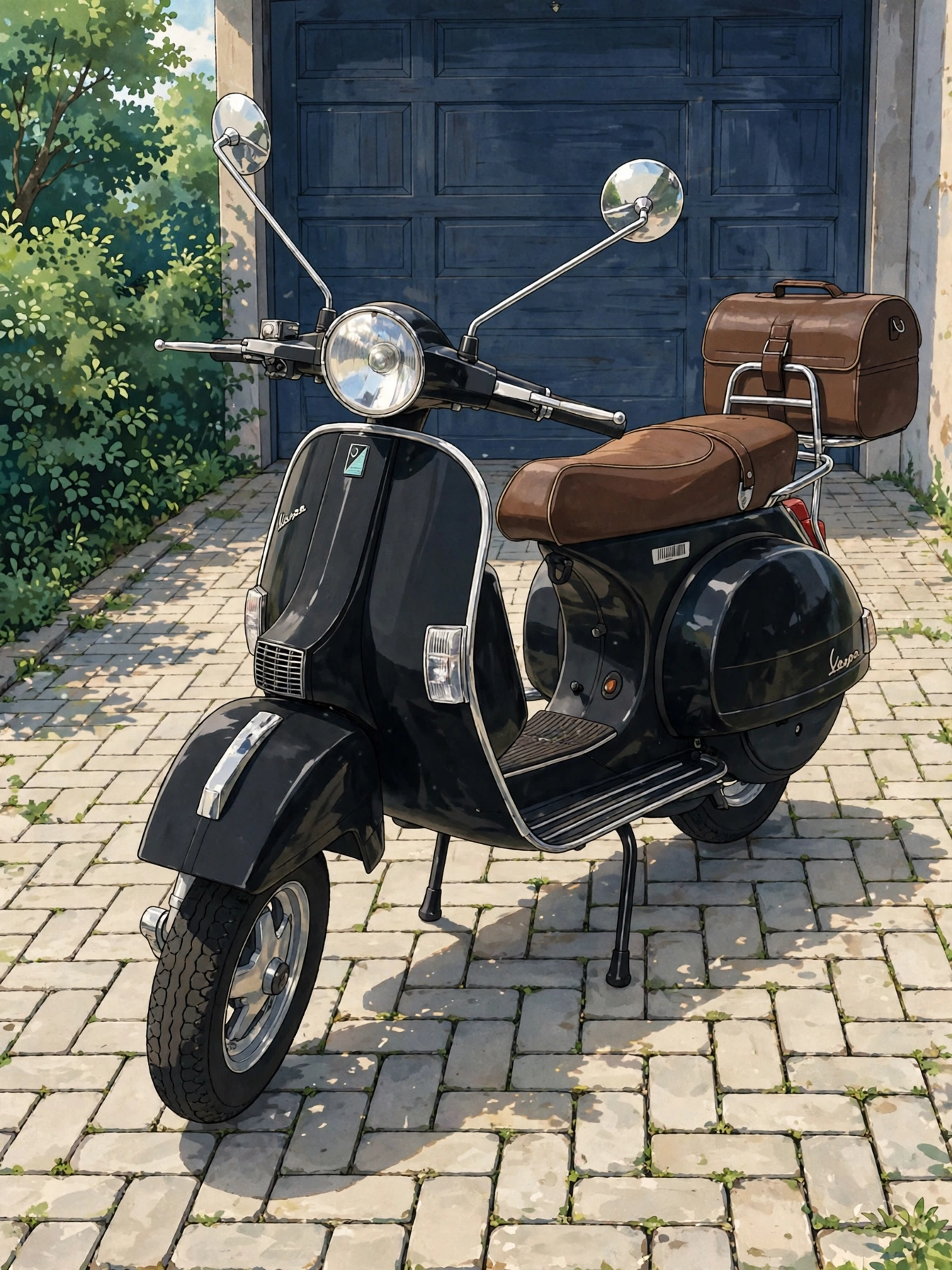
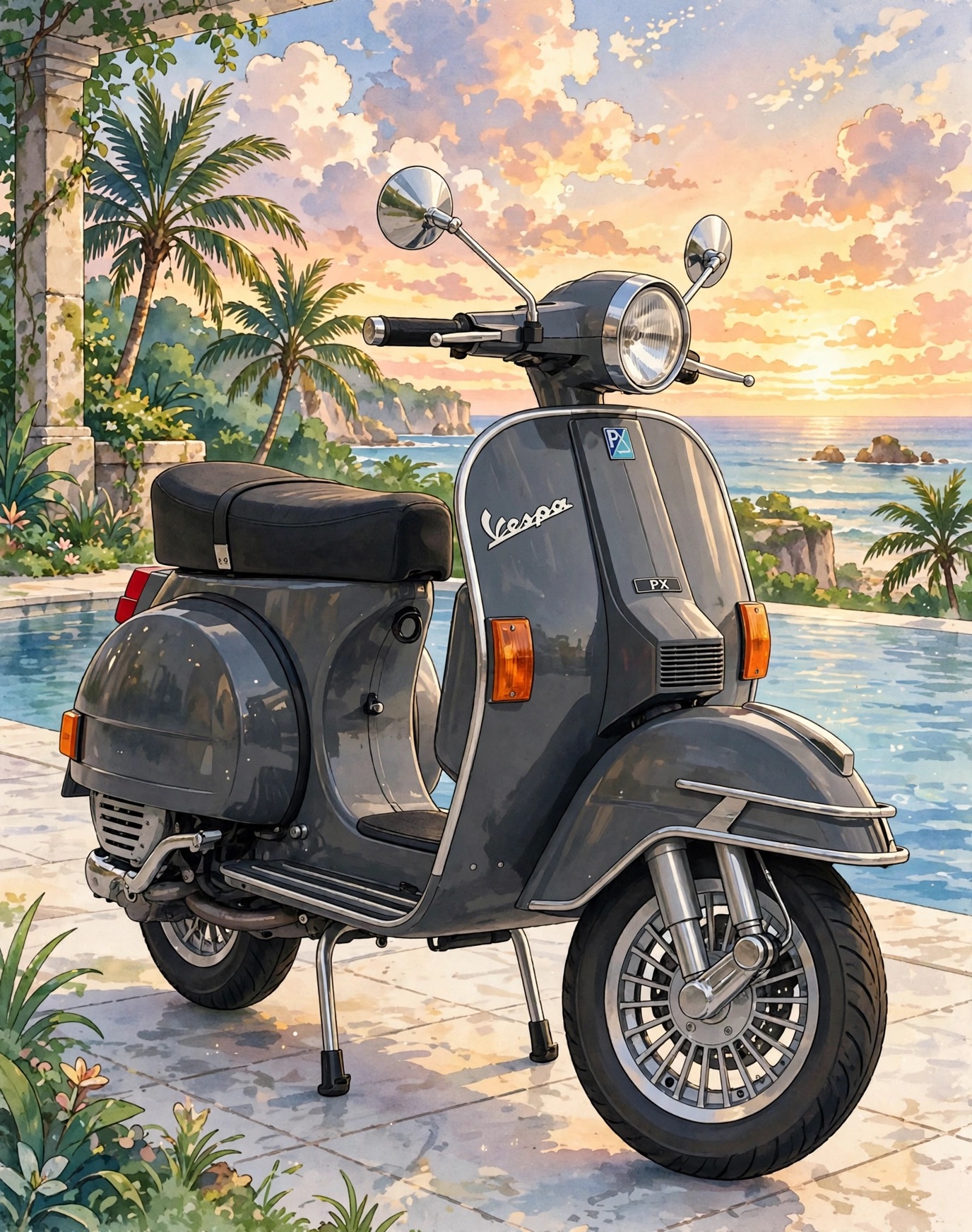
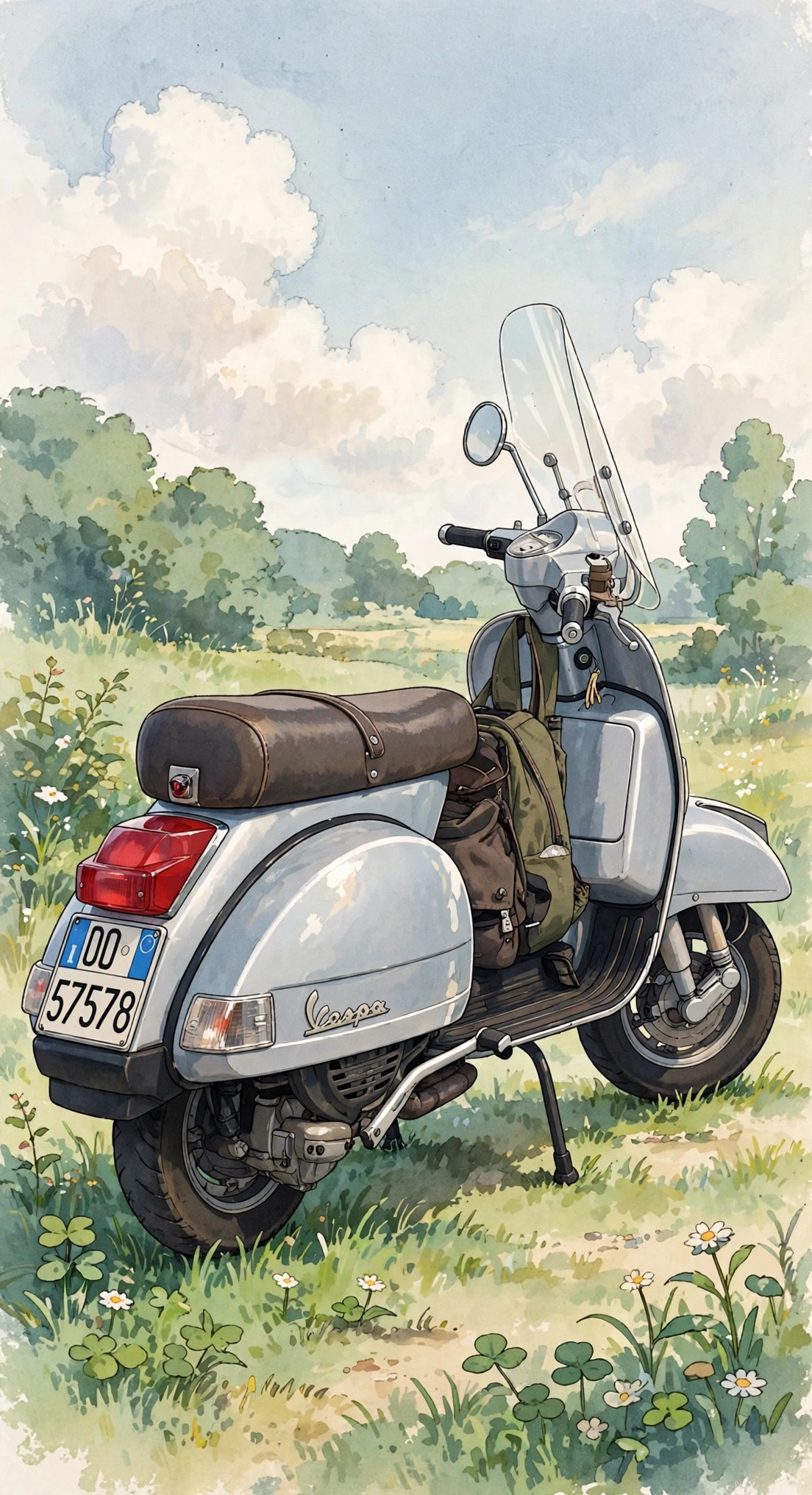
2011 Vespa PX 150: The Timeless Italian Classic with a Two-Stroke Heart
The 2011 Vespa PX 150 represents one of the last great expressions of traditional Italian scooter engineering. Combining a steel monocoque body, a 150cc two-stroke engine, four-speed manual hand-shift gearbox and unmistakable vintage styling, it brings the original Vespa riding experience into the modern era.
1. Introduction: A Classic Vespa That Refuses to Disappear
In an era when modern scooters increasingly feature automatic transmissions, fuel injection, digital dashboards and sophisticated electronic systems, the 2011 Vespa PX 150 stands apart as a reminder of a different approach to personal transportation.
The PX 150 is not simply another retro-styled scooter. It is a continuation of a design and engineering philosophy that began decades earlier, when scooters were designed around mechanical simplicity, practical transportation and distinctive Italian styling.
Its most recognisable features are immediately familiar to Vespa enthusiasts: a pressed-steel monocoque body, rounded front shield, exposed front suspension, compact 10-inch wheels and a single-sided rear engine assembly.
However, the feature that makes the PX particularly special is its traditional four-speed manual gearbox operated through the left handlebar grip.
Unlike modern automatic Vespa scooters, the rider must coordinate the clutch and gear selection manually. This creates a more involved riding experience that connects the rider directly with the mechanical character of the machine.
The 2011 model was especially significant because Piaggio brought the PX back into production after an earlier discontinuation. The relaunch coincided with Vespa’s 65th anniversary and demonstrated that there was still a market for traditional manual-shift scooters.
The engine remained a two-stroke single-cylinder unit, but it received updates, including a catalytic converter, to satisfy Euro 3 emissions requirements.
For enthusiasts, the 2011 PX 150 offered an appealing combination: familiar vintage mechanical character with updated emissions compliance and improved everyday usability.
It is a scooter for people who appreciate the journey as much as the destination.
2. History of the Vespa PX: From 1977 to the 2011 Revival
The Birth of the PX
The Vespa PX was introduced in 1977 as an important development in the history of the Italian scooter manufacturer Piaggio.
By that time, Vespa had already established itself as one of the world’s most recognisable scooter brands. Its earlier models had helped popularise affordable personal transportation across Europe and beyond.
The PX introduced a more modern interpretation of the traditional Vespa formula while retaining the essential features that made the original scooters successful.
These included:
- Steel monocoque construction.
- A compact, practical body design.
- A single-cylinder two-stroke engine.
- Manual handlebar-operated gear shifting.
- Small-diameter wheels.
- A removable side-panel arrangement.
- A practical riding position.
The PX became one of the most successful models in Vespa history, eventually selling millions of examples worldwide.
Development Through the 1980s and 1990s
Throughout the following decades, the PX received various improvements while retaining its fundamental design.
One particularly important development was the introduction of a front disc brake in later versions, improving braking performance compared with earlier drum-brake configurations.
The PX also received changes to its electrical equipment, instrumentation, ignition systems and general equipment depending on the market and production year.
Despite these developments, the basic riding experience remained remarkably consistent.
The rider still operated a manual gearbox through the left handlebar, controlled the rear brake using a foot pedal and experienced the characteristic sound and behaviour of a two-stroke engine.
This continuity helped establish the PX as a favourite among traditional Vespa enthusiasts.
The End of an Era and the Return in 2011
As emissions regulations became increasingly demanding, maintaining the traditional two-stroke engine became more difficult.
The PX was withdrawn from production in the late 2000s, leading enthusiasts to believe that the manual-shift Vespa might finally disappear.
However, demand from the Vespa community encouraged Piaggio to reconsider.
In 2011, the company relaunched the PX 125 and PX 150 to celebrate Vespa’s 65th anniversary.
The updated models retained their traditional steel body, manual gearbox and two-stroke engine but incorporated technical improvements to meet Euro 3 emissions requirements.
The revised PX also received updated styling details, improved seat ergonomics and a catalytic converter.
This was an important moment in Vespa history. Rather than completely replacing the traditional PX with a modern automatic scooter, Piaggio continued to offer a machine that preserved the original mechanical experience.
The 2011 Vespa PX 150 Anniversary Edition
The 2011 revival also included a special edition celebrating the 150th anniversary of Italian unification.
Known as the Vespa PX 150° Anniversario Unità d’Italia, this version featured distinctive white bodywork with Italian tricolour graphics.
It was equipped with a spare wheel mounted on the left side, following the traditional Vespa arrangement.
The special edition was an appropriate tribute to both Italian national history and the country’s most recognisable scooter manufacturer.
It is particularly interesting to collectors because it combines the PX’s traditional mechanical character with a specific historical anniversary.
3. 2011 Vespa PX 150: Technical Specifications
The 2011 PX 150 uses a single-cylinder, air-cooled two-stroke engine with rotary-valve induction and a carburettor fuel system.
Its mechanical configuration is considerably different from that of modern automatic Vespa scooters.
Complete Technical Specifications
| Specification | 2011 Vespa PX 150 |
|---|---|
| Manufacturer | Piaggio |
| Brand | Vespa |
| Model | PX 150 |
| Model year | 2011 |
| Engine type | Single-cylinder, two-stroke |
| Engine capacity | Approximately 150cc |
| Bore | 57.8 mm |
| Stroke | 57 mm |
| Induction | Rotary valve |
| Fuel system | Carburettor |
| Cooling system | Forced-air cooling |
| Ignition | Electronic CDI |
| Lubrication | Automatic oil injection |
| Fuel requirement | Unleaded petrol, minimum 95 RON in the European specification |
| Starting system | Electric and kick starter |
| Transmission | Four-speed manual |
| Gear selection | Handlebar-operated |
| Clutch | Wet multi-plate |
| Frame | Steel monocoque |
| Front suspension | Single-sided trailing link with coil spring and hydraulic shock absorber |
| Rear suspension | Engine-mounted swingarm with hydraulic shock absorber |
| Front brake | 200 mm stainless-steel disc |
| Rear brake | 150 mm drum |
| Front wheel | 10-inch |
| Rear wheel | 10-inch |
| Tyres | 3.50-10 front and rear |
| Length | 1,810 mm |
| Width | 740 mm |
| Wheelbase | 1,260 mm |
| Seat height | Approximately 805–810 mm, depending on specification |
| Dry weight | Approximately 97 kg |
| Fuel tank capacity | 8 litres |
| Emissions standard | Euro 3 |
Specification note: Figures are based primarily on Piaggio’s 2011 technical documentation. Some published specification databases give different power, torque and weight figures depending on the market and measurement method. The exact homologation document for an individual scooter should take precedence.
Engine Output
The PX 150’s engine produces approximately:
- Maximum power: 6 kW (approximately 8 hp).
- Maximum torque: approximately 11.2 Nm in some published European specifications.
The engine is designed around usable low- and mid-range performance rather than high-revving power.
Although these figures look modest compared with modern 150cc four-stroke scooters, the PX has a relatively lightweight body and a different mechanical character.
Its performance is best understood as relaxed, traditional scooter performance rather than outright acceleration.
4. The Two-Stroke Engine: The Heart of the PX 150
The engine is arguably the most important part of the 2011 Vespa PX 150’s identity.
Unlike modern Vespa Primavera and Sprint models, which use four-stroke engines, the PX retains the traditional two-stroke architecture.
How the Two-Stroke Engine Works
A two-stroke engine completes its combustion cycle through two piston strokes:
- Compression and combustion.
- Exhaust and intake processes during the return stroke.
This design provides a relatively simple mechanical arrangement with fewer moving components than a conventional four-stroke engine.
The PX 150 uses rotary-valve induction, a traditional Piaggio engineering arrangement in which the crankshaft controls the timing of the incoming air-fuel mixture.
The system contributes to the engine’s distinctive character and compact construction.
Automatic Oil Injection
One particularly useful feature of the 2011 PX 150 is its automatic two-stroke oil injection system.
Unlike older two-stroke scooters that require the rider to mix petrol and oil manually, the PX has a separate oil reservoir and an automatic lubrication system.
The system meters oil into the engine according to operating requirements.
This makes everyday ownership more convenient while retaining the characteristics of a traditional two-stroke engine.
Owners must still monitor the oil reservoir and use suitable two-stroke oil.
Running the engine without adequate lubrication can cause serious internal damage.
Forced-Air Cooling
The PX 150 uses forced-air cooling rather than liquid cooling.
A fan directs cooling air around the engine to help control operating temperatures.
This eliminates the need for a radiator, coolant pump and associated plumbing.
The arrangement is mechanically simple and well suited to the PX’s traditional design.
However, maintaining the cooling fan, shrouds and airflow passages is important, particularly in tropical climates.
5. Riding Performance and Experience
Riding the 2011 Vespa PX 150 is different from riding almost any modern automatic scooter.
The manual transmission, two-stroke engine, compact wheels and traditional chassis create an experience that is more mechanical and involving.
Acceleration
The PX 150 provides modest acceleration suitable for everyday urban riding.
Its two-stroke engine delivers its power differently from a modern four-stroke engine.
Rather than relying on a continuously variable transmission to maintain engine speed, the rider selects the appropriate gear manually.
This gives the PX a more direct relationship between throttle input, engine speed and road speed.
The rider must learn how to use the gearbox effectively, particularly when accelerating from a standstill or climbing hills.
Top Speed
Published top-speed figures vary, with some specification databases quoting approximately 87 km/h and other sources reporting figures approaching 95 km/h.
Actual performance depends on:
- Engine condition.
- Carburettor adjustment.
- Rider weight.
- Road gradient.
- Wind conditions.
- Tyre condition.
- Engine maintenance.
The PX 150 is not designed to compete with modern high-performance 150cc scooters.
It is better suited to relaxed riding at moderate speeds.
Handling
The compact 10-inch wheels give the PX a distinctive handling character.
The scooter is relatively agile at lower speeds, making it convenient for navigating urban streets.
However, small wheels are more sensitive to potholes, road joints and uneven surfaces than the larger wheels commonly found on modern scooters.
The traditional front suspension also behaves differently from contemporary suspension designs.
Riders should approach rough roads with care, particularly when carrying a passenger.
Comfort
The 2011 model benefited from seat improvements compared with some earlier PX versions.
Its upright riding position is generally comfortable for ordinary commuting and leisurely rides.
However, the narrow seat, relatively basic suspension and limited wind protection become more noticeable during longer journeys.
A touring windscreen and suitable luggage accessories can improve its long-distance practicality.
6. The Four-Speed Manual Gearbox: What Makes the PX Special
One of the PX 150’s defining features is its four-speed manual transmission.
Modern scooters generally use automatic continuously variable transmissions (CVTs), allowing riders to accelerate without manually selecting gears.
The PX takes a completely different approach.
Handlebar Gear Shifting
The gearbox is operated through the left handlebar grip.
The rider rotates the grip to select the appropriate gear while operating the clutch lever.
The arrangement follows the traditional Vespa hand-shift system.
It requires some practice, particularly for riders who have only used automatic scooters.
However, once familiar with the controls, gear selection becomes an enjoyable part of the riding experience.
Foot-Operated Rear Brake
Another traditional feature is the rear brake pedal.
Instead of operating the rear brake with a handlebar lever, the rider uses a pedal positioned on the floorboard.
This arrangement is characteristic of classic manual Vespa scooters.
It also means that riders accustomed to modern scooters must adapt their braking technique.
Why Enthusiasts Prefer Manual Shifting
The manual gearbox gives the PX a more involving riding experience.
It allows the rider to choose gears according to road conditions and engine speed.
It also gives the scooter a mechanical personality that is increasingly uncommon.
For some enthusiasts, this is the primary reason to choose a PX over a modern automatic Vespa.
7. Classic Italian Design and Styling
The Vespa PX is one of the most recognisable scooter designs ever produced.
The 2011 version retained the visual language of the original model rather than adopting a completely new body design.
Steel Monocoque Construction
The body is not simply decorative plastic mounted over a conventional motorcycle frame.
The pressed-steel body itself forms the scooter’s main structural framework.
This monocoque construction is an important part of the traditional Vespa engineering philosophy.
It provides a distinctive appearance and contributes to the PX’s solid, substantial feel.
The metal bodywork also gives the scooter a different character from many modern scooters that rely heavily on plastic panels.
Front Shield and Rounded Headlight
The broad front shield protects the rider from some wind and road debris.
The rounded headlight is another important part of the PX’s traditional appearance.
The 2011 version incorporated updated lighting details while maintaining the familiar overall design.
Side Panels
The removable side panels are among the most recognisable Vespa design features.
They provide access to the engine and mechanical components while maintaining the scooter’s smooth, rounded silhouette.
The arrangement is practical as well as visually distinctive.
Wheels and Spare Wheel
The PX uses traditional 10-inch wheels.
Depending on the specification and equipment, the scooter can also accommodate a spare wheel mounted on the side.
This is particularly useful for owners who undertake longer rides.
The side-mounted spare wheel is also an important part of the classic Vespa visual identity.
Colours
2011 PX colour availability varied by country and edition.
Commonly documented colours include:
- Monte Bianco (white).
- Nero Lucido (black).
- Rosso Dragon (red).
- Azzurro Mediterraneo (Mediterranean blue).
The anniversary edition added distinctive white bodywork and Italian tricolour graphics.
8. Fuel Economy and Running Costs
Although the PX 150 is a relatively small-capacity scooter, its two-stroke engine has different fuel and lubrication requirements from modern four-stroke scooters.
Fuel Consumption
Real-world owner reports provide a useful indication of fuel consumption.
One published PX 150 ownership account reported approximately:
| Riding Conditions | Reported Fuel Economy |
|---|---|
| Urban riding | 20–25 km/L |
| Extra-urban riding | 30–35 km/L |
These figures should be treated as indicative rather than guaranteed manufacturer figures.
Actual consumption depends on engine condition, carburettor tuning, riding style, traffic and load.
Fuel Tank Capacity
The fuel tank holds approximately 8 litres.
Using the reported consumption figures, the theoretical range would be:
| Riding Conditions | Estimated Range |
|---|---|
| Urban, 20 km/L | 160 km |
| Urban, 25 km/L | 200 km |
| Extra-urban, 30 km/L | 240 km |
| Extra-urban, 35 km/L | 280 km |
Actual usable range will be lower or may vary because of reserve fuel, riding conditions and engine tuning.
Two-Stroke Oil Consumption
The automatic oil-injection system means that two-stroke oil is an additional running expense.
The owner should:
- Check the oil reservoir regularly.
- Use suitable high-quality two-stroke oil.
- Inspect the oil-feed system for leaks.
- Ensure the oil pump is correctly adjusted.
- Avoid operating the engine when the oil supply is uncertain.
The system’s convenience should not lead owners to overlook lubrication maintenance.
Overall Running Costs
The PX 150 can be relatively inexpensive to maintain when mechanically sound.
Its simple mechanical architecture means that many repairs do not require the specialist electronic diagnostic equipment used on modern scooters.
However, age-related deterioration can create unexpected expenses.
Carburettor servicing, ignition components, suspension, tyres, brakes, cables and electrical repairs should all be included in an ownership budget.
9. Maintenance, Reliability and Common Problems
The PX has a reputation for straightforward mechanical construction, but a 2011 example is now an older vehicle.
At approximately 15 years of age, condition and maintenance history are more important than mileage alone.
Engine Maintenance
Important maintenance areas include:
- Carburettor cleaning and adjustment.
- Spark plug replacement.
- Ignition-system inspection.
- Cylinder and piston condition.
- Compression checks.
- Oil-injection pump inspection.
- Cooling fan and shroud inspection.
- Exhaust system condition.
A poorly maintained two-stroke engine can suffer from carbon deposits, incorrect fuel mixtures, air leaks and piston or cylinder wear.
Transmission and Clutch
The four-speed gearbox is relatively simple but requires proper adjustment.
Inspect:
- Clutch operation.
- Gear-selection cables.
- Gearbox oil condition.
- Gear engagement.
- Unusual transmission noises.
- Clutch slipping.
Gear selection should feel positive and predictable.
Electrical System
The PX uses a relatively traditional electrical system with electronic CDI ignition.
Check:
- Battery condition.
- Charging system.
- Starter motor.
- Kick starter.
- Lighting.
- Indicators.
- Horn.
- Wiring connectors.
Electrical deterioration can occur as insulation and connectors age.
Rust and Bodywork
The steel monocoque body is an important part of the PX’s appeal, but corrosion must be taken seriously.
Inspect:
- Floorboards.
- Lower body panels.
- Front shield.
- Rear body sections.
- Engine mounting areas.
- Battery compartment.
- Areas around repaired bodywork.
A scooter with attractive paintwork may still have hidden corrosion underneath.
Professional inspection is recommended before purchasing an expensive example.
Suspension and Brakes
The front disc brake should be checked for rotor wear, caliper condition and hydraulic leaks.
The rear drum requires inspection for worn brake shoes and correct adjustment.
The suspension should also be inspected for worn bushes, leaking shock absorbers and excessive play.
10. Restoration and Spare Parts Availability
One advantage of owning a traditional Vespa PX is its established enthusiast and aftermarket community.
The PX has been produced in large numbers over several decades, and many components remain available through specialist suppliers.
Common Restoration Components
Depending on the condition of the scooter, restoration may involve:
- Body panels and floorboards.
- Paint and corrosion repairs.
- Seats and upholstery.
- Chrome accessories.
- Headlights and indicators.
- Carburettor components.
- Engine bearings and seals.
- Piston and cylinder components.
- Clutch components.
- Gear cables.
- Brake components.
- Suspension parts.
- Electrical components.
Specialist suppliers such as SIP Scootershop offer model-specific parts catalogues and technical information.
However, buyers should distinguish between genuine Piaggio components, quality aftermarket parts and inexpensive reproduction components.
Originality Matters
For collectors, originality can have a meaningful influence on value.
A PX with its original engine, factory bodywork, correct paint colour and original equipment may be more desirable than a heavily modified example.
This is especially relevant to anniversary editions.
Before undertaking a restoration, owners should document the original specification and retain removed factory components wherever practical.
11. 2011 Original Price and Current Used-Market Value
The PX 150 occupied an interesting position in the market when it returned in 2011.
It was a traditional manual scooter with a relatively high purchase price compared with ordinary commuter scooters.
Its appeal was based on heritage, design and mechanical character rather than simply transportation value.
Original 2011 Pricing
Historical launch prices varied by market.
| Market | Historical Price |
|---|---|
| Italy – standard PX 150 reported list price | Approximately €3,750 |
| Italy – anniversary launch offer | €3,550 |
| Australia – announced 2011 price | AUD 5,990 plus on-road costs |
The Italian anniversary launch price was officially confirmed by Piaggio.
The standard-model price was also reported by contemporary Italian motorcycle publications.
These prices are not directly comparable because taxes, dealer charges, registration and equipment varied between markets.
Singapore Used-Market Value
Singapore has a very different scooter ownership environment because of its Certificate of Entitlement (COE) system.
The value of an older Vespa is influenced by:
- Remaining COE validity.
- Whether the COE is renewable.
- Registration date.
- Vehicle condition.
- Originality.
- Mileage.
- Engine modifications.
- Registration and ownership history.
- Availability of parts.
Recent Singapore PX150 advertisements provide useful market context, although they do not all represent 2011 models.
Examples found in advertised listings include:
| Advertised Vehicle | Asking Price |
|---|---|
| 2012-registered PX150, COE to September 2032 | S$16,500 |
| Older PX150 with renewable COE | S$10,000 |
| 2017 70th Anniversary PX150 | S$15,000 |
| 2005 PX150 with extended COE | S$20,000 |
These are advertised asking prices, not confirmed completed-sale prices.
They also demonstrate why it is difficult to establish a single Singapore market value for a 2011 PX150.
A 2011 scooter with a different registration date, remaining COE and condition could command a substantially different price.
Malaysia Used-Market Value
Malaysia has a different ownership and registration environment.
The used PX market includes older Italian PX models, locally registered scooters, modified examples and LML scooters.
It is important not to confuse an LML Star or Star Deluxe with an original Italian-built Vespa PX.
Recent Malaysian PX150-category advertisements have included older examples around RM9,900–RM13,000, while some LML examples have been advertised at higher prices.
These are broad market indicators rather than verified valuations of a 2011 Italian PX 150.
A genuine 2011 PX 150 should be assessed separately according to its registration documents, authenticity, originality and condition.
What Determines the Value?
The most important factors are:
- Originality: Factory-correct examples are generally more attractive to collectors.
- Engine condition: A healthy engine with good compression and a properly functioning oil-injection system is important.
- Body condition: Rust-free original steel bodywork is highly desirable.
- Documentation: Original registration and ownership records help establish authenticity.
- Restoration quality: A professional restoration can improve desirability, but poor modifications may reduce value.
- Special editions: Anniversary models may attract additional collector interest.
- Local registration: COE and road-registration status are particularly important in Singapore.
For buyers, the best purchase is not necessarily the cheapest example. A properly maintained, largely original scooter can be a better long-term proposition than a neglected machine requiring extensive restoration.
12. Vespa PX 150 vs PX 125 vs PX 200
The PX family includes several engine capacities, each offering a slightly different ownership experience.
| Feature | PX 125 | PX 150 | PX 200 |
|---|---|---|---|
| Engine | Two-stroke single | Two-stroke single | Two-stroke single |
| Capacity | Approximately 123cc | Approximately 150cc | Approximately 198cc |
| Transmission | 4-speed manual | 4-speed manual | 4-speed manual |
| Cooling | Forced air | Forced air | Forced air |
| Lubrication | Market/version dependent | Automatic oil injection on 2011 version | Market/version dependent |
| Performance | More modest | Balanced | Stronger |
| Highway suitability | More limited | Better than 125 | Generally best |
| Collector appeal | Strong | Strong | Particularly desirable in many markets |
The PX 125 is a good choice for riders who prioritise traditional Vespa ownership and lower engine capacity.
The PX 150 offers a useful compromise between everyday usability and traditional PX character.
The PX 200 is particularly appealing to enthusiasts who want stronger performance and greater flexibility on longer journeys.
However, the 200cc version belongs to a different production and technical history. It should not be treated as a direct 2011 specification equivalent to the relaunched PX 150.
13. 2011 Vespa PX 150 vs Modern Vespa Scooters
The PX 150 is an interesting alternative to modern Vespa scooters because the two approaches to scooter design are fundamentally different.
PX 150 vs Vespa Primavera 150
| Feature | PX 150 (2011) | Modern Primavera 150 |
|---|---|---|
| Engine | 150cc two-stroke | 150cc four-stroke |
| Fuel system | Carburettor | Fuel injection |
| Transmission | Four-speed manual | Automatic CVT |
| Cooling | Forced air | Depends on generation |
| Lubrication | Two-stroke oil injection | Separate four-stroke engine lubrication |
| Frame | Steel monocoque | Steel monocoque |
| Wheels | 10-inch | Generally 12-inch |
| Riding character | Traditional and mechanical | Modern and convenient |
| Maintenance | Carburettor and two-stroke servicing | Modern engine and electronic servicing |
The Primavera is more convenient for daily commuting.
Its automatic transmission makes it easier to ride in heavy traffic, while modern engine technology provides a different balance of performance and emissions.
The PX, on the other hand, offers a much more traditional experience.
PX 150 vs Vespa Sprint 150
The Sprint is another modern interpretation of Vespa’s classic styling.
It generally features sportier styling, larger wheels and modern automatic transmission technology.
The PX has a more traditional appearance and a manual gearbox that gives it a unique identity.
The choice between these models depends largely on what the owner values.
| Priority | Better Choice |
|---|---|
| Traditional manual gearbox | PX 150 |
| Modern commuting convenience | Primavera 150 |
| Sportier modern styling | Sprint 150 |
| Classic steel-body experience | PX 150 |
| Modern fuel-injected engine | Primavera/Sprint |
| Vintage mechanical character | PX 150 |
14. Urban Riding and Long-Distance Practicality
Urban Commuting
The PX 150 is well suited to relaxed urban riding.
Its compact dimensions and relatively low weight make it manageable in city environments.
The manual gearbox can become enjoyable once the rider develops familiarity with the controls.
However, heavy stop-and-go traffic can become tiring compared with an automatic scooter.
Riders must constantly coordinate the clutch, gear selection and throttle.
In Singapore and Kuala Lumpur, this may be a consideration during peak-hour commuting.
Long-Distance Riding
The PX 150 can undertake longer journeys, provided that the scooter is mechanically sound and properly maintained.
Its simple mechanical design makes it appealing to riders who enjoy touring on classic machines.
Nevertheless, it has several limitations:
- Modest engine output.
- Limited high-speed cruising ability.
- Small 10-inch wheels.
- Basic suspension.
- Limited luggage capacity.
- Limited wind protection.
A touring windscreen, luggage rack and spare wheel can improve practicality.
For relaxed country-road journeys, the PX is an enjoyable companion.
For frequent high-speed highway travel, a modern larger-capacity scooter or motorcycle is generally more suitable.
Touring in Southeast Asia
The PX 150 has particular appeal for riders exploring the countryside in Malaysia and Thailand.
Its traditional styling suits scenic roads, small towns and heritage destinations.
However, long-distance owners should plan fuel stops, inspect the oil reservoir regularly and carry basic tools.
They should also identify workshops familiar with traditional Vespa mechanical systems along their route.
15. Pros and Cons of the 2011 Vespa PX 150
Advantages
1. Timeless Italian design
The PX retains one of the most recognisable scooter designs in automotive history.
2. Steel monocoque body
Its metal body construction gives it a distinctive traditional character.
3. Traditional two-stroke engine
The engine provides a mechanical experience that is increasingly rare in modern scooters.
4. Four-speed manual transmission
The handlebar-operated gearbox makes riding more involving.
5. Relatively simple mechanical construction
Many routine mechanical repairs can be handled by experienced traditional Vespa specialists.
6. Strong enthusiast community
The PX benefits from an established international community and aftermarket parts ecosystem.
7. Collector appeal
The model’s historical importance and long production history make it attractive to enthusiasts.
Disadvantages
1. Less convenient in heavy traffic
Manual shifting can become tiring in congested urban environments.
2. Modest performance
The 150cc two-stroke engine is not particularly powerful by modern standards.
3. Older suspension design
The small wheels and traditional suspension are less comfortable on rough roads.
4. Two-stroke oil requirements
Owners must monitor the separate oil supply and maintain the injection system.
5. Age-related maintenance
Even a relatively late-production PX is now an older vehicle.
6. Less sophisticated braking
The combination of front disc and rear drum is more basic than the braking systems on many modern scooters.
7. Limited practicality
Storage, passenger comfort and wind protection are less developed than on modern touring scooters.
16. Collector Appeal and the Lasting Legacy of the PX
The Vespa PX is more than an old scooter.
It represents an important period in the evolution of personal transportation, when mechanical simplicity and practical design were central to everyday mobility.
The 2011 model is especially interesting because it represents a deliberate return to traditional engineering at a time when the industry was moving towards automatic transmissions and four-stroke engines.
For collectors, the final-generation PX models offer a connection to the traditional Vespa experience while benefiting from improvements developed over decades.
The 2011 anniversary editions are particularly interesting because of their historical significance.
The PX’s long production history also gives it an established international following.
Owners can find technical information, restoration guides and specialist parts through the global Vespa community.
However, collector value should not be confused with guaranteed investment appreciation.
Condition, originality, documentation and local demand will continue to determine the value of individual scooters.
17. Buying Guide: What to Check Before Purchasing a Used 2011 PX 150
If you are considering purchasing a 2011 PX 150, a detailed inspection is essential.
Engine and Mechanical Inspection
- Check cold starting.
- Test both electric and kick starting.
- Inspect engine compression.
- Check for abnormal engine noises.
- Inspect carburettor condition.
- Confirm that the oil-injection system works correctly.
- Check for gearbox oil leaks.
- Test all four gears.
- Inspect clutch operation.
Body and Chassis
- Inspect the floorboard for corrosion.
- Check the front shield.
- Examine both side panels.
- Inspect the engine mounting area.
- Look for evidence of accident repairs.
- Check paintwork and panel alignment.
Electrical Equipment
- Test the battery and charging system.
- Check the headlight.
- Test the indicators and brake lights.
- Inspect the horn.
- Confirm the electric starter works.
Documentation
For Singapore buyers, check:
- Registration date.
- COE expiry date.
- COE renewal eligibility.
- Vehicle ownership records.
- Registration details.
- Engine and chassis numbers.
For Malaysia buyers, check:
- Registration documents.
- Chassis and engine numbers.
- Ownership history.
- Road tax and insurance status.
- Legality of engine modifications.
- Authenticity of the Italian Vespa identification.
A pre-purchase inspection by a specialist familiar with manual-shift Vespa scooters is strongly recommended.
18. Final Verdict: Is the 2011 Vespa PX 150 Still Worth Buying?
The 2011 Vespa PX 150 occupies a special place in the history of the Vespa brand.
It represents a successful attempt to preserve traditional scooter engineering in an increasingly modern motorcycle industry.
Its steel body, two-stroke engine, manual gearbox and unmistakable Italian styling make it fundamentally different from today’s automatic scooters.
It is not the most powerful, comfortable or technologically advanced 150cc scooter available.
Nor is it necessarily the most practical choice for someone who needs dependable daily transport in heavy urban traffic.
However, the PX 150 offers something that modern scooters cannot easily reproduce: a genuinely traditional riding experience.
Every journey involves the rider in the mechanical operation of the machine. Changing gears, listening to the two-stroke engine and feeling the direct connection between throttle and transmission are all part of its appeal.
For Vespa enthusiasts, collectors and riders who appreciate classic Italian engineering, the 2011 PX 150 remains a highly attractive scooter.
In Singapore and Malaysia, the purchase decision should also take into account local registration requirements, COE status where applicable, spare-parts availability and the condition of individual examples.
Ultimately, the 2011 Vespa PX 150 is not simply about getting from one place to another.
It is about enjoying the character, history and mechanical personality of a scooter that has remained remarkably faithful to its origins.
The Vespa PX 150 is a reminder that sometimes the best riding experience comes not from having more technology, but from having a greater connection with the machine.
19. References and Further Reading
- Piaggio Group – 2011 Vespa PX 150 Technical Specifications (Official PDF)
- Piaggio Group – Vespa PX 150° Anniversario Unità d’Italia
- Piaggio Group – Vespa PX 150 Pre-Order Announcement, February 2011
- Piaggio Group – 2011 Financial Statements and Vespa Relaunch
- Ultimate Motorcycling – 2011 Vespa PX 125/150 Preview
- Bikesales – 2011 Vespa PX 150 Australian Launch and Specifications
- inSella – 2011 Vespa PX 150 Review
- SIP Scootershop – Vespa PX 150 Parts and Technical Information
- Carousell Singapore – Vespa PX 150 Used Listings
- Mudah.my – Vespa PX 150 Malaysia Used Listings
Pricing and used-market information reflects advertised listings and historical launch information, not guaranteed transaction prices. Specifications may differ between national-market versions and individual production variants.
Research notes: The original Piaggio technical sheet confirms the 150cc engine, 57.8 × 57 mm bore and stroke, automatic oil mixer, four-speed gearbox, 200 mm front disc, 150 mm rear drum and 8-litre tank.
piaggiogroup.com+1
The historical Italian anniversary launch price was €3,550, while other contemporary reports quoted €3,750 for the standard PX 150.
Piaggio Group+1
Current Singapore advertisements and Malaysian listings are useful market indicators, but neither provides a sufficiently robust sample to claim a precise 2011-model valuation.
Carousell Singapore+1
SEO Metadata
- SEO Title: 2011 Vespa PX 150 Review: Specifications, History, Performance and Used Prices
- Meta Description: Discover the 2011 Vespa PX 150, featuring a classic 150cc two-stroke engine, four-speed manual gearbox, Italian design, technical specifications, ownership costs and used-market values in Singapore and Malaysia.
- URL Slug:
2011-vespa-px-150 - Primary Keyword: 2011 Vespa PX 150
- Secondary Keywords: Vespa PX 150 specifications, Vespa PX 150 two-stroke, classic Vespa scooter, Vespa PX 150 used price, Vespa PX 150 Singapore, Vespa PX 150 Malaysia, Vespa PX restoration.
The article distinguish the 2011 PX 150 from earlier PX generations and later production variants. One important historical detail is that Piaggio relaunched the PX 125 and PX 150 in March 2011 for Vespa’s 65th anniversary, retaining the traditional two-stroke engine, four-speed manual gearbox and steel monocoque body while updating the engine to meet Euro 3 emissions requirements.