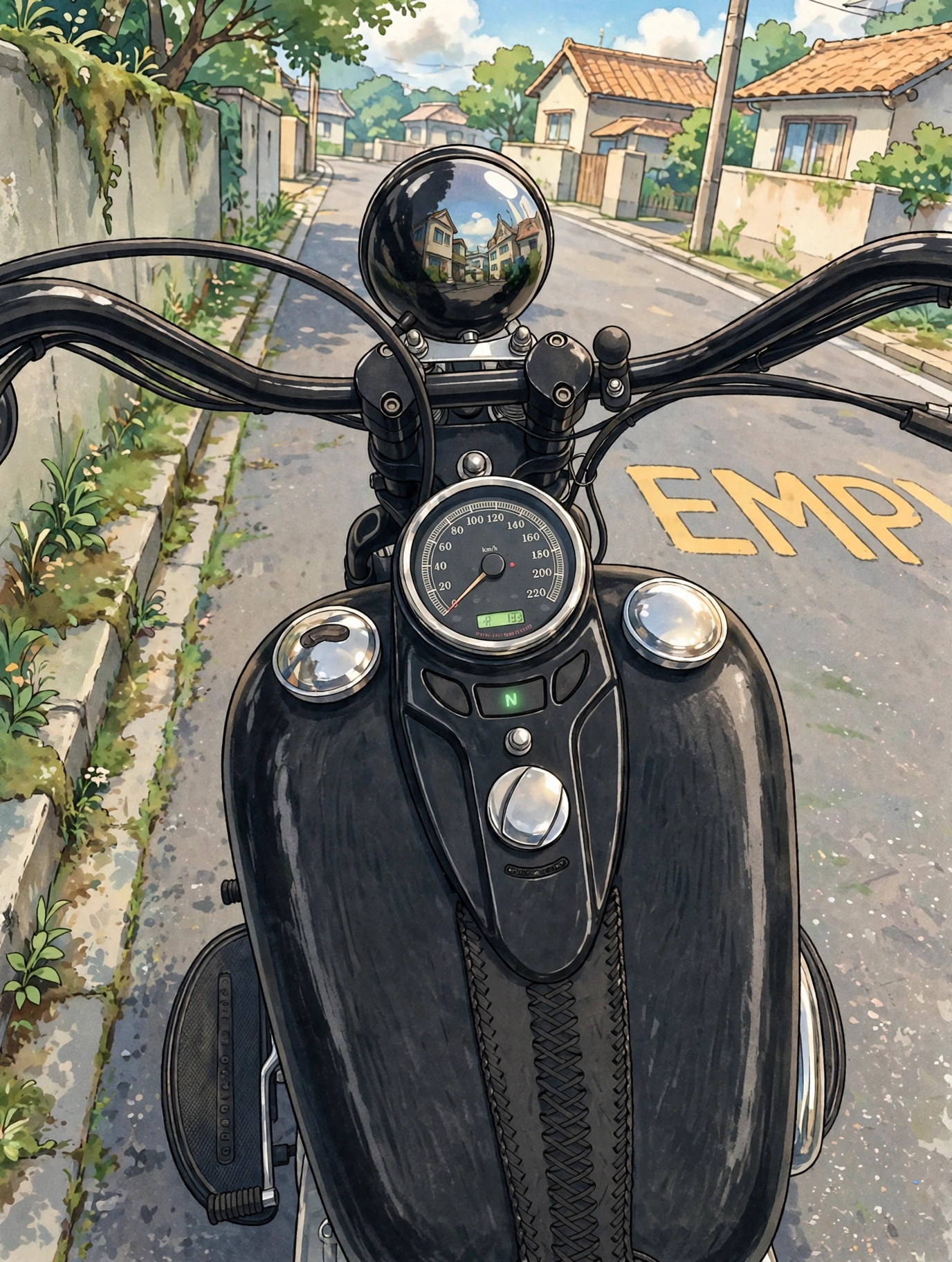
2011 Harley-Davidson FLSTSB Softail Cross Bones: The Spirit of the Classic American Bobber
An in-depth look at one of Harley-Davidson’s most distinctive modern classics, combining vintage bobber styling, a traditional Springer front end and the unmistakable character of the Twin Cam 96B.
Introduction: A Harley-Davidson with Old-School Character
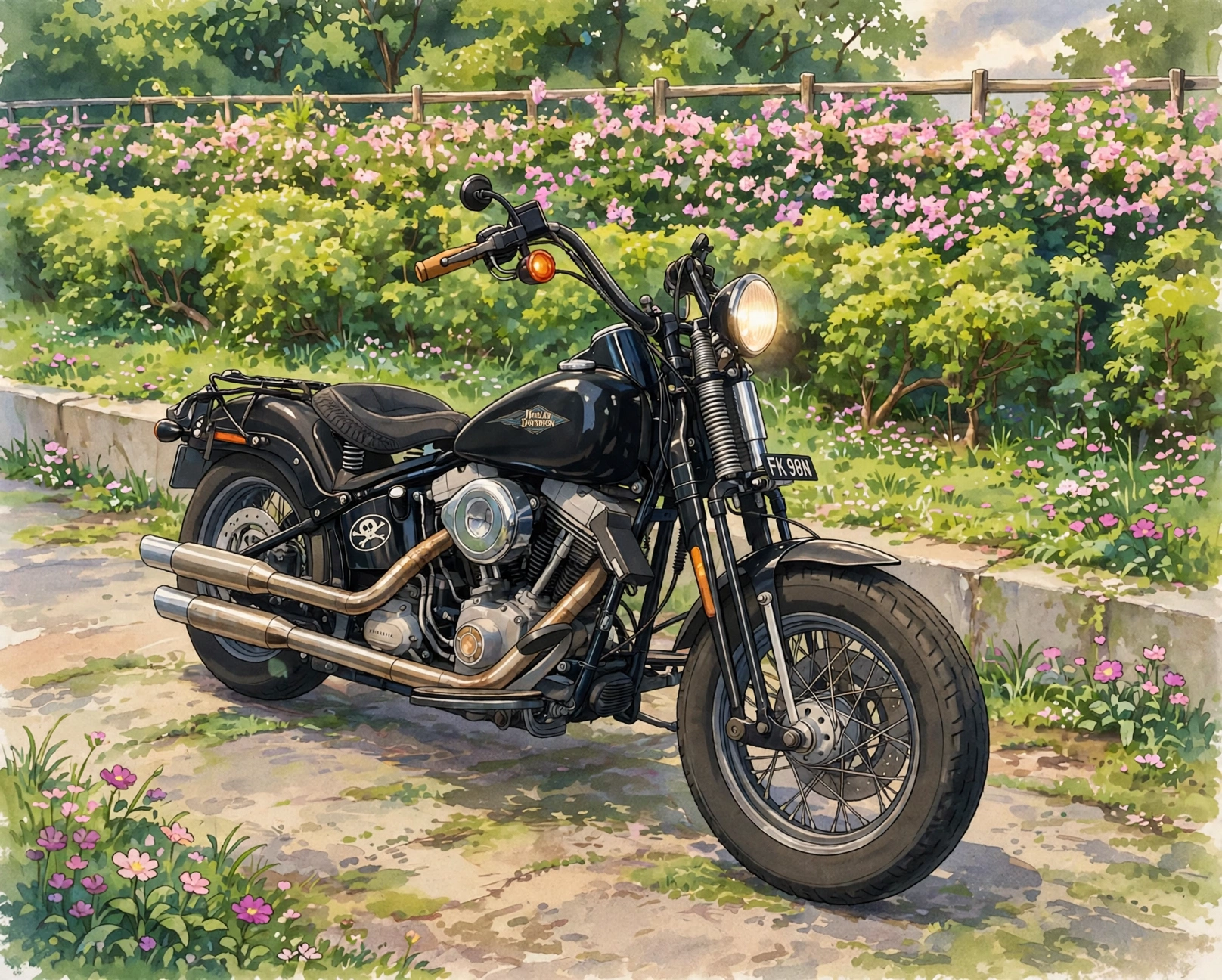
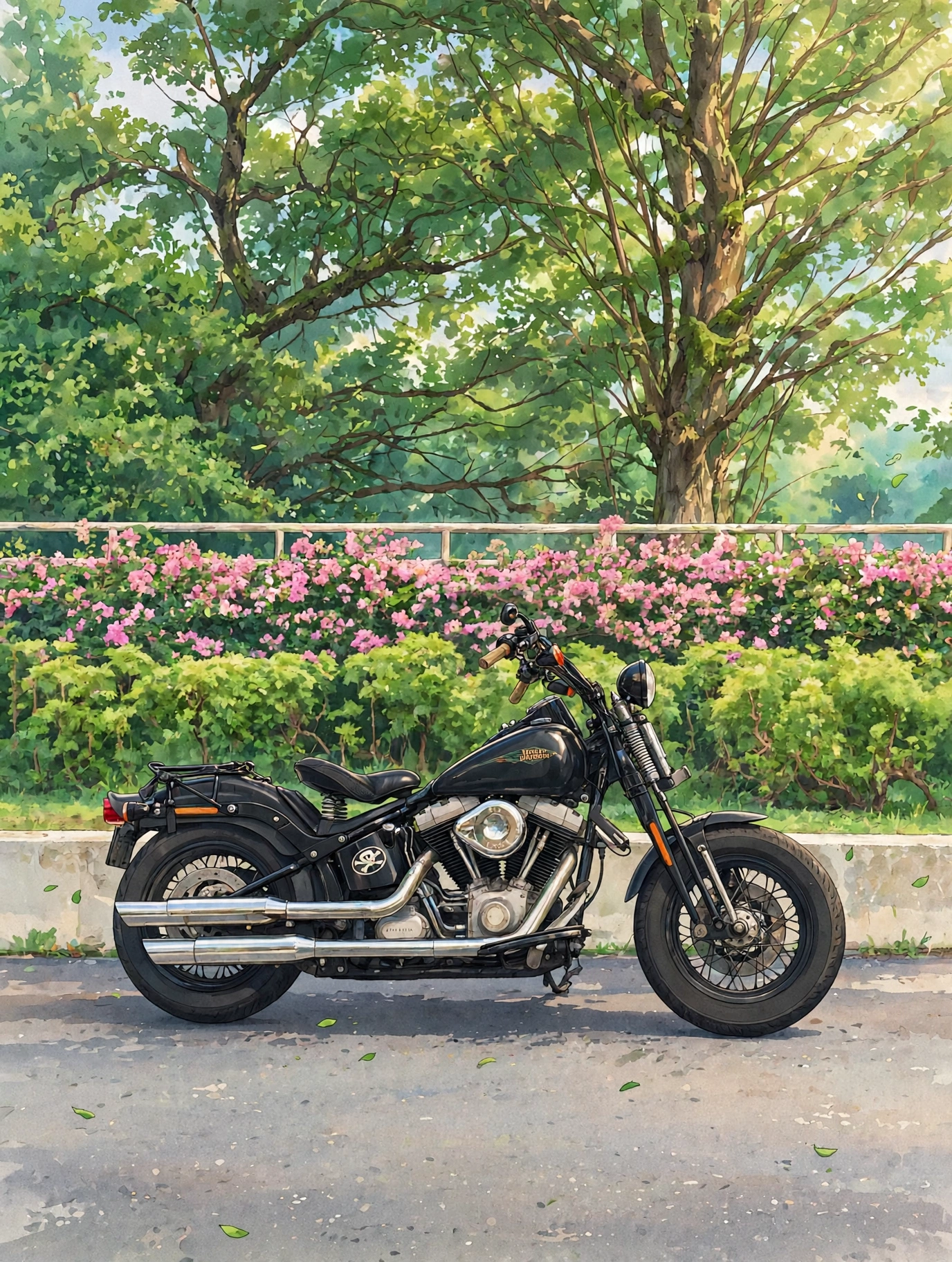
Few motorcycles capture the traditional American bobber aesthetic as convincingly as the 2011 Harley-Davidson FLSTSB Softail Cross Bones. With its exposed Springer front suspension, tall handlebars, solo sprung saddle, blacked-out components and chunky spoked wheels, the Cross Bones looks like a motorcycle that could have emerged from a custom workshop in the 1940s or 1950s.
Yet beneath its vintage-inspired appearance is a considerably more modern motorcycle. It combines Harley-Davidson’s counterbalanced Twin Cam 96B engine, electronic fuel injection, a six-speed Cruise Drive transmission and the company’s distinctive Softail chassis.
The Cross Bones was introduced for the 2008 model year as part of Harley-Davidson’s Dark Custom family. It remained in the range through 2011, making the 2011 model the final production year of this distinctive factory bobber.
More than a decade later, the Cross Bones continues to attract enthusiasts who appreciate motorcycles with individual character. It is not designed to compete with modern performance cruisers or technologically sophisticated touring machines. Instead, it offers something different: a relatively rare factory motorcycle that celebrates the history of American customisation without requiring its owner to build a bobber from scratch.
For collectors, Harley-Davidson enthusiasts and riders who appreciate traditional motorcycle design, the 2011 Cross Bones represents an interesting combination of heritage, mechanical simplicity and unmistakable personality.
1. The History of the Harley-Davidson Cross Bones
The Origins of the Bobber
To understand the Cross Bones, it helps to understand the bobber motorcycles that inspired it.
During the years following the Second World War, American motorcyclists began modifying their production motorcycles to create lighter, simpler and more individual machines. Returning servicemen and motorcycle enthusiasts frequently removed unnecessary components, shortened fenders and stripped away accessories to reduce weight and create a more aggressive appearance.
These customised motorcycles became known as bobbers.
Typical bobber characteristics included:
- Shortened front and rear fenders.
- Minimal bodywork and accessories.
- Solo motorcycle seats.
- Exposed mechanical components.
- Wide handlebars.
- Spoked wheels.
- Simple paint schemes.
- A strong emphasis on engine appearance and mechanical character.
Harley-Davidson’s pre-war Knucklehead and post-war Panhead motorcycles became particularly influential in the development of this visual tradition.
The Cross Bones takes inspiration from this period, particularly the post-war bobbers that helped establish the American custom motorcycle movement.
The Cross Bones Arrives in 2008
Harley-Davidson officially introduced the FLSTSB Softail Cross Bones in January 2008.
The motorcycle became part of the Dark Custom family, a range that emphasised darker finishes, stripped-back styling and a more individualistic interpretation of Harley-Davidson design.
Unlike many modern retro motorcycles, the Cross Bones did not simply reproduce the appearance of an old machine. It incorporated distinctive historical design elements into an existing Softail platform.
Its most recognisable features included:
- A traditional Springer front fork.
- Mini ape-hanger handlebars.
- A sprung solo tractor-style seat.
- Half-moon rider floorboards.
- A chopped front fender.
- Black powder-coated wheels.
- A distinctive horseshoe-style oil tank.
- A black and polished Twin Cam engine.
The result was a motorcycle that looked considerably older than its actual engineering.
The Cross Bones was particularly interesting because it came factory-built with styling details that would otherwise require considerable aftermarket customisation.
The 2011 Model: The Final Cross Bones
The 2011 model year is particularly significant because it was the final year of the FLSTSB Cross Bones.
By then, the motorcycle had established a distinctive identity within Harley-Davidson’s Softail family. Its combination of a Springer front end, bobber-inspired bodywork and traditional V-twin engine made it noticeably different from the company’s more conventional cruisers.
The 2011 model retained the established Twin Cam 96B engine and six-speed transmission.
Small refinements included revised hand-control wiring and a larger odometer display, although the fundamental mechanical and styling package remained familiar.
For collectors, the final-year designation adds an additional point of interest. It does not automatically make every 2011 example rare or exceptionally valuable, but it gives the model a clear place in the history of Harley-Davidson’s factory-built Springer motorcycles.
2. Exterior Design: A Factory-Built American Bobber
The greatest attraction of the Cross Bones is undoubtedly its appearance.
Harley-Davidson created a motorcycle with a distinctive silhouette that combines traditional American motorcycle proportions with a dark, industrial aesthetic.
The Springer Front End
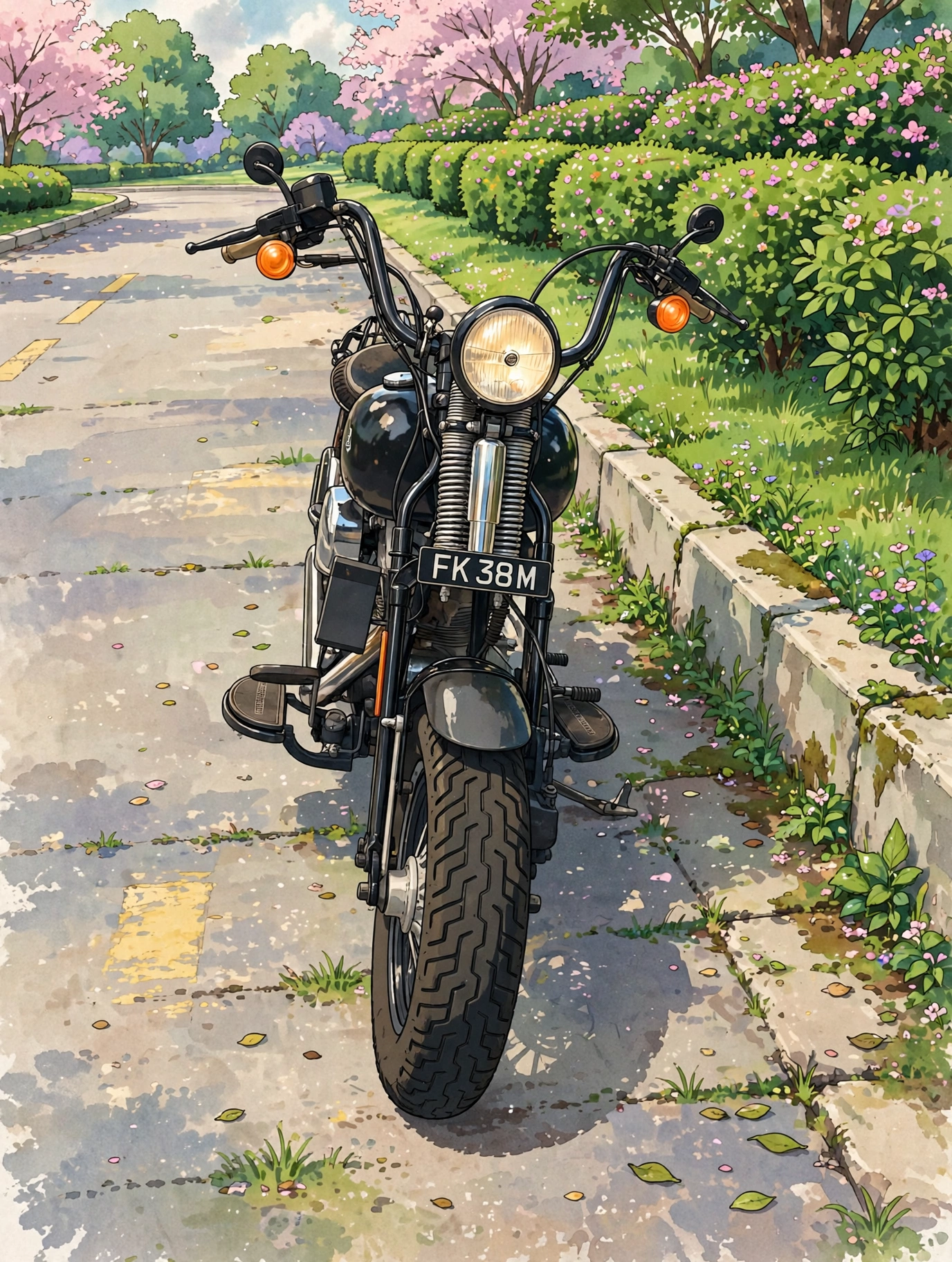
The Springer front suspension is arguably the most important design feature.
Unlike conventional telescopic forks, the Springer uses a leading-link arrangement with exposed springs and mechanical linkages.
The front suspension has a distinctly mechanical appearance. Its visible springs, black components and polished details create a strong connection with Harley-Davidson motorcycles from earlier generations.
The Springer front end also changes the visual proportions of the motorcycle. Combined with the high-mounted headlamp and wide front tyre, it gives the Cross Bones an unmistakable presence.
It is important to remember that the Springer is not simply decorative. It is a functioning suspension system with its own mechanical characteristics and maintenance requirements.
For enthusiasts, however, its greatest appeal is that it gives the motorcycle an identity that conventional telescopic forks cannot easily reproduce.
Mini Ape-Hanger Handlebars
The mini ape-hanger handlebars reinforce the old-school custom appearance.
Their relatively high position creates a distinctive riding posture, with the rider’s arms extended and shoulders raised compared with a conventional cruiser.
The handlebars are not as extreme as those fitted to some heavily customised choppers, making the motorcycle more manageable for everyday riding.
The overall arrangement gives the Cross Bones a relaxed but commanding riding position.
The Sprung Solo Saddle
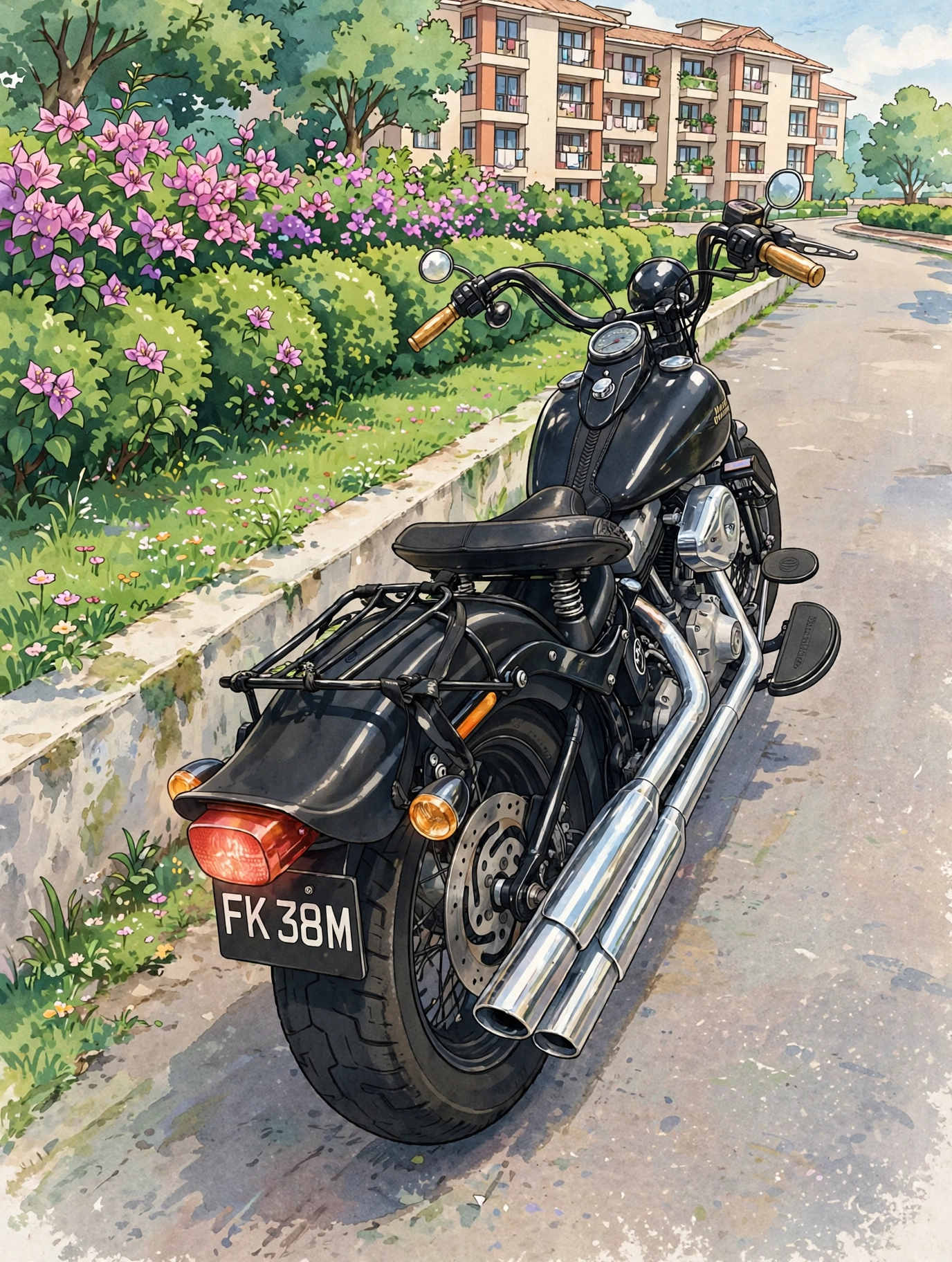
Another signature feature is the tractor-style solo seat.
The saddle is mounted on exposed springs, visually recreating the appearance of early bobber motorcycles.
The sprung arrangement provides additional movement beneath the rider, while the seat’s shape reinforces the motorcycle’s stripped-down character.
The solo configuration also makes the Cross Bones particularly individual.
Unlike touring-oriented Harley-Davidson models, the Cross Bones prioritises the rider rather than passenger accommodation. Owners who regularly carry passengers will need to consider an optional passenger seat and suitable footrests.
The Fuel Tank and Bodywork
The fuel tank follows Harley-Davidson’s traditional cruiser proportions, complementing the motorcycle’s large V-twin engine.
Its relatively simple shape allows the paintwork and tank graphics to remain visually prominent without competing with the Springer suspension or exposed mechanical components.
The chopped fenders are another important part of the design.
They provide minimal visual coverage and help create the impression of a shortened, customised motorcycle.
The overall styling is deliberately uncomplicated. There is little unnecessary bodywork, and the mechanical components remain visually important.
Wheels, Tyres and Exhaust
The Cross Bones uses black-finished, laced wheels that reinforce its traditional bobber appearance.
The rear wheel is particularly distinctive because it carries a wide 200-section tyre.
The combination of the narrow-looking front profile and broad rear tyre creates a muscular stance.
The exhaust system features dual pipes with slash-cut mufflers, giving the motorcycle the traditional appearance and sound expected from a large Harley-Davidson V-twin.
The dark finishes, exposed mechanical components and polished details combine to create a motorcycle that looks equally appropriate parked outside a traditional American diner or travelling along a scenic country road.
3. Engine and Mechanical Engineering
Although the Cross Bones looks like a motorcycle from an earlier era, its powertrain is considerably more modern.
The 2011 model is equipped with Harley-Davidson’s Twin Cam 96B engine.
Twin Cam 96B V-Twin
The engine is an air-cooled, 45-degree V-twin with a displacement of 96 cubic inches, equivalent to 1,584 cc.
The B designation identifies the counterbalanced version of the Twin Cam engine used in the Softail family.
The counterbalancers help reduce the vibration associated with the large V-twin engine while maintaining the distinctive mechanical character of a Harley-Davidson.
Key engine specifications include:
| Specification | Details |
|---|---|
| Engine | Harley-Davidson Twin Cam 96B |
| Configuration | 45-degree V-twin |
| Displacement | 1,584 cc / 96 cu in |
| Cooling | Air-cooled |
| Bore | 95.3 mm |
| Stroke | 111.3 mm |
| Compression ratio | 9.2:1 |
| Valve arrangement | OHV, pushrod-operated |
| Valves | 2 per cylinder |
| Fuel system | Electronic Sequential Port Fuel Injection |
| Lubrication | Pressurised dry-sump |
| Crankshaft balancing | Counterbalanced |
| Starting system | Electric |
The engine is designed around low- and mid-range torque rather than high-revolution performance.
Its long stroke and traditional V-twin configuration give it the characteristic power delivery expected from a large Harley-Davidson cruiser.
Engine Performance
The Twin Cam 96B produces approximately 93.7 lb-ft of torque at 3,000 rpm, equivalent to approximately 127 Nm.
This is a useful amount of torque for a large cruiser weighing more than 330 kg in running condition.
Rather than requiring the rider to keep the engine spinning at high revolutions, the Cross Bones delivers its performance through relatively low engine speeds.
The result is relaxed acceleration and strong pulling power when moving away from traffic lights or cruising along open roads.
The engine is particularly suited to riders who enjoy a deliberate, mechanical riding experience.
It is not a high-performance sport motorcycle, and its engine should not be judged by the standards of modern liquid-cooled performance cruisers.
Its attraction is the combination of usable torque, traditional V-twin character and a distinctive exhaust note.
Six-Speed Cruise Drive Transmission
Power is transferred through a six-speed Cruise Drive manual transmission.
The six-speed gearbox provides a relatively wide range of ratios, allowing the rider to use shorter gears for acceleration and a taller sixth gear for relaxed highway cruising.
The transmission is paired with a wet multi-plate clutch.
Final drive is through a belt, a popular arrangement across Harley-Davidson’s cruiser range.
The belt drive is generally quieter and requires less routine attention than a conventional exposed chain drive.
For long-distance owners, this is a practical advantage.
4. Chassis, Suspension and Handling
The Cross Bones is built around Harley-Davidson’s Softail frame.
The Softail concept is particularly important because it allows the motorcycle to retain the appearance of a traditional hardtail while incorporating rear suspension.
Softail Rear Suspension
Unlike a conventional motorcycle with exposed twin rear shock absorbers, the Softail uses concealed suspension components beneath the chassis.
The rear suspension is connected to the swingarm and positioned to maintain the motorcycle’s clean, traditional silhouette.
This arrangement gives the Cross Bones its classic hardtail-inspired appearance without completely sacrificing rear suspension.
However, its suspension travel and adjustability are limited compared with many modern motorcycles.
Riders should not expect the comfort or cornering performance of a contemporary touring motorcycle.
Front Springer Suspension
The front suspension is a leading-link Springer arrangement.
It provides a distinctive appearance and a different steering and suspension response from conventional telescopic forks.
The front end contributes considerably to the character of the motorcycle, although its behaviour may feel unusual to riders accustomed to modern suspension systems.
It is particularly important to inspect the springs, pivots, bearings and associated components when purchasing a used example.
Braking System
The Cross Bones uses hydraulic disc brakes at both ends.
The front brake employs a single-piston caliper, while the rear uses a two-piston arrangement.
Although the braking system is suitable for the motorcycle’s intended cruising role, the Cross Bones does not offer the multiple-disc braking performance found on some larger modern motorcycles.
Its considerable weight also means riders should maintain an appropriate following distance and use progressive braking techniques.
Prospective buyers should confirm the braking specification of the individual motorcycle, including whether any market-specific equipment or subsequent modifications are fitted.
5. Riding Experience: What Is It Like on the Road?
The Cross Bones is a motorcycle that places character ahead of outright performance.
Its riding experience is strongly influenced by its engine, riding position, weight and unusual front suspension.
Urban Riding
In town, the Twin Cam 96B provides sufficient torque to move the motorcycle away from traffic without requiring frequent gear changes.
The relatively low seat height is helpful when stopping, although the motorcycle’s weight remains noticeable when manoeuvring at low speeds.
The wide handlebars provide useful leverage, but the overall riding position is different from that of a conventional cruiser.
Tight parking spaces, steep driveways and low-speed U-turns require attention.
Highway Cruising
Open roads are where the Cross Bones feels most natural.
The six-speed gearbox allows the engine to settle into a relaxed cruising rhythm.
The riding position is comfortable for some riders, although the mini ape-hanger handlebars may not suit every body type.
Wind protection is minimal because the motorcycle has no substantial fairing or windscreen as standard.
At sustained highway speeds, the absence of wind protection becomes noticeable.
Owners planning longer journeys may wish to consider a detachable windscreen.
Cornering and Handling
The Cross Bones is designed for relaxed cruising rather than aggressive cornering.
Its long wheelbase, substantial weight, wide rear tyre and distinctive front suspension give it a very different character from modern sport cruisers.
Ground clearance is limited, and riders should avoid expecting substantial cornering lean angles.
Its natural environment is a flowing road where the rider can enjoy the engine, soundtrack and visual character rather than constantly pushing the motorcycle towards its limits.
Comfort
The sprung solo seat contributes to the motorcycle’s distinctive feel.
However, comfort is subjective, and the relatively limited suspension travel can become noticeable on rough roads.
The Cross Bones is best appreciated as a motorcycle for enjoyable rides rather than a machine designed to cover hundreds of kilometres every day with maximum comfort.
6. Technical Specifications: 2011 Harley-Davidson FLSTSB
The following specifications represent the US-market 2011 model. Minor differences may exist between markets and individual motorcycles.
Engine and Transmission
| Specification | Details |
|---|---|
| Model | FLSTSB Softail Cross Bones |
| Engine | Twin Cam 96B |
| Displacement | 1,584 cc |
| Engine configuration | 45-degree V-twin |
| Cooling | Air-cooled |
| Bore x stroke | 95.3 x 111.3 mm |
| Compression ratio | 9.2:1 |
| Fuel injection | Electronic Sequential Port Fuel Injection |
| Maximum torque | 93.7 lb-ft / 127 Nm |
| Torque engine speed | 3,000 rpm |
| Transmission | Six-speed Cruise Drive |
| Clutch | Wet multi-plate |
| Primary drive | Chain |
| Final drive | Belt |
| Starting | Electric |
Dimensions and Weight
| Specification | Details |
|---|---|
| Overall length | 2,299 mm |
| Overall width | 968 mm |
| Overall height | 1,336 mm |
| Wheelbase | 1,638 mm |
| Seat height, laden | 676 mm |
| Seat height, unladen | 765 mm |
| Ground clearance | 124 mm |
| Rake | 32.5 degrees |
| Trail | 160 mm |
| Dry weight | Approximately 318 kg |
| Running weight | Approximately 332 kg |
| Fuel capacity | 18.9 litres |
| Oil capacity | 3.3 litres |
Wheels, Tyres and Brakes
| Specification | Details |
|---|---|
| Front wheel | Black laced steel |
| Rear wheel | Black laced steel |
| Front tyre | MT90B16 72H |
| Rear tyre | 200/55R17 78V |
| Front brake | Hydraulic disc, single-piston caliper |
| Rear brake | Hydraulic disc, two-piston caliper |
| Front suspension | Springer leading-link |
| Rear suspension | Concealed Softail suspension |
Equipment and Features
The 2011 Cross Bones combines traditional styling with practical modern equipment.
Its instrumentation includes:
- Electronic speedometer.
- Digital odometer.
- Dual trip meters.
- Clock.
- Fuel gauge.
- Low-fuel warning.
- Engine diagnostic information.
- Gear-position indication.
Other features include electric starting, electronic fuel injection, a six-speed gearbox and a belt final drive.
The result is a motorcycle that retains a traditional visual identity while providing the convenience expected of a modern production motorcycle of its period.
7. Paint Colours and Customisation Potential
The Cross Bones is an excellent starting point for owners who enjoy customising their motorcycles.
Its relatively uncomplicated bodywork and traditional design make it suitable for a wide range of modifications without necessarily compromising its original identity.
The 2011 model was offered in several finishes, including:
- Vivid Black
- Cool Blue Pearl
- Sedona Orange
- Black Denim
Availability and colour combinations varied by market.
Popular Customisation Options
Exhaust systems
Aftermarket exhaust systems from manufacturers such as Vance & Hines and other Harley-Davidson specialists can change the motorcycle’s sound, appearance and exhaust flow.
Owners should consider local noise and emissions regulations before modifying the exhaust.
Handlebars
Some owners prefer alternative handlebars to change the riding position. Traditional mini ape-hangers can be retained, replaced with lower bars or modified to suit individual ergonomics.
Seats
The original sprung solo saddle is one of the Cross Bones’ defining features. Nevertheless, aftermarket solo seats and optional passenger arrangements provide additional flexibility.
Air cleaners and engine accessories
Custom air cleaners, engine covers and other accessories can enhance the motorcycle’s appearance.
Any engine or intake modifications should be properly matched with appropriate fuel-system calibration.
Lighting
Modern LED lighting can improve visibility while retaining the classic appearance of the motorcycle.
Wheels and tyres
Owners sometimes customise the wheels, spokes and tyre combinations. However, the original wheel dimensions and tyre specifications should be respected to maintain appropriate handling and clearance.
One important consideration is originality. Since the Cross Bones has a distinctive factory appearance, retaining its original Springer front end, sprung saddle, wheels and bodywork may be desirable to future collectors.
8. Advantages and Disadvantages
The Cross Bones is a highly individual motorcycle, but its traditional design brings both advantages and compromises.
Advantages
1. Distinctive Springer front suspension
The exposed Springer front end gives the motorcycle an identity that few modern production motorcycles can match.
2. Authentic bobber styling
The combination of the solo sprung seat, chopped fenders, mini ape-hanger handlebars and black wheels creates an authentic post-war American bobber appearance.
3. Strong low-speed torque
The Twin Cam 96B produces substantial torque at relatively low engine speeds, making it suitable for relaxed cruising.
4. Modern fuel injection
Electronic fuel injection offers more convenient starting and fuel delivery than older carburetted Harley-Davidson motorcycles.
5. Six-speed transmission
The six-speed Cruise Drive gearbox provides a useful range of ratios for urban riding and highway cruising.
6. Distinctive final-year model
The 2011 model represents the final production year of the Cross Bones, giving it additional historical interest.
7. Excellent customisation potential
Its traditional appearance makes it a suitable platform for tasteful personal modifications.
8. Strong Harley-Davidson identity
The Cross Bones combines recognisable Harley-Davidson mechanical character with an unusual factory design.
Disadvantages
1. Considerable weight
At approximately 332 kg in running condition, the Cross Bones is a heavy motorcycle. Low-speed manoeuvring and parking require care.
2. Limited ground clearance
The low-slung Softail chassis restricts aggressive cornering.
3. Minimal wind protection
The absence of a substantial fairing makes sustained highway riding more tiring.
4. Limited passenger practicality
The standard solo-seat configuration is not designed for regular two-up touring.
5. Traditional suspension limitations
The Springer front end and concealed rear suspension prioritise the motorcycle’s design character rather than modern suspension performance.
6. Age-related maintenance
A motorcycle produced in 2011 is now approximately 15 years old. Rubber components, electrical connections, suspension parts and other ageing components deserve careful inspection.
7. Specialist replacement parts
Some Springer-specific and model-specific cosmetic components may be more difficult or expensive to source than common Softail parts.
9. 2011 Original Pricing and Current Used-Market Value
The Cross Bones was positioned as a premium factory custom motorcycle when new.
Its distinctive Springer front end, specialised styling components and Softail platform placed it above more conventional cruiser offerings.
Original 2011 US Pricing
The commonly quoted US-market starting price for the 2011 model was:
| Model / Finish | Original US MSRP |
|---|---|
| Vivid Black | US$16,999 |
| Solid colours | US$17,374 |
Some valuation databases report different suggested list figures depending on their pricing basis and included options.
These prices exclude applicable taxes, registration, dealer charges and optional accessories.
Current Used-Market Pricing
The value of a Cross Bones today depends heavily on mileage, originality, mechanical condition, maintenance history and colour.
Available US-market valuation and dealer listings provide a useful reference.
For example:
| Reference | Advertised / Valuation Price | Details |
|---|---|---|
| JD Power average retail | US$11,025 | Published valuation |
| JD Power low retail | US$8,380 | Published valuation |
| Cycle Trader dealer listing | US$11,999 | Approximately 14,637 miles |
| Green Mount Road HD | US$15,990 | Approximately 28,541 miles |
| ChopperExchange listing | US$16,500 | Approximately 3,575 miles |
These figures are asking prices or published valuation estimates, not confirmed transaction prices. They also represent individual examples rather than a comprehensive market survey.
Estimated Buying Guide
For a buyer evaluating a 2011 Cross Bones in the US market, the following indicative ranges provide a useful starting point:
| Condition | Indicative Price (USD) |
|---|---|
| Higher mileage / needs attention | $8,000–$10,000 |
| Good original condition | $10,000–$12,500 |
| Very good condition | $12,500–$15,000 |
| Exceptional low-mileage example | $15,000–$17,000+ |
These are indicative assessment bands based on the available valuation and asking-price references, not guaranteed market values.
An exceptionally original motorcycle with complete service records may justify a premium, particularly if it retains its original exhaust, seat, wheels and Springer components.
What About Singapore and Malaysia?
The US market provides useful reference pricing, but imported Harley-Davidson motorcycles in Singapore, Malaysia and other international markets can have substantially different retail prices.
Several factors influence the final price:
- Import duties and taxes.
- Registration and road-legal compliance.
- Local supply and demand.
- Vehicle condition and mileage.
- Previous ownership and maintenance records.
- Availability of specialist Harley-Davidson servicing.
- Currency exchange rates.
Singapore buyers should also account for the relevant registration and vehicle taxation requirements rather than simply converting the US asking price into Singapore dollars.
For international buyers, the most useful approach is to compare several local examples and assess the total landed and registration cost.
10. What to Check Before Buying a Used Cross Bones
A used Cross Bones can be an attractive purchase, but its age and distinctive mechanical components make a thorough inspection particularly important.
1. Inspect the Springer Front End
The Springer suspension is the most distinctive component of the motorcycle.
Check:
- Condition of the exposed springs.
- Wear around the pivot points.
- Steering-head bearings.
- Front suspension linkages.
- Signs of corrosion or previous repairs.
- Any unusual noises or looseness.
A specialist Harley-Davidson technician should inspect the assembly if there is evidence of damage or excessive play.
2. Check the Twin Cam Engine
Listen to the engine during a cold start and after it reaches operating temperature.
Look for:
- Excessive mechanical noise.
- Oil leaks.
- Irregular idle.
- Starting difficulties.
- Exhaust smoke.
- Poor throttle response.
A service history is especially valuable for an older Twin Cam motorcycle.
3. Examine the Transmission and Clutch
Check that all six gears engage properly.
The clutch should operate smoothly without excessive slipping or unusual noises.
A road test should include acceleration through the gears and a check for abnormal drivetrain behaviour.
4. Inspect the Softail Rear Suspension
Examine the concealed suspension components and associated mounting points.
Check for oil leaks, damaged bushes, corrosion and evidence of previous repairs.
5. Check the Belt Drive
Inspect the final-drive belt for:
- Cracks.
- Missing teeth.
- Fraying.
- Incorrect tension.
- Signs of misalignment.
A damaged belt should be replaced rather than treated as a minor cosmetic issue.
6. Examine the Electrical System
Check the charging system, battery, lighting, switches, instrumentation and wiring.
Modified handlebars and aftermarket accessories sometimes introduce wiring problems, especially on older motorcycles.
7. Verify Originality
If the motorcycle is being purchased as a collectible, check whether it retains its original:
- Springer front end.
- Wheels.
- Fuel tank.
- Solo seat.
- Exhaust.
- Instrumentation.
- Bodywork and paintwork.
Keep in mind that tasteful modifications do not necessarily reduce a motorcycle’s appeal, but extensive modifications may make it less attractive to collectors seeking an original example.
8. Check Recalls and Service History
Verify the motorcycle’s VIN against the relevant Harley-Davidson dealer or official recall database.
Ask for documentation of completed recall work and previous servicing.
Also check ownership documentation, accident history and any applicable import or registration records.
11. Why the Cross Bones Remains Special
The Cross Bones occupies an interesting position in Harley-Davidson’s history.
It was produced during a period when manufacturers were increasingly exploring retro-inspired designs while introducing more modern mechanical technology.
Rather than simply creating another cruiser with vintage graphics, Harley-Davidson developed a motorcycle with genuinely distinctive hardware and proportions.
The Springer front end is particularly important.
It gives the motorcycle a visual and mechanical identity that is difficult to reproduce with conventional telescopic forks.
The Softail frame adds another dimension to the design, allowing the motorcycle to maintain the appearance of an old hardtail while incorporating rear suspension.
The Twin Cam 96B engine provides the traditional Harley-Davidson experience without relying on genuinely vintage mechanical technology.
This combination makes the Cross Bones interesting to two different groups of enthusiasts:
- Riders who appreciate traditional American bobber styling.
- Harley-Davidson collectors interested in unusual factory-produced models.
Its final-year 2011 designation further strengthens its historical significance.
Although the Cross Bones was not produced in enormous numbers compared with Harley-Davidson’s mainstream cruisers, its distinctive specification gives it a recognisable identity within the Softail family.
12. Final Verdict: A Modern Classic with Genuine Personality
The 2011 Harley-Davidson FLSTSB Softail Cross Bones is not a motorcycle designed to satisfy every rider.
Its substantial weight, limited ground clearance, minimal wind protection and traditional suspension design make it less practical than many contemporary cruisers.
However, judging the Cross Bones purely on practicality would miss the point.
Its appeal lies in its unusual combination of heritage-inspired styling and modern mechanical engineering.
The Springer front suspension, sprung solo saddle, chopped fenders, mini ape-hanger handlebars and blacked-out components create one of the most recognisable factory bobber designs of its era.
The Twin Cam 96B engine provides the torque and character expected from a large Harley-Davidson V-twin, while electronic fuel injection and the six-speed transmission make it considerably easier to live with than a genuine vintage motorcycle.
For collectors, the 2011 model has additional significance as the final production year of the Cross Bones.
For riders, it offers an experience that is increasingly difficult to find among modern motorcycles: a machine that places individuality, mechanical character and traditional design ahead of electronic technology and outright performance.
Ultimately, the Cross Bones is best appreciated as a factory-built interpretation of the classic American bobber.
It may not be the fastest, most comfortable or most technologically advanced Harley-Davidson, but few motorcycles from its generation have such a distinctive personality.
The 2011 Harley-Davidson Cross Bones is a motorcycle for enthusiasts who believe that character, heritage and individuality are just as important as performance.
13. Technical Summary
| Category | 2011 Harley-Davidson FLSTSB |
|---|---|
| Motorcycle type | Factory custom bobber / Softail cruiser |
| Production period | 2008–2011 |
| Final model year | 2011 |
| Engine | Twin Cam 96B |
| Displacement | 1,584 cc |
| Maximum torque | 127 Nm at 3,000 rpm |
| Transmission | 6-speed Cruise Drive |
| Fuel system | Electronic fuel injection |
| Front suspension | Springer |
| Rear suspension | Concealed Softail |
| Front tyre | MT90B16 |
| Rear tyre | 200/55R17 |
| Fuel capacity | 18.9 litres |
| Running weight | Approximately 332 kg |
| Original US starting price | US$16,999 |
| Main attraction | Classic Springer bobber styling |
Sources and Further Reading
The following references provide additional technical information, historical background and pricing references for the 2011 Harley-Davidson FLSTSB Softail Cross Bones.
- Harley-Davidson Cross Bones – Historical Introduction and Original Design
- 2011 Harley-Davidson Cross Bones – Specifications and Model Information
- 2011 Harley-Davidson Cross Bones – Motorcycle Review
- JD Power – 2011 Harley-Davidson FLSTSB Pricing and Values
- JD Power – 2011 Harley-Davidson FLSTSB Specifications
- Cycle Trader – Used 2011 Harley-Davidson Cross Bones
- Harley-Davidson Cross Bones – History, Specifications and Maintenance
Editorial note: Original specifications and prices refer primarily to the US-market motorcycle. Used-market figures are indicative references and should be checked against current local listings. Individual motorcycles may differ because of market-specific equipment, accessories and modifications.
Suggested SEO metadata
- SEO title: 2011 Harley-Davidson Cross Bones Review – FLSTSB Specifications, History & Value
- Meta description: Explore the 2011 Harley-Davidson FLSTSB Cross Bones, featuring the Twin Cam 96B engine, Springer front suspension, classic bobber styling, technical specifications and used-market values.
- Suggested URL slug:
2011-harley-davidson-flstsb-cross-bones - Primary keyword: 2011 Harley-Davidson Cross Bones
- Secondary keywords: Harley-Davidson FLSTSB, Softail Cross Bones, Twin Cam 96B, Harley Springer motorcycle, Harley-Davidson bobber.